South Korea to announce results of 3.2 GWh energy storage auction in February 2026

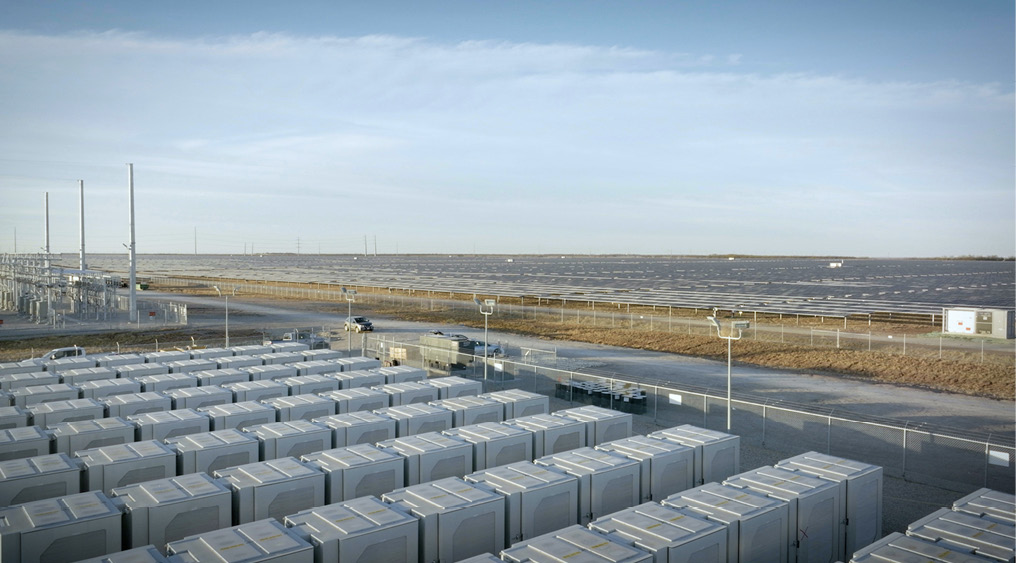
The Korean Power Exchange (KPX) held a briefing on December 12th, during which it finalized further details about its upcoming Second ESS auction. The auction was announced in May, 2025 by the South Korean government, and it is seeking contracts for 540 MW/3,240 MWh of grid scale BESS with a six-hour duration.
The procurement capacity is to be split between South Korea’s mainland (500 MW/3,000 MWh) and Jeju Island (40 MW/240 MWh).
The bid submission window has already closed, and according to Korea Power Exchange (KPX), the organizers of the auction, the winners will be announced in February 2026. Companies that submitted a bid have until January 12th to submit proposals and business plans for the 15-year contract term.
One of the main bidders in the auction is NuvveVolt, a newly created consortium by Seoul-based Volt and San Diego, United States-based Nuvve. The American grid and energy storage technology company is formally entering South Korea’s growing energy storage market, having completed the registration of the new entity NuvveVolt on December 4th.
NuvveVolt proposed a 95 MW/570 MWh project as part of the upcoming auction.
Nuvve’s CEO, Gregory Poilasne, said that the company’s technology was built to deliver advanced grid services “by aggregating highly distributed and unpredictable electric vehicle (EV) batteries.”
“We have created sophisticated tools for managing these dynamic assets and are now applying this expertise more broadly for any type of storage across various geographic regions, including Asia, to stationary storage and microgrid solutions,” the executive added.
The orchestration of diverse types of storage into more of a single asset, regardless of if mobile or stationary, delivers new options for smart energy management at scale.
In 2024, South Korea’s first central market BESS tender awarded 65 MW/260 MWh of four-hour duration capacity under 15-to-20-year term contracts. This second auction marks a new period of development in the country’s renewables buildout.
According to a white paper exploring Korea’s battery ESS industry by global technology consulting firm P3, BESS is expected to cover all new storage needs through the mid-2030s. The country’s 11th Basic Plan of Long-Term Electricity Supply and Demand, finalized in February 2025, aims to have nuclear and renewables provide around one third of electricity generation by 2038.
Korea has begun phasing out coal generation, with nuclear taking over much of the core role in electricity supply, according to the paper. It also claimed that electricity generation from renewables passed 10% for the first time in Korea’s history, although this is still relatively low.
The 11th Plan targets short duration batteries for fast response and long-duration plumped hydro storage and long-duration batteries for multi-hour balancing. Through 2035, all new storage needs are expected to be met by BESS and emerging storage technology. From 2036 to 2038, a hybrid long-duration fleet is expected to be achieved, where about half of the required 7.5 GW of long-duration storage is met by new pumped hydro and the other half by large BESS or other storage technologies. Battery storage could overtake pumped hydro in the long run with technology advancements.
P3’s report said with the growth of Korea’s energy storage market, there will be plenty of opportunities for virtual power plant (VPPs) and battery management software providers.
Written by



Popular Posts