Major German port debuts sea-rail transport for 48-ton BESS units

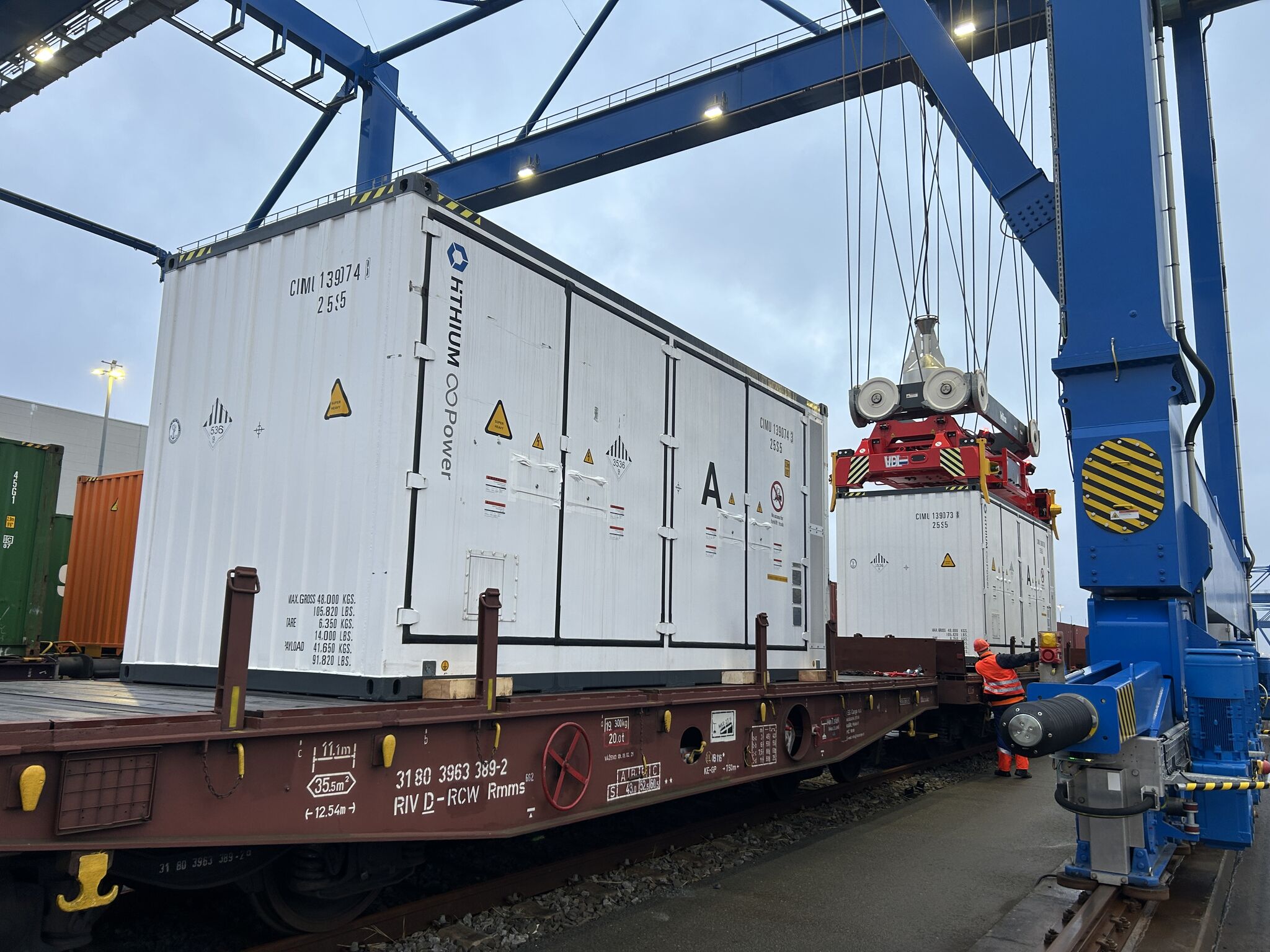
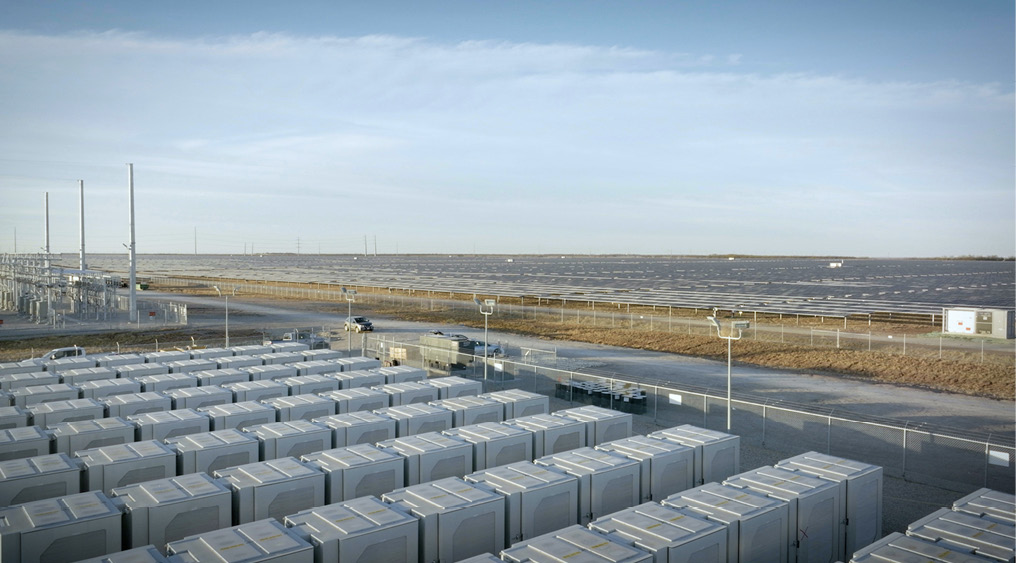
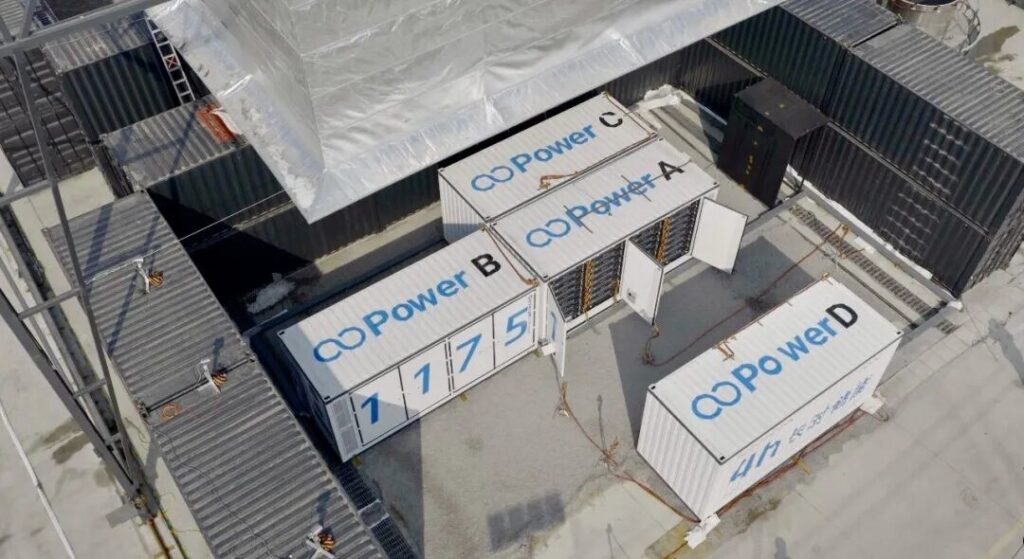
Earlier this month, the first sea-to-rail transfer of 48-ton battery energy storage system (BESS) units was completed in the German seaport of Wilhelmshaven, arriving at the Eurogate. The operation involved twelve 48-ton units manufactured by Chinese battery maker, Hithium.
The hardware arrived from Ningbo on the vessel KAWA BUDAPEST as part of Kawa Shipping’s China-Europe Express (CEX) service. Following discharge at the terminal, the units were transferred to the Rail Terminal Wilhelmshaven, where they were placed directly onto rail wagons for onward transport to Budapest, Hungary. The end-to-end logistics were coordinated by Zhejiang Seaport (Germany) Supply Chain Management.
The transit of battery containers is standard practice for major ports, but the 48-ton weight of these individual units puts them at the edge of European and many major hubs’ logistical capabilities. The same logistics challenges apply in North America, as CEA’s director of energy storage explained previously.
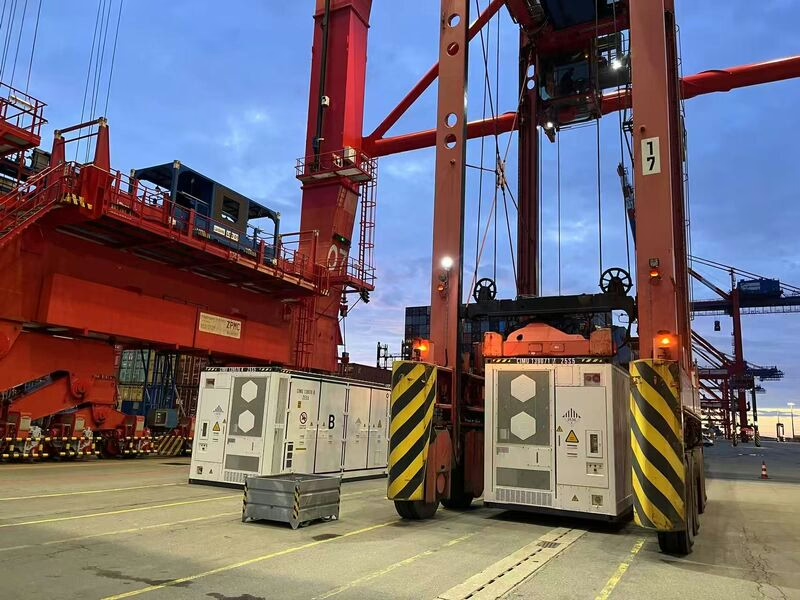
Image: Eurogate
By utilizing Wilhelmshaven’s sea-rail combined transport, the shipment avoided the “last mile” bottlenecks often found in road logistics. European rail corridors are generally designed for higher axle loads than highways, allowing fully integrated, heavy units to move across borders with fewer regulatory hurdles.
The problem of growing energy density to support compact sites for BESS projects is largely weight-related and related to both port and inland transport, which is further complicated by Europe’s aging infrastructure. Many bridges and secondary roads, particularly in Central Europe, have strict axle-load limits. A 48-ton battery concentrates its mass into a single 20-foot or 40-foot footprint, creating a point load that many older bridges cannot safely support.
When transportation infrastructure cannot handle these weights, developers are often forced to ship batteries partially empty and complete the integration of cells on-site. This adds significant labor costs and increases the risk of dust or moisture contamination during the installation process.
A recent pv magazine webinar with Chinese manufacturer Rongjie Energy included the following slide, which pointed out a comparison and breakdown of costs for 20-foot and 10-foot containers, and its own nonstandard container design:
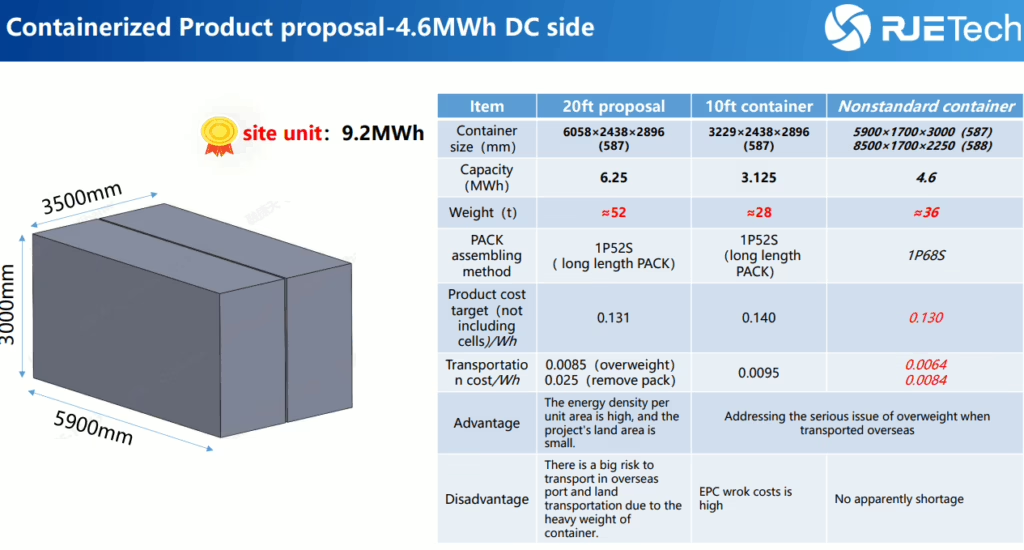
Screenshot from Rongjie Tech presentation
Wilhelmshaven is currently the only German seaport capable of handling these weights via a direct sea-rail link. As the battery industry shifts toward 5 MWh+ containers, which pack even more weight into the same dimensions, the availability of deep-water ports with integrated rail terminals is becoming a critical factor for project timelines.
Written by


Popular Posts