Germany’s grid-fee reform threatens energy storage investment
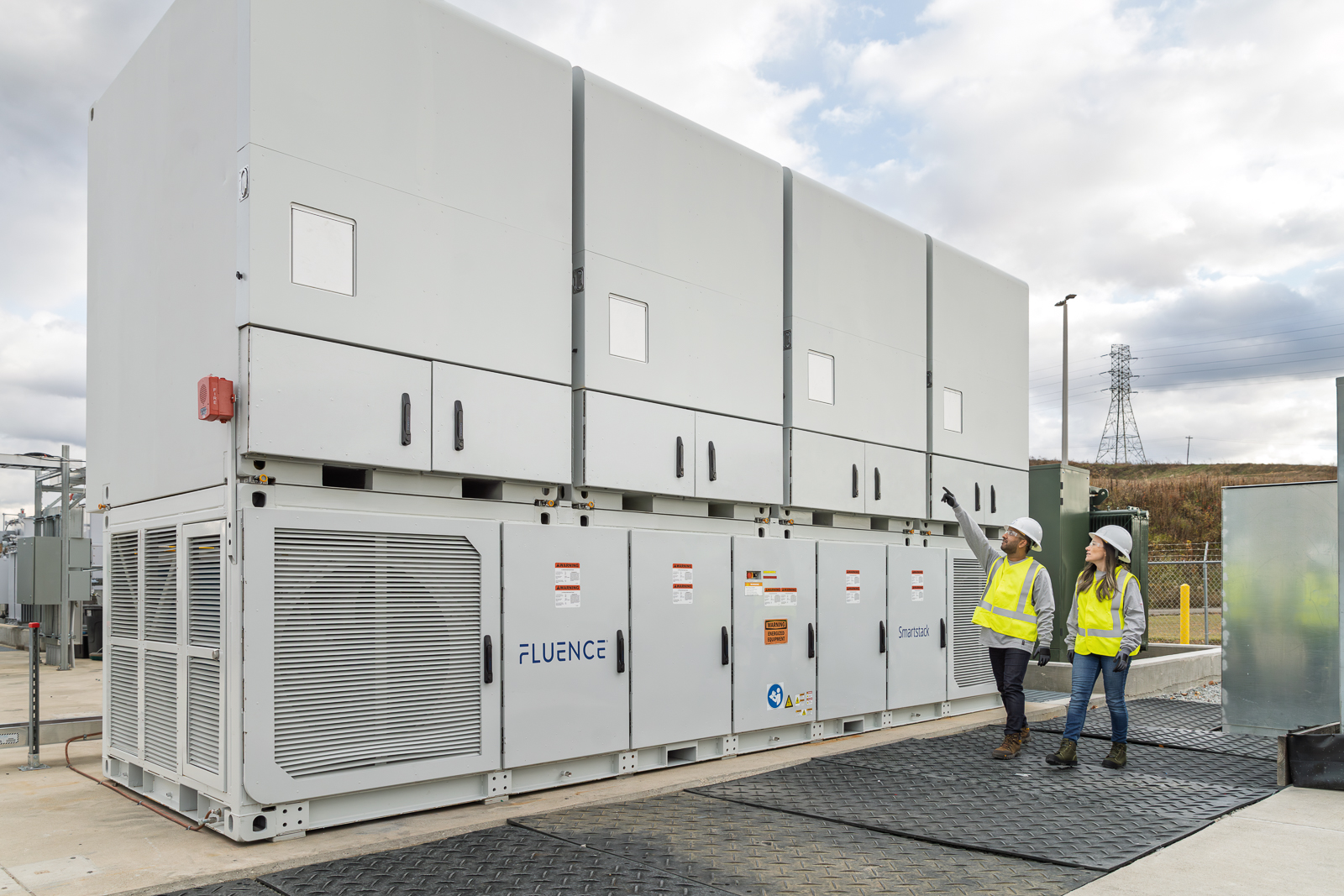
Energy storage is vital for Germany’s energy system. It boosts security of supply, lowers energy costs, and supports efficient grid operation. But investment security is at risk. Unclear grid fee reforms make investors hesitant and stalling projects.
Germany faces a crucial moment in its energy policy. The procedure for establishing a new general grid fee system for electricity, or “AgNeS” in short, will determine the future of investing into large-scale battery storage. Uncertainty created by the Federal Network Agency (BNetzA) is delaying or in the worst case stopping urgently needed investments.
If investment decisions are no longer possible in Germany, funds will be shifted abroad and used to finance storage projects there. Alongside, the burgeoning storage industry, which is creating local jobs and value, will be stopped in its tracks. This threatens the country’s energy security and transformation.
A fundamental need for energy storage, for energy security and independence
Large-scale energy storage facilities are needed in Germany, as regularly emphasized by the federal government and the Federal Network Agency. The monitoring report of the Federal Ministry for Economic Affairs and Climate Protection describes storage facilities as a lever for increasing efficiency and a prerequisite for an efficient grid. The Federal Network Agency anticipates large-scale energy storage deployments increasing from the current 2.8 GW to 68 GW/135 GWh by 2037.
Increasing supply security, resilience and reducing energy costs require the fast expansion of large-scale battery storage in Germany. The expansion of 57 GWh BESS by 2030 would reduce wholesale prices by €1/MWh, according to Frontier Economics. With energy consumption in Germany at 800 TWh in the mid-2030s, this would correspond to €800 million in electricity price savings per year. According to the study, the expansion of large-scale battery storage also reduces the necessary development of gas-fired power plants in the context of a future capacity market. A recent study by NEON Neue Energieökonomie shows that with the planned introduction of dynamic grid fees, each kW of additional storage capacity can reduce redispatch costs by up to €50 per year.
This underlines seemingly broad agreement on the goal to expand storage capacity. In the AgNeS process, the BNetzA publicly affirms that the introduction of grid fees for storage should not hinder the successful and necessary expansion of the storage infrastructure. It must now be measured against this statement.
Undermining a growing asset class
The current shifts in the regulatory framework do not live up to this claim. Since the publication of the guidance paper on storage grid fees, investors are noticeably cautious: financing decisions are being postponed and earmarked investment sums are under review.
Investors, with earmarked funds sometimes in the billions, are expressing their uncertainty. If investment decisions are no longer possible in Germany, the funds will be shifted and used to finance storage projects abroad.
The industry was relying on a law exempting storage projects that go online before August 2029 from grid fees. This regulation was last confirmed by the Bundestag in December 2025. The Federal Network Agency is now calling into question the industries trust and interpretation of the grid fee exemption granted by the German parliament by retroactively changing the investment parameters of this regulation in a way that affects past investment decisions. At the same time, it is unclear when the AgNeS process will provide clarity over future grid-fee levels.
The legally guaranteed transitional regulation until August 2029 is effectively up for grabs due to the position taken by the Federal Network Agency. Subsequently investors do not know what level of grid fees will be applicable and should be used in their financial models.
The opposite is required. Large-scale battery storage projects in Germany have so far been largely privately financed, not requiring subsidies or public investment. Germany has attracted international investors trusting its perceived stable and predictable regulatory framework. This trust has been severely damaged by the actions of the Federal Network Agency.
The principle that storage facilities will enable a secure and efficient electricity grid in the future is undisputed. Jeopardizing the financial viability of storage projects will create a storage gap. A situation we cannot afford from an energy policy perspective.
We must urgently restore trust to enable the continued investment in our critical energy infrastructure.
Where next?
Undermining the financial viability of large-scale battery storage projects making a critical contribution to our electricity system will halt market-based expansion. This means that to reach the required deployment levels, the federal government would instead have to incentivize the necessary investments through subsidies.
Instead of leveraging market-based investments, taxpayers or grid users would instead shoulder the bill for the expansion of storage capacity. That would be a German folly.
Investment security must be restored as quickly as possible. The Federal Network Agency must now present a clear commitment to restoring confidence. This will require more detailed guidelines for the design of future storage grid fees in the “Lessons Learned”, announced for the second quarter. Waiting until the AgNeS draft determination is consulted over the summer, will allow the storage gap to grow and lead to investments being diverted away from Germany.
Appealing to policymakers and regulators, I ask: Drive reform that promotes flexibility rather than hindering it. Give investors planning security and do not unsettle them further.
My appeal to the industry is: Get involved in the consultation process!
Together, we should seize the opportunity to finance and build the electricity grid of the future in a way that combines innovation, security, domestic value creation and competitiveness.

— The author, Julian Jansen, is Managing Director of Fluence in Germany. Previously, he was Managing Director for Eastern and Southern Europe and held various positions in strategy, market development, policy, and marketing in the EMEA region at Fluence. Julian is also Vice President of Energy Storage Europe (ESE). He began his career in the clean tech and renewable energy sector. Before joining Fluence, he was an Associate Director at IHS Markit, where he led the group’s consulting activities in clean energy technologies. Prior to that, he led the global energy storage team at the consulting firm Delta-ee and, before that, built up the energy storage business.
Written by






Popular Posts