Fraunhofer IEE calls for “grid-forming readiness” in distribution networks and BESS

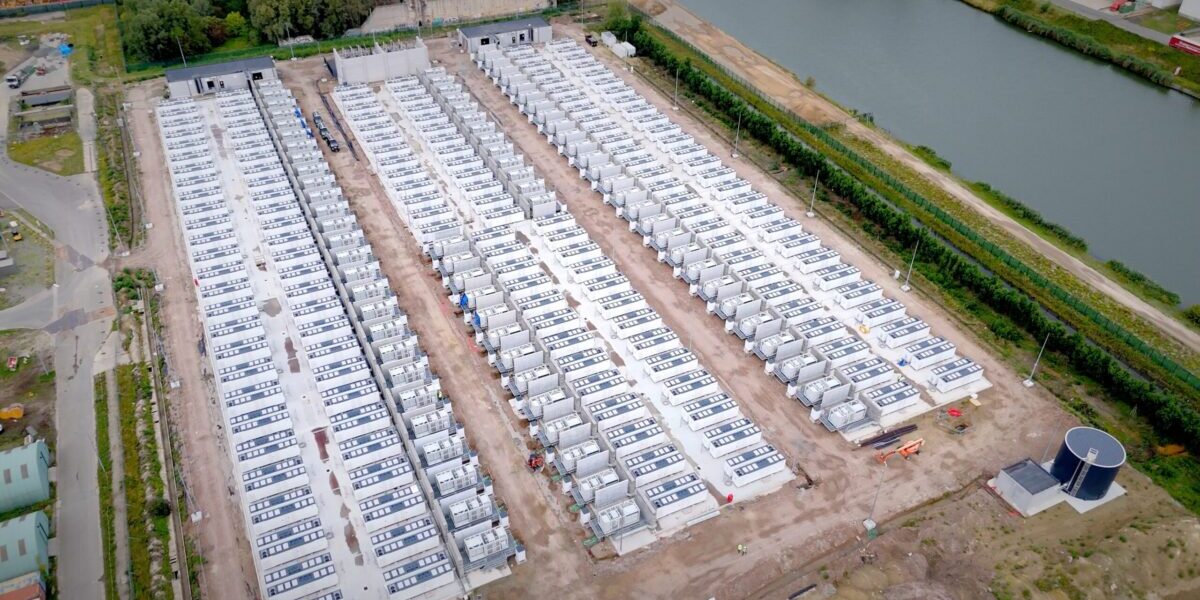
In a recent position paper, the Fraunhofer Institute for Energy Economics and Energy System Technology IEE (Fraunhofer IEE) calls for the early technical preparation of distribution networks for grid-forming functions. Under the term “Grid-Forming Readiness,” the authors outline a concept by which large battery storage systems in the medium-voltage grid, in particular, should contribute to the stability, islanding capability, and resilience of the electricity system in the future, without requiring them to actively operate in a grid-forming mode today. (Europe’s grid operator is already deep in technical drafts on this topic)
As the energy transition progresses, rotating masses, which have previously contributed to frequency and voltage stability, are becoming less important. They are being replaced by electronically coupled generators and storage systems – photovoltaic, wind, and battery systems. Frequency control, short-circuit power, fault management, and recovery after disturbances are provided by the inverters’ control engineering capabilities.
Regional resilience concepts, such as the ability to disconnect grid sections from the main grid when needed and operate them stably as islands, are gaining strategic importance. Battery storage systems could provide this capability, provided their control technology allows it. Action is needed now, in order to seize the opportunity to create these new resilience possibilities during the upcoming expansion of several gigawatts of new large-scale battery storage capacity.
Readiness instead of expensive retrofitting
So far, regulatory and technical discourse has primarily distinguished between “grid-following” and “grid-forming.” Grid-following systems follow an existing grid, while grid-forming systems can define their own voltage and frequency references. However, according to the Fraunhofer IEE, this binary distinction is too simplistic.
A gap exists between current normal operation and a future obligation to actively participate in grid development. Investments in new facilities are being made today without clarity regarding the system services that will be required in ten or twenty years. Retrofitting later could be technically complex and economically inefficient.
This is where the “Grid-Forming Readiness” proposal comes in. It refers to a structured provision of grid-forming capabilities. Facilities should be technically designed and classified so that they can assume grid-forming functions when needed, without these functions necessarily having to be activated during normal operation.
Large-scale battery storage systems in the medium voltage range
In a first phase, the institute recommends focusing on large battery storage systems connected to medium-voltage grids. These systems are considered technologically particularly suitable for providing grid-forming capabilities. They typically have appropriate communication links and represent long-term infrastructure investments that will shape the system for decades.
Furthermore, its impact is clearly localized and regionally defined. This makes regulatory requirements and potential implementation manageable. A later expansion to other technologies and network levels is conceivable in principle, but should be based on practical experience.
The position paper identifies specific use cases that should be considered during the design process. These include, among others: island grid operation and regional supply capability, black start and recovery capability, support for weak grids, provision of instantaneous reserves, and energy reserves for disaster situations.
The authors propose standardizing the functions. Systems could demonstrate, through defined testing procedures, which grid-forming capabilities they technically fulfill. This would enable a transparent and comparable classification.
Anchoring in standards and regulations
A key step is the precise definition of “grid-forming readiness” in standards and application rules. According to the position paper, the standardization bodies VDE/DKE and VDE FNN should play a central role in this. They need to specify technical classes, verification methods, and activation dimensions and integrate them into existing regulations.
In addition to the technical design, the paper also examines the perspectives of various stakeholders, from manufacturers and operators to network operators, policymakers, and regulators. Issues of financing, investment security, and long-term system responsibility are discussed.
From Fraunhofer IEE’s perspective, the key benefit of Grid-Forming Readiness lies in the early consideration of future stability and resilience functions. The technical feasibility of later activation is separated from an immediate operational obligation. This avoids costly retrofit programs and ensures the system’s long-term operational capability.
The position paper can be read here.
From pv magazine Germany.
Written by



Popular Posts