Form Energy, Crusoe partner on 12 GWh of iron-air batteries for AI data centers

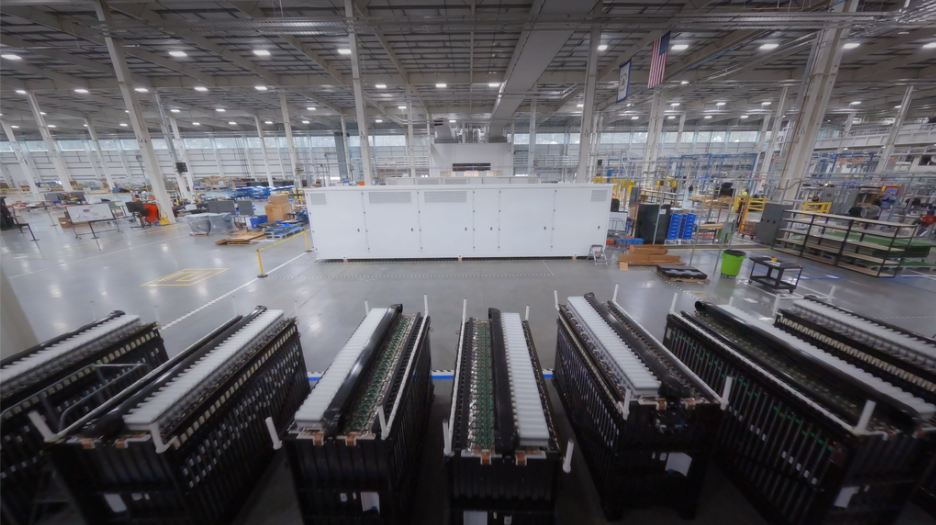
US long-duration storage specialist Form Energy has agreed to deploy 12 GWh of capacity for AI infrastructure developer Crusoe, with deliveries starting in 2027.
Under the agreement, Crusoe has secured reserved volume, pricing, and delivery terms, ensuring access to Form Energy’s iron-air battery technology as it scales its AI infrastructure. All systems will be manufactured at Form Energy’s Form Factory 1 in Weirton, West Virginia, supporting domestic energy manufacturing and job creation.
Crusoe aims to deliver AI infrastructure at speed and is therefore committed to a “bring-your-own-capacity” approach, whereby power generation is developed and secured alongside compute. This model accelerates deployment, reduces reliance on constrained grid capacity, supports utility system growth, helps shield ratepayers from cost increases, and enhances overall grid reliability, the company explains.
Previously, Crusoe deployed second-life batteries, announcing a 12 MW/63 MWh microgrid combining solar and repurposed electric vehicle batteries to power four Crusoe Spark modular data centers. According to the companies, the project was completed in under four months. Earlier this week, Crusoe announced the expansion of the microgrid deal in partnership with Redwood Energy.
The new partnership with Form Energy introduces multi-day energy storage to AI infrastructure and reflects the accelerating commercial and manufacturing momentum behind long-duration energy storage solutions.
Form Energy has recently launched production at its first high-volume manufacturing facility in Weirton and has begun delivering its first commercial pilot project in Minnesota. The company reports more than 75 GWh of projects under agreement, including several of the largest battery deployments announced globally, such as a 30 GWh project with Xcel Energy and Google.
Form Energy’s iron-air batteries are designed to store renewable electricity for up to 100 hours, with system costs that the company claims are competitive with conventional power generation.
The technology operates through a reversible rusting process: iron pellets react with oxygen from the air to form rust during discharge, and this process is reversed during charging. Each battery module consists of stacks of cells filled with iron and air electrodes, using a water-based, non-flammable electrolyte.
While less energy-dense than lithium-ion batteries, the technology is well suited for large-scale, stationary applications. Individual modules are roughly the size of a side-by-side washer-dryer unit and contain approximately 50 one-meter-tall cells.
These iron-air modules are manufactured at the Weirton facility, which is scaling toward 500 MW of annual production capacity, supported in part by domestic content incentives under the Inflation Reduction Act.
Written by



Popular Posts