A closer look at CATL’s new sodium-ion battery

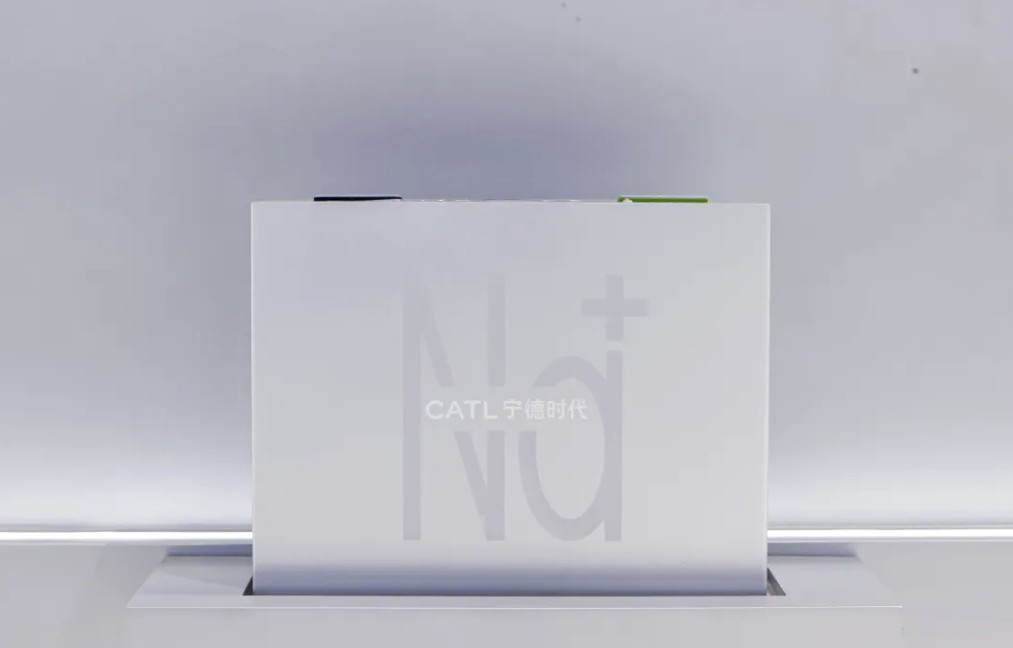
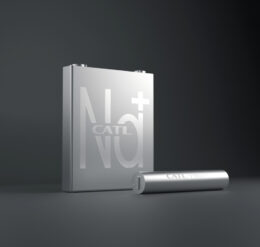
CATL has unveiled a new sodium-ion battery for energy storage at ESIE 2026 in Beijing, expanding its sodium-ion lineup beyond passenger cars, commercial vehicles, and auxiliary power into utility-scale and commercial storage.
The company presented the product on April 1 under the theme “sodium and lithium dual stars creating full-scenario energy storage solutions.” According to a spokesman of the company, CATL positioned the new product as the world’s first platform-based sodium-ion battery designed specifically for energy storage. The battery is expected to enter commercial deployment within 2026.
The main design feature is platform compatibility with CATL’s existing 587 Ah lithium storage cell. The sodium-ion battery uses the same enclosure dimensions, which CATL says will allow a high degree of compatibility in system design, manufacturing lines, and supply chains, helping reduce switching costs for customers. The cell is described as a 300+ Ah large-format product with energy density of about 160 Wh/kg, system energy conversion efficiency of 97%, cycle life of more than 15,000 cycles at 80% capacity retention, and an operating temperature range of -40 C to 70 C.
CATL says chemistry uses a long-cycle hard carbon anode and a layered oxide composite cathode. The company also claims strong intrinsic safety, stating that the battery showed no thermal runaway in nail penetration, crush, or overcharge tests. The sodium-ion design is cobalt-free and nickel-free, and uses aluminum foil instead of copper foil, which CATL says offers a cost advantage.
In terms of applications, the battery is aimed at 2-hour to 8-hour utility-scale storage, shared storage, renewable energy base projects, and AIDC (artificial intelligence data center), storage scenarios, according to CATL. The long cycle life and wide temperature tolerance suggest CATL is targeting use cases where durability, cold-weather operation, and system standardization matter as much as pure energy density.
The launch fits into CATL’s broader sodium-ion strategy. At its supplier conference on Dec. 28, 2025, the company said sodium-ion batteries would enter large-scale deployment in 2026 across four fields: battery swapping, passenger vehicles, commercial vehicles, and energy storage. It described sodium-ion and lithium-ion as a “dual-star” development path, signaling that the chemistries are intended to coexist rather than compete head-on.
That roadmap has unfolded in stages. CATL first introduced its first-generation sodium-ion battery in July 2021, with cell energy density of 160 Wh/kg and an AB pack concept combining sodium-ion and lithium-ion cells. In April 2025, it launched the Naxtra sodium-ion series for passenger vehicles and heavy trucks, with energy density up to 175 Wh/kg and operating range from -40 C to 70 C. In February 2026, CATL and Changan unveiled what CATL described as the world’s first mass-production passenger vehicle equipped with sodium-ion batteries. The new storage product completes CATL’s sodium-ion portfolio across the main transport and stationary storage segments it had flagged for commercialization.
Alongside the sodium-ion announcement, CATL also highlighted its 587 Ah lithium storage cell, whose cumulative shipments have exceeded 5 GWh. The parallel promotion of sodium and lithium products at ESIE suggests CATL is trying to build a broader storage platform around both chemistries, with sodium aimed at safety, temperature resilience, and lifecycle economics, and lithium continuing to anchor higher-volume deployment today.
Written by
Comments



Popular Posts