Comparing safety profiles of lithium-ion, sodium-ion and solid-state batteries


The global transition to sustainable energy systems requires battery energy storage technologies that deliver both high performance and robust safety. While lithium-ion batteries (LIBs) currently dominate deployment, their safety limitations – particularly thermal runaway driven by flammable liquid electrolytes – remain a concern.
Researchers from Newcastle University in the UK, in collaboration with the Fire Service Academy in Poland, have conducted a comprehensive comparison of three key technologies: conventional lithium-ion, emerging sodium-ion (SIB), and solid-state batteries (SSB). They argue that although resistance to thermal runaway is important, meaningful cross-chemistry comparisons require a holistic, multi-attribute safety framework tailored to different deployment scenarios.
Their assessment evaluates initiation resistance, abuse tolerance, failure severity (including maximum temperature, heat release, and heating rate), gas hazards (volume, flammability, toxicity), propagation risk, and application-specific constraints, such as the difference between confined marine transport and grid storage systems equipped with active fire suppression.
The team established a detailed safety baseline for LIBs, examining failure mechanisms under thermal, electrical, and mechanical abuse. This included analysing thermal runaway progression, gas evolution profiles, and cell-to-cell propagation dynamics.
They note that the cathode chemistry largely determines the severity of thermal events by governing energy density and oxidising potential. High-energy layered oxides such as LiCoO₂ and nickel-rich NMC chemistries provide high capacity for electric vehicles but become structurally unstable when highly charged, releasing reactive oxygen that accelerates exothermic reactions with electrolyte solvents. Thermal stability declines with increasing nickel content: NMC-811 begins decomposing at around 215 °C, compared with approximately 275 °C for NMC-111.
Lithium iron phosphate (LFP), by contrast, features a robust olivine structure that resists oxygen release even above 300 °C, making it less prone to violent runaway. However, it offers lower voltage and energy density. The researchers caution that both chemistries present distinct hazards, including the production of flammable or explosive gases under extreme conditions, meaning LFP cannot simply be described as “safer” than NMC.
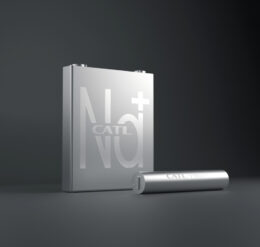
Sodium-ion batteries show notable safety advantages, including higher thermal runaway initiation temperatures (220–260 °C versus 170–220 °C for NMC-based LIBs), lower heat release rates, reduced hydrogen content in off-gases (around 30% compared with 42% for LFP), and the ability to be transported at zero volts, which significantly lowers logistics risks.
Solid-state batteries, particularly oxide-based variants, represent a more fundamental shift by eliminating flammable liquid electrolytes. These systems demonstrate exceptional thermal stability (T2 above 600 °C), minimal gas evolution (less than 0.5 L/Ah), and significantly slower propagation rates compared with high-nickel NMC cells (0.3–0.9 °C/min vs. 9–11 °C/min for high-Ni NMCs).
However, the researchers emphasise that safety rankings depend heavily on application context. LFP’s superior thermal stability can be offset by high concentrations of hydrogen fluoride (HF) in failure scenarios (3000–8000 ppm), while sulfide-based solid-state batteries may pose hydrogen sulfide (H₂S) risks if exposed to moisture.
In their paper, Comparative Safety Analysis of Current and Next-Generation Battery Technologies, published in the Journal of Power Sources, the authors conclude that “the journey towards safer energy storage is an ongoing evolution, not a single destination.”
While solid-state architectures promise intrinsic safety gains in the long term, the researchers suggest sodium-ion technology offers a practical near-term improvement. Continued refinement of lithium-ion systems, meanwhile, will be essential to ensuring the safety of the vast installed and near-future fleet. Ultimately, they argue, a battery-powered future will rely on a diverse portfolio of technologies, each selected for its specific balance of performance, cost, and—most critically—a rigorously validated safety profile.
Written by





Popular Posts