Liquid metal battery storage specialist Ambri emerges from restructuring

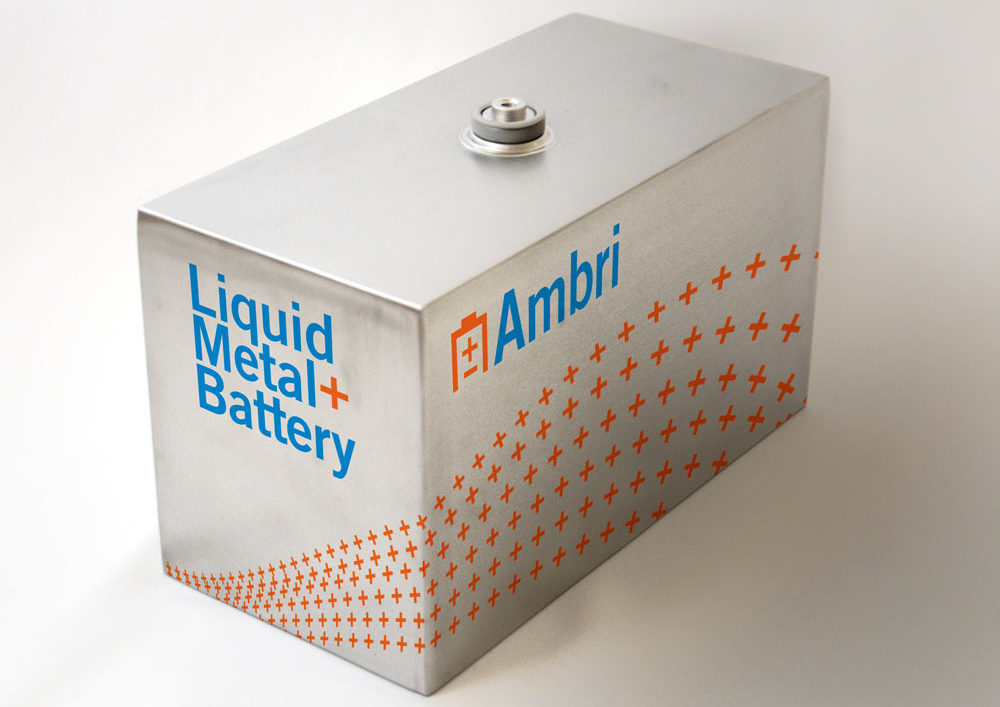
US-based startup Ambri has confirmed the closing of the sale of its assets in accordance with Section 363 of the Bankruptcy Code to a consortium of its lenders, as it prepares to take fresh steps towards commerialization of its long-duration storage technology.
Earlier this year, Ambri’s board, management and its lenders determined that a court-supervised 363 sale process was the best course to facilitate a comprehensive recapitalization in a bid to esure long-term growth and profitability. The company filed for bankruptcy in May, blaming a challenging fundraising environment and thwarted plans to expand into manufacturing.
Now, the liquid metal battery storage startup has emerged with additional capital contribution from the Lender Consortium, whose bid was selected following a competitive sale process. The Lender Consortium comprises a group of Ambri’s pre-bankruptcy investors, including funds managed by each of Gates Frontier, Paulson and Co. Inc., Fortistar, and other investors.
“The team at Ambri has continued to make impressive progress towards a commercial long-duration battery system, including developing our third-generation cell product,” said David Bradwell, Ambri’s cofounder who is now taking the reins as the company’s new CEO.
“I am grateful for the dedication of our team and the support of our investors as we emerge as a leaner and more capital efficient organization. We look forward to offering our unique, safe, and low-cost commercial product to our customers at scale, to meet the strong customer demand for our battery systems, and for a cleaner energy future. As we embark on this fresh start with a stronger balance sheet and new capital, we are focused on positioning Ambri to play a leading role in the long duration energy storage market for the benefit of our stakeholders,” Bradwell said.
Founded in 2010 at MIT, Ambri has been working on building industrial-scale, liquid-metal batteries for over a decade. With Reliance Industries as one of its key investors, the company had plans to set up a large-scale battery manufacturing facility in India, in addition to building a 140,000 square foot facility in Milford, Massachusetts.
As it filed for Chapter 11 bankruptcy, the company said it had seen strong demand for its technology from across the market, equalling the planned output of its factory in Milford, Massachusetts, for three years.
Ambri’s batteries feature a liquid calcium alloy anode, a molten salt electrolyte, and a cathode comprised of solid particles of antimony, enabling the use of low-cost materials and a low number of steps in the cell assembly process.
The company said that the active materials in its cells reversibly alloy and de-alloy while charging and discharging. The electrolyte thermodynamically stable with the electrodes, avoiding side reactions such as film-formation that can lead to performance degradation. The negative electrode is fully consumed when discharged, and reformed on every cycle, resulting in what the company said is a “highly repeatable process with no memory effect.”
Ambri’s chemistry is being developed to meet the demands of large industrial energy customers, such as data centers. The company says its long-duration energy storage solution is built for daily cycling – even in extreme, harsh environments. The systems boast a lifespan of more than 20 years and improved safety credetials with no possibility for thermal runaway.
The company claimed that its systems can range from 10 MWh to more than 2 GWh of energy storage capacity, providing durations of between four to 24 hours.
More about
Written by






Popular Posts