CEA: 21 GWh of US battery energy storage factories cancelled in 2025

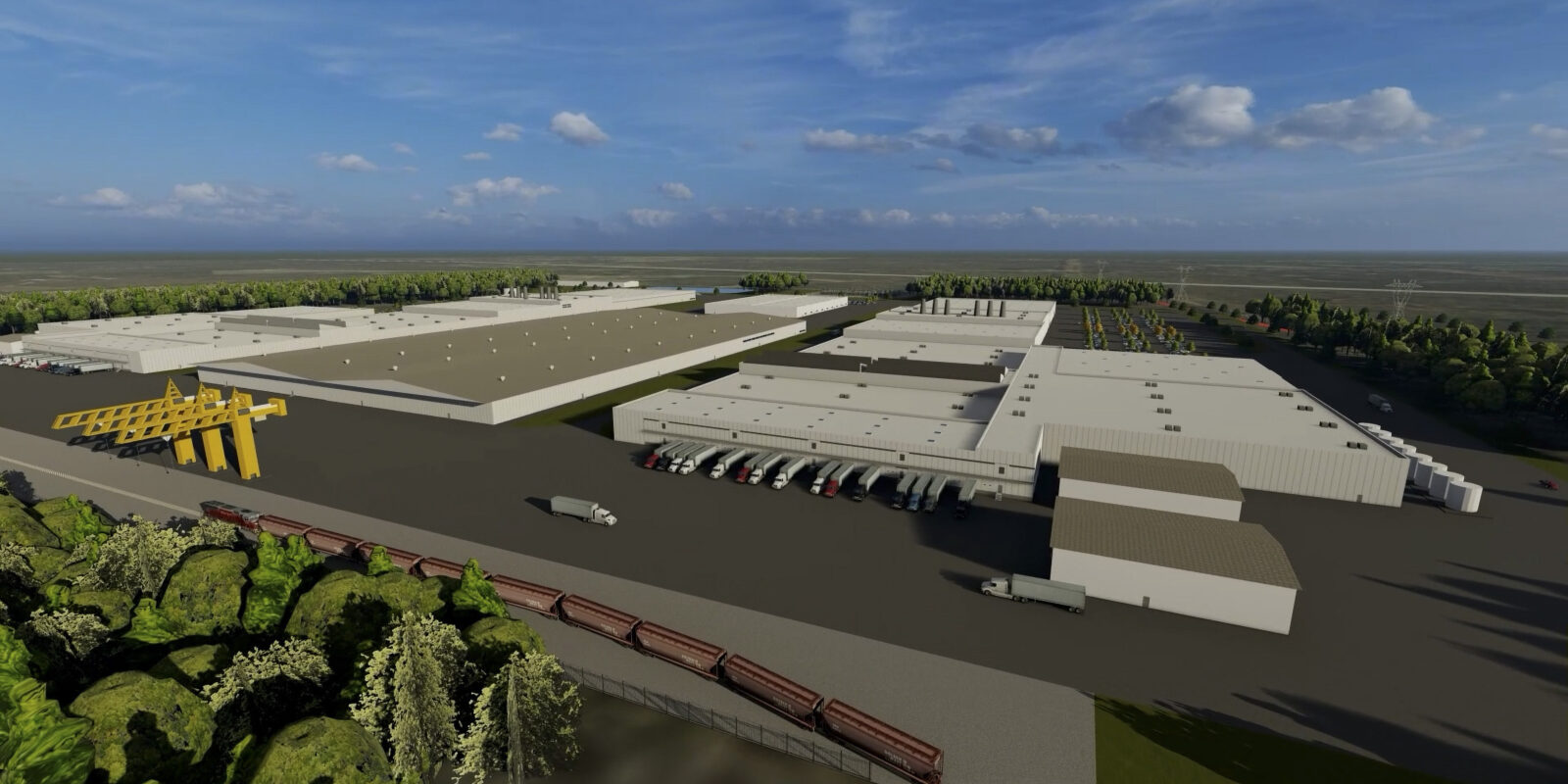
More than 20 GWh of planned energy storage cell production capacity, for 2028, has been cancelled this year according to Q2, 2025 reports on energy storage supply, technology, policy, and pricing compiled by CEA.
The cancelled projects include a 9.6 GWh-per-year factory from KORE Power in Arizona and a 10.2 GWh project in Georgia from FREYR. A swath of 1 GWh to 5 GWh annual production capacity projects around the US Midwest and the Southeast have also been delayed as policy uncertainty and financing snafus hit small producers hard.
That loss of 21 GWh could strongly negatively impact the industry if the annual demand in 2028 meets its projected 100 GWh target.
Even so, CEA also found that locally integrated systems are becoming a more viable option in the US thanks to growing original equipment manufacturer and domestic integrator capacity. That increased capacity makes it easier for integrators to build local networks and secure spare or replacement parts.
Rather than siting manufacturing in lower-cost countries, the report notes that more integrators are focusing on co-locating their manufacturing capacity with their end market, including a Chinese manufacturer that recently opened a 10 GWh battery manufacturing plant in Texas.
The resulting prices are “fairly reasonable” from a manufacturing cost standpoint. The integrated ESS options do come at a cost premium of 15% to 20% but, the report points out, “siting manufacturing in the US is the best choice for minimizing tariff risk, even if costs are higher,” due to reduced Chinese content.
Still, regarding cathode and anode materials, CEA notes it will be “possible though difficult” to minimize tariff exposure with a North American supply chain due to tariffs on steel and aluminum, as well as on battery parts.
For manufacturers looking outside the US, purchasing cells and systems from South Korea and parts of Southeast Asia could be the best bet to avoiding up to $40/kWh in tariffs. Domestic hardware integrators are thus best positioned to “mix and match” supply sources to attain the lowest costs, per the reports’ findings.
While most of the announced manufacturing capacity in Southeast Asia is geared toward electric vehicle batteries, CEA pointed out that lithium-ion ESS capacity is likely to follow a similar path to that of offshore solar manufacturing. The consultancy “anticipates many joint ventures, expansions, and accelerations of production to be announced over the coming months in the region.”
Though lithium-iron-phosphate (LFP) cell manufacturing outside of China is still in its early days, the report notes there will be more options available by early 2026 in The States, South Korea, Malaysia, and Indonesia (though the recent foreign-entities-of-concern rules under the budget bill could complicate the question of least-cost supply).
Stable low lithium prices also play a role, as they bode well for battery energy storage system developers in nations not facing significant trade barriers. That said, non-lithium battery technologies and lithium-ion battery recycling could both face a windy road ahead as lithium prices are expected to remain below $10/kg for most of the decade.
From pv magazine USA.
Written by

Popular Posts