UK: Elements Green secures debt for 720 MWh battery, Gresham House bags equity for BESS project augmentation

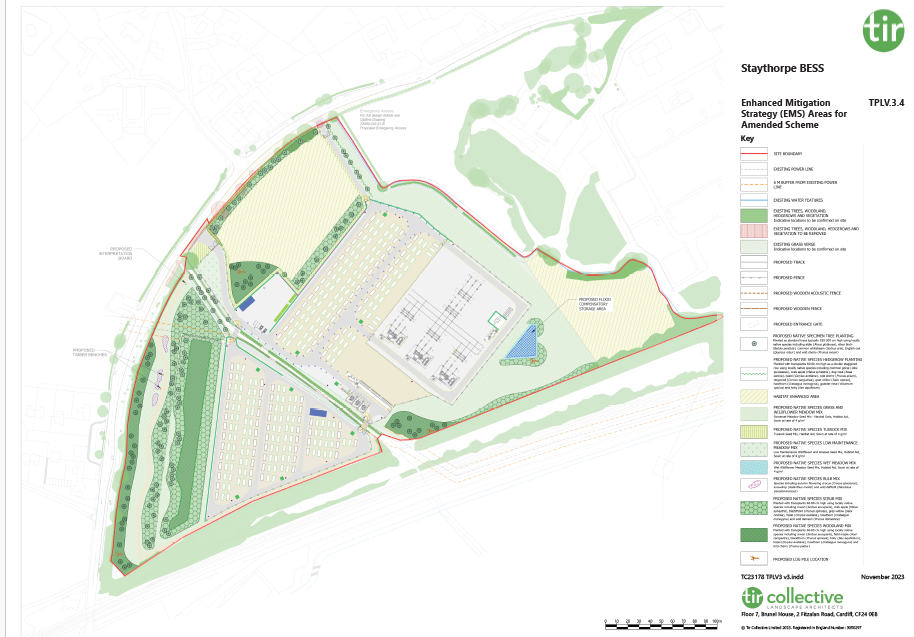
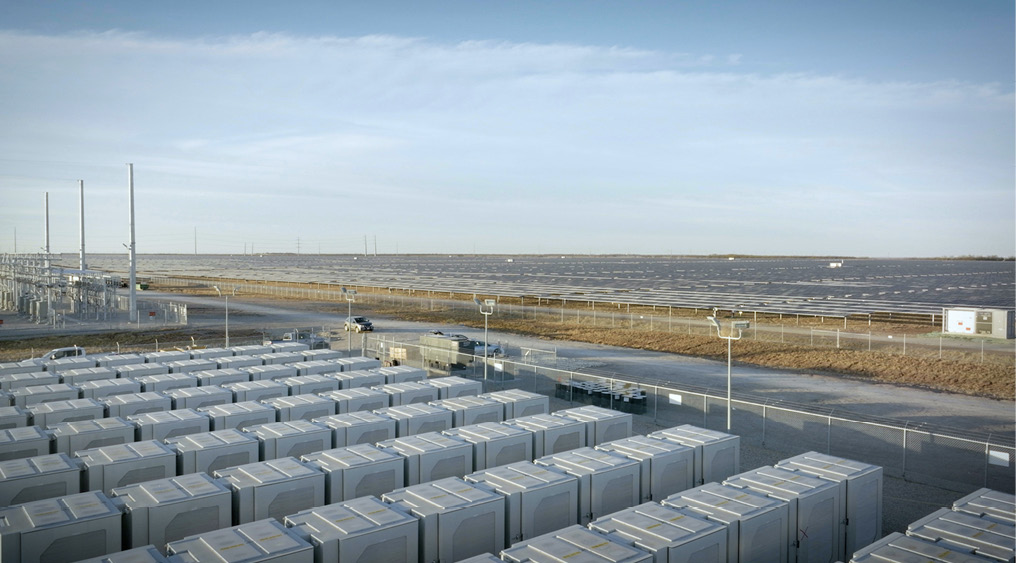
Elements Green, a UK-based developer of utility-scale solar and battery energy storage systems (BESS), has reached financial close on a £140 million debt facility to support the development of its flagship 360 MW / 720 MWh battery storage project in Staythorpe, Nottinghamshire, England.
The financing has been provided by Private Credit at Goldman Sachs Alternatives, marking a significant milestone in Elements Green’s transition into a large-scale independent power producer (IPP). IDCM acted as financial advisor throughout the transaction
Construction on the Staythorpe project – set to be one of the largest battery storage facilities in the UK- is already underway. Full commissioning is expected by mid-2027. Once operational, the facility will provide critical grid-balancing capabilities, support the integration of renewable generation, and contribute to the UK’s long-term net-zero targets.
The Staythorpe project benefits from a strong commercial foundation, including a 15-year capacity market contract and a long-term revenue floor agreement with EDF, providing revenue certainty and strengthening the project’s bankability. Engineering and construction services are being delivered by Mitie, using the latest BESS technology from China’s Hithium.
Augmentation wave
In a separate funding announcement, Gresham House Energy Storage Fund (GRID) said it had secured £8.6 million equity investment for its Glassenbury battery project expansion. The funding will enable the augmentation of the Glassenbury site from 38 MWh to 110 MWh, extending the project’s storage duration to 2.2 hours.
Glassenbury Battery Storage Ltd (“Glassenbury”), which owns the Glassenbury A (40MW) and Glassenbury B (10MW) projects in Hartley, Kent, was indirectly 100% owned by GRID prior to this transaction. Now, new shares have been issued to UAB E Energy Invest (EEI), translating into 35% ownership of Glassenbury. GRID will continue to indirectly own the remaining 65%.
Planning permission for the augmentation has already been granted, with construction and battery supply contracts expected to be finalized shortly. Construction is scheduled to begin in early July, with project completion targeted for December 2025.
“This transaction is believed to be the first augmentation-driven equity injection at project level for a listed BESS fund. It not only increases the asset’s value significantly but also opens up a new path for project-level capital raising in the UK battery sector,” said John Leggate CBE, Chair of Gresham House Energy Storage Fund plc.
GRID expects the augmentation to result in a 22% increase in EBITDA attributable to its share of the project over its lifetime. The transaction is anticipated to deliver a net present value uplift, which will be reflected in the company’s 30 June 2025 NAV, due in September 2025.
Following the completion of GRID’s pending debt refinancing, the company plans to embark on an additional seven augmentations through 2025 and early 2026, which will also be funded via refinancing. “These augmentations will meaningfully enhance our portfolio’s EBITDA and overall value—both in absolute terms and per share,” said Ben Guest, Fund Manager of GRID and Managing Director of Gresham House Energy Transition.
In other related news, GRID has signed a series of revenue optimization agteements with Statkraft, covering a portfolio of 412 MW of its existing BESS assets. Statkraft has agreed to provide a minimum income guarantee across these assets, which will support GRID in augmenting and refinancing them.
The GRID portfolio comprises of the following thirteen BESS assets: Nevendon (15MW), Cleator (10MW), Arbroath (35MW), Bloxwich (41MW), Byers Brae (30MW), Coupar Angus (40MW), Grendon (50MW), Red Scar (49MW), Roundponds (20MW), Rufford (7MW), Stairfoot (40MW), Tynemouth (25MW) and Wickham (50MW). As part of the agreement, Statkraft will convert existing optimisation power purchase agreements (PPAs) to incorporate them into the floor portfolio, so they benefit from the minimum income.
Statkraft will leverage its expertise in asset optimisation and algorithmic trading to optimise this portfolio across all relevant energy and ancillary markets. As a result of this agreement, Statkraft now has an optimisation portfolio in Great Britain which is in excess of 3 GW.
Written by




Popular Posts