New battery manufacturer with European software: GAZ Energy builds factory in Czech Republic


Europe is getting a new battery manufacturer: GAZ Energy. In the eastern Czech city of Bohumín, near the Polish border, a new production facility for battery storage solutions is being established. The chemical company Bochemie and the battery manufacturer GAZ GmbH are working together with energy trading firm Second Foundation to set up an integration line for containerised batteries. Stephan Lehrke, head of Second Foundation Germany, confirmed the project in an interview with pv magazine.
Focus on European control technology
Second Foundation acquired significant stake in Bochemie. The German-named “Geräte- und Akkumulatorenwerk Zwickau” or GAZ is a well-known brand for nickel-cadmium batteries, traditionally used as backup power sources for critical infrastructure in the energy and telecom sectors. The three companies are jointly investing in a production line to assemble lithium-ion battery storage solutions intended for storing electricity from renewable energy sources.
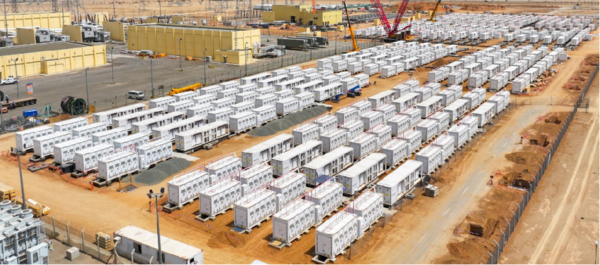
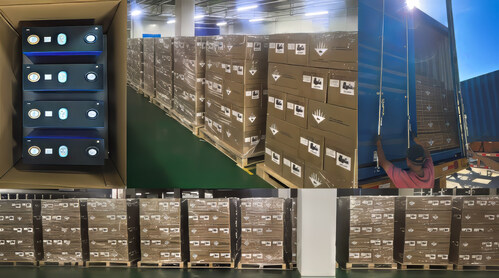
The aim is to produce large-format container batteries. The battery cells and packs will be sourced from China. The software, control, and management systems will be developed in Europe, specifically by Second Foundation.
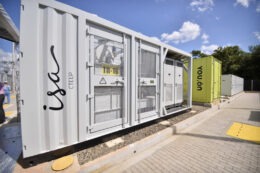
Each 20-foot shipping container will have 5 MWh of storage capacity and 2.5 MW of power output. A single container weighs 43 tonnes. The system is liquid-cooled and can charge between 0 and 55 degrees Celsius and discharge between minus 30 and 55 degrees Celsius. The round-trip efficiency is listed as 96.5 percent under full load. The system is designed to withstand 6,000 full cycles at 80 percent depth of discharge. However, the key feature highlighted in the product announcement is the proprietary battery management system, which is also open for end-user customisation.
“We see four levels of control, from cell communication to battery management systems (BMS) to full plant control,” said Lehrke. “When you buy container systems from Chinese suppliers, the BMS usually comes bundled. If you build it yourself, you can implement your own safety standards.” All software is developed entirely in-house by Second Foundation.
This approach is a response to growing concerns over cybersecurity. There is increasing awareness of the risks when critical infrastructure is largely controlled by Chinese software. Lehrke noted that US regulators have already taken action. For example, the utility Duke Energy recently announced it would dismantle some of its battery projects that used CATL batteries. That decision came amid political pressure, as US lawmakers worry about cyberattacks.
Although there is not yet a general import ban on such batteries, Second Foundation is choosing to act before fears in Europe lead to trade restrictions. “Cells and hardware from China will still be needed,” Lehrke said. “What matters is that European companies retain control through software and data sovereignty.”
First deliveries planned for later this year
The new production line in Bohumín is scheduled to be set up in August and tested in September. The first deliveries are planned before the end of this year. From early 2026, the line is expected to reach an annual capacity of 2 GWh.
Second Foundation is primarily an electricity trader on the EPEX spot markets and currently markets around 1.8 GW of installed wind and solar capacity, as well as batteries. The company also develops its own battery storage projects. Its own battery systems are already in the order books and sales to other European partners are also planned.
From pv magazine Germany
Written by

Popular Posts