Securing Europe’s battery future: Why China’s LFP export ban must be a catalyst for action
LFP and LMFP are no longer niche chemistries. They are the backbone of next-generation battery innovation, offering safer, more affordable, and longer-lasting alternatives to traditional nickel- and cobalt-rich chemistries. These materials power everything from electric vehicles and grid-scale storage systems to military electrification programmes. When a single nation holds a near-monopoly over the mining, processing, intellectual property, and export of these materials, and then chooses to tighten controls, the implications for the rest of the world are profound.
At Integrals Power, we saw this coming.
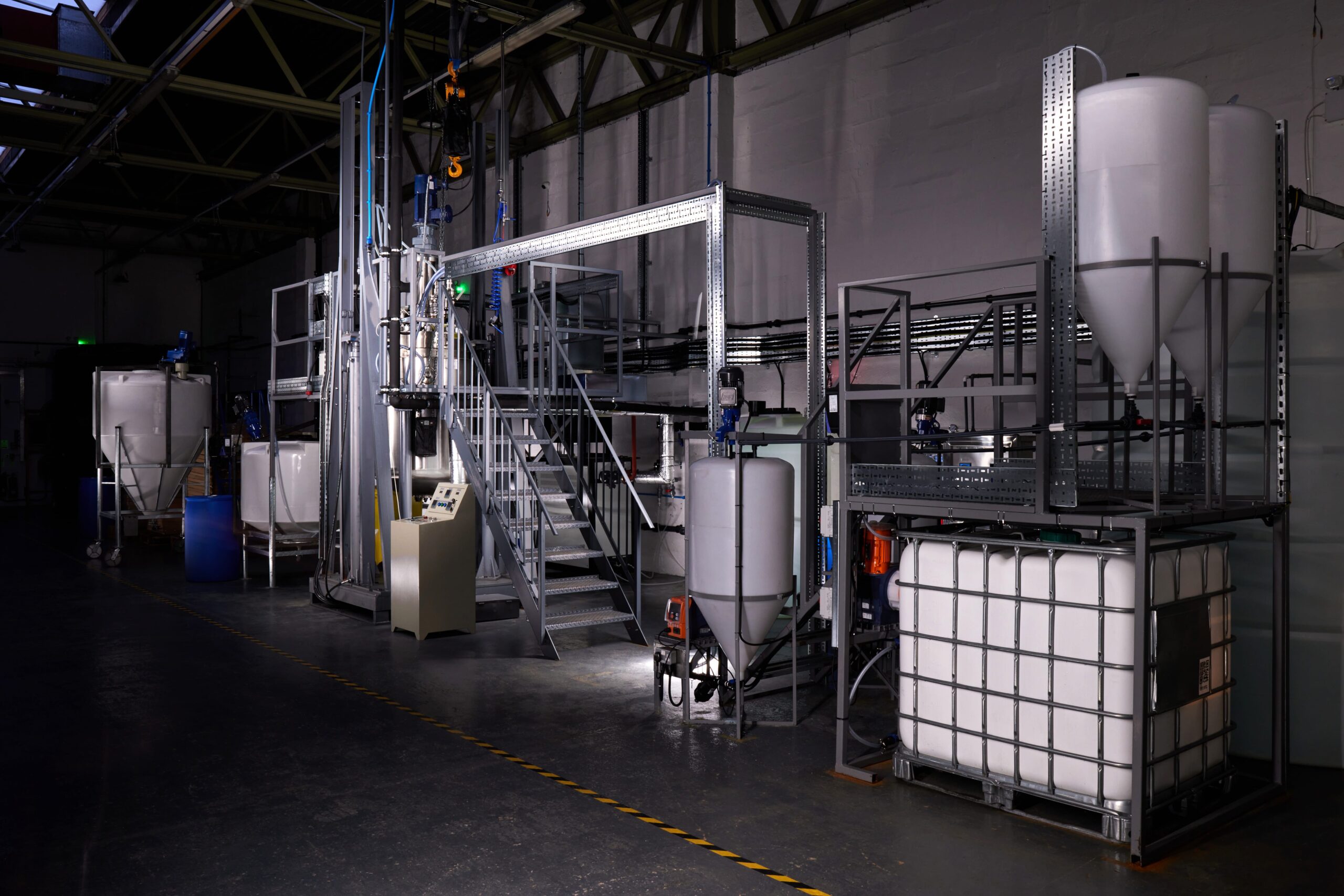
Since our founding, we’ve focused on solving exactly this challenge: building a domestic capability to manufacture high-performance battery cathode active materials here in the UK, using high-purity raw materials sourced primarily from Europe and North America From our pilot plant in Milton Keynes, we are producing not only LFP and LMFP (with an 80:20 manganese-rich ratio for enhanced energy density) but also the crucial precursor, iron phosphate. This puts us in a unique position to deliver fully localised cathode supply chains, from precursor to final product, with no reliance on China.
This isn’t just about safeguarding supply. It’s about resilience, innovation, sustainability, and economic opportunity.
The UK and Europe are racing to scale battery cell production, electric mobility, and renewable energy storage. But without control over the underlying materials, the cathode being the single most expensive and strategically important component in a battery cell, we are building on a weak foundation. The entire value chain is at risk if just one link, such as LFP supply, is disrupted.
Now, with China effectively locking the gates behind them, the urgency to develop independent capabilities has reached a critical level. And while private companies like Integrals Power are stepping up, this is a moment that demands bold public policy, coordinated investment, and pan-European industrial collaboration.
Let’s be clear: Europe can compete. We have world-class research, an ambitious industrial base, and rapidly-growing demand for energy storage and electrification. What we need now is alignment between policy and action.
Three imperatives must guide our strategic response:
- Accelerate local production of critical materials: Governments should prioritise the establishment and expansion of domestic cathode active material facilities, like our plant in Milton Keynes, and support the scaling of local precursor manufacturing. These investments must be fast-tracked as a matter of national and regional energy security.
- Secure supply chain resilience through IP ownership and vertical integration: It’s not enough to just build capacity. We must own the intellectual property that underpins cathode chemistry innovation. Integrals Power has developed its own process and formulation IP for both LFP and high-performance LMFP. This enables long-term competitiveness, de-risks our customers, and ensures sovereignty across the battery supply chain.
- Mobilise public-private partnerships to bridge the scale-up gap: Building a pilot facility is one thing, but scaling to commercial production requires significant capital and coordinated support. The UK’s Automotive Transformation Fund, the EU’s Green Deal Industrial Plan, and other public funding instruments, must channel their support towards strategically-important material providers, not just gigafactories, if Europe is to build a complete battery ecosystem.
This is not a time for incrementalism. With global supply chains fragmenting and geopolitical tensions rising, we must treat battery material independence with the same urgency as energy independence.
The economic opportunity is immense. As OEMs seek to diversify supply chains and derisk sourcing, there is a growing appetite for made-in-Europe materials, especially those that can meet EU ESG, localisation, and performance standards. Our LMFP material, with its 20% energy density improvement over conventional LFP, provides a powerful proposition for cell manufacturers seeking a safer and more cost-effective path to next-generation performance.
Likewise, the rise of energy storage systems, from national grids to remote installations, demands chemistries that are non-flammable, long-lasting, and cost-stable. LFP and LMFP are ideally suited to meet this demand.
Integrals Power was founded to anticipate these strategic shifts. We believe in building local strength with global ambition, and in doing so, de-risking Europe’s clean energy transition. But we cannot do it alone. Now is the time for collaboration, investment, and decisive policy action.
The energy transition will not wait. Let’s secure our battery future together.
About the author:
Behnam Hormozi is the founder and CEO of Integrals Power, a UK-based company specialising in next-generation battery materials. Prior to Integrals Power, he contributed to battery development projects for Cummins EV buses, trucks, and the McLaren P1. Under his leadership, Integrals Power has developed innovative Lithium Iron Phosphate (LFP) and Lithium Manganese Iron Phosphate (LMFP) battery cathode materials, enhancing energy density and performance for EVs. In 2023, Hormozi was recognised in Forbes’ 30 Under 30 in Europe for his significant contributions to manufacturing and industry. He has also been instrumental in establishing a UK pilot plant to produce battery materials, aiming to strengthen local supply chains and reduce reliance on overseas sources.
Written by