Energy Vault, PG&E unveil multi-day duration hydrogen-plus-battery storage microgrid

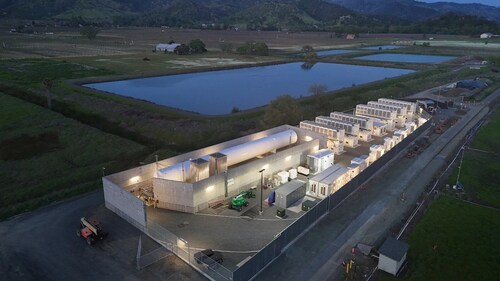
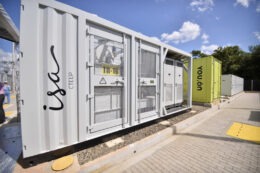
Californian energy storage business Energy Vault has announced completion of the 293 MWh Calistoga Resiliency Center (CRC) microgrid which features its VaultOS energy management system (EMS) and B-Vault DC [direct-current] batteries alongside hydrogen fuel cells.
The project will provide backup power for around 1,600 customers of utility Pacific Gas & Electric (PG&E) in the Californian city of Calistoga in the event of wildfires and extreme weather events.
A press release issued by PG&E yesterday to announce commercial operation of the microgrid stated the CRC will use hydrogen fuel cells to provide electricity in the “island mode” which will be activated in the event of shutdowns. The liquid hydrogen – which can be stored at an on-site tank – and Energy Vault’s batteries, will be able to supply peak output of 8.5 MW for at least 48 hours during grid power outages, fulfilling PG&E’s requirements for long-duration energy storage systems.
Energy Vault, which will own and operate the microgrid, is also supplying the EMS, which will enable “black-start” operation from a standing start in the event of blackouts and grid forming technology which will offer sufficient “inertia” for the lights to stay on while alternative power sources activate. The EMS will also co-ordinate the operation of all systems in concert with PG&E’s electricity distribution control center.
The project’s owner recently secured $28 million for the project – with the sale of investment tax credits securing part of the funding – and the CRC will operate under a long-term energy service agreement with PG&E.
PG&E described the hybrid microgrid as “scalable, bankable, and ready to be deployed across California and other regions prone to wildfires as well as locations where improved grid-resiliency is needed.”
Calistoga is the second project under the “own and operate” strategy of Energy Vault, which also develops gravity energy storage systems. The first project was the 57 MW/114 MWh Cross Trails battery energy storage system developed in Snyder, Texas, for utility the Electric Reliability Council of Texas.
Written by






Popular Posts