France introduces new pricing signals to boost strategic use of energy storage

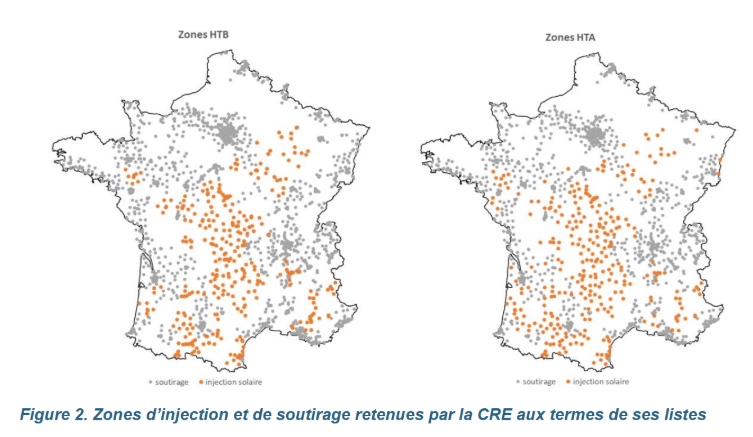
On Thursday, October 9, France’s Energy Regulatory Commission (CRE) published a list of areas eligible for the new injection-withdrawal tariff component under the recently adopted TURPE 7 framework. The new pricing structure will come into effect on August 1, 2026, and applies to users of the public electricity networks – TURPE 7 HTB (high voltage) and TURPE 7 HTA-BT (medium and low voltage).
The measure introduces a new tariff component designed to encourage more efficient use of the grid during periods of high electricity consumption or production. By targeting load balancing at the local level, the mechanism aims to reduce pressure on the network during peak periods.
The component distinguishes between two types of grid zones based on network sizing: “withdrawal zones”, where the grid is dimensioned primarily for consumption, and “injection zones”, where the grid must accommodate significant electricity input, such as from renewables. This will encourage batteries to operate intelligently, by avoiding charging or discharging during times when the network is under strain.
Operators of eligible facilities, including battery storage systems, will be financially incentivized to avoid charging or discharging during periods when the local grid is under strain. The initiative is part of a broader push to integrate more renewable energy into the system while maintaining grid stability.
Approximately 13% of network zones are constrained by “photovoltaic injection”, meaning that in these areas, the grid tends to be saturated in the production direction during peak solar generation hours – typically from 12:00 to 16:00 over 125 consecutive days in summer. In such zones, the injection-withdrawal tariff will remunerate storage systems for withdrawing electricity (i.e. charging) during these solar peaks.
Conversely, the majority of facilities classified in HTA injection zones are not classified in HTB injection zones. This is because the distribution network can be locally sized for injection from solar production, while the transmission network, which aggregates flows over a wider area, may be sized for withdrawal.
Around 50% of network areas are constrained on the withdrawal side, meaning the grid is often saturated in the consumption direction during peak demand periods – particularly during winter TURPE peak hours. In these areas, the injection-withdrawal tariff provides for remuneration of storage systems that inject energy back into the grid during these high-demand times.
Ultimately, the identification of these new eligible zones is intended to help stabilize the electricity network and support the broader integration of photovoltaic and other renewable energy sources, particularly when coupled with energy storage systems.
From pv magazine France
Written by


Popular Posts