Fortescue delivers 250 MWh battery powered by BYD to decarbonize mining

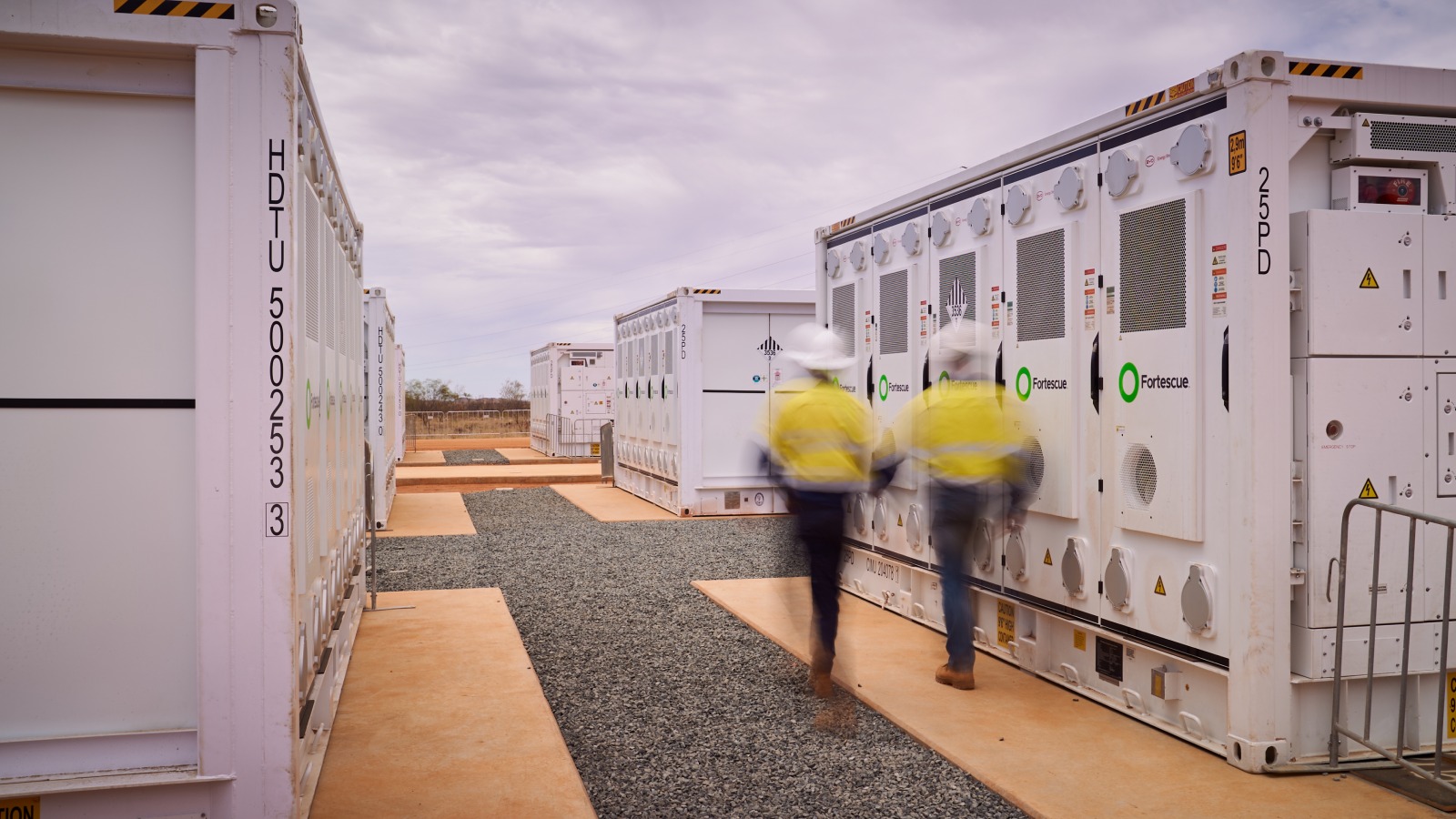
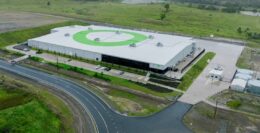
Fortescue has installed a battery energy storage system (BESS) at its North Star Junction site in Western Australia’s Pilbara region, in the country’s far north west, as it progresses plans to roll out the up to 5 GWh of large-scale storage systems required to decarbonize its energy supply over the coming years.
The new battery energy storage system has been installed alongside Fortescue’s existing 100 MW solar farm at the North Star site, adjacent to its Iron Bridge ore mining operation, about 140 kilometers south of Port Hedland in the state’s northwest.
The site is already home to a 26 MW battery energy storage system that was installed in 2023, along with a 16 MW battery at Fortescue’s Solomon mine.
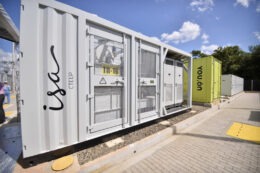
The new system includes 48 energy storage containers housing Chinese manufacturer BYD’s Blade Battery technology. These units, featuring liquid cooling systems designed to operate efficiently in Pilbara temperatures and conditions, store a total 250 MWh of solar power and are capable of delivering 50 MW of power for five hours. BYD’s MC Cube BESS platform is being used.
Based on previous announcements, Gamesa Electric supplied Fortescue with 12 Gamesa Electric Proteus PCS-E inverters as part of the North Star Junction project.
Fortescue said the renewable power will be delivered to its Pilbara Energy Connect (PEC) network overnight, helping reduce its reliance on diesel.
Fortescue Metals and Operations Chief Executive Officer Dino Otranto said the battery is a major step in the company’s ambition to replace fossil-fuelled generation with renewable energy.
“This is a big moment for Fortescue,” he said. “We’re fundamentally changing the way we power our mines. These systems let us store solar power and use it when we need it most, helping us cut diesel and gas and run our sites on renewable energy.”
The North Star battery is the first instalment in a planned rollout of 4 GWh to 5 GWh large-scale storage systems Fortescue said is needed to decarbonize its mining operations.
Battery energy storage is a key component of the company’s PEC project that features large-scale solar and wind generation. It also includes a major transmission project that will connect Fortescue’s mine sites.
“We’re creating a renewable energy ecosystem,” the company said. “[We’re] building solar farms, wind installations, battery storage systems, and a 629-kilometer transmission network … designed to integrate our operations into a unified, green-powered grid.”
Fortescue’s next BESS installation will be at its Eliwana site, with a 20 MW / 120 MWh system scheduled for delivery and installation in early 2026.
The company is also progressing construction of its 190 MW Cloudbreak Solar Farm, which is now almost halfway complete, and has built more than 460 km of transmission lines as part of the PEC project.
From pv magazine Australia.
Written by





Popular Posts