Helios 104 MWh Tesla battery project achieves commercial operations in Japan

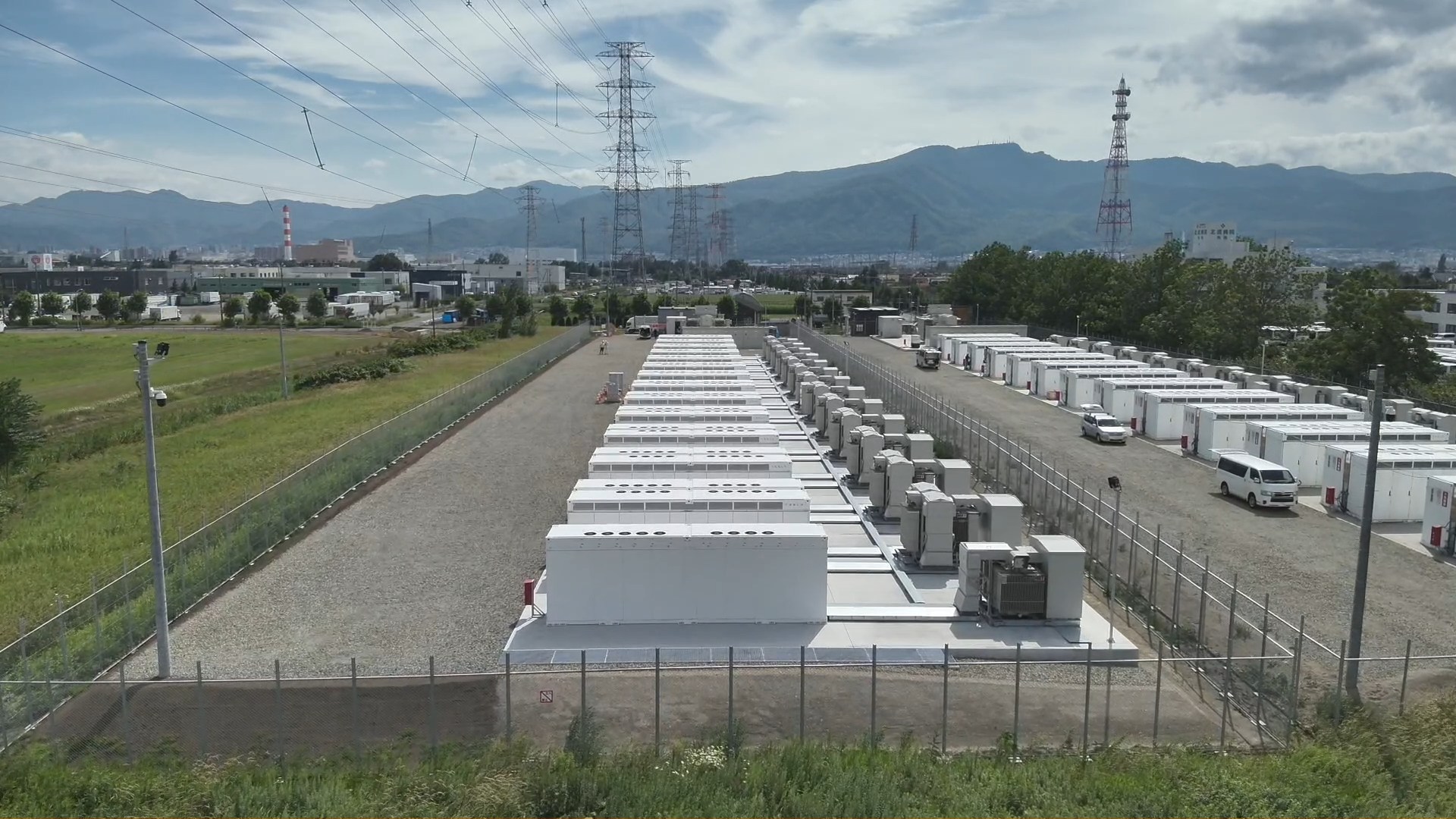
One of Japan’s first fully merchant battery energy storage systems has begun commercial operations, with Manoa Energy announcing the news this week for its Helios 50 MW / 104 MWh battery project in Sapporo, Hokkaido, in the snowy north of the country.
The plant will trade in Japan’s wholesale market from launch, with participation in the balancing market expected in 2026 and the capacity market later this decade. The system is also classified in Japan as “Extra High Voltage,” (EHV) for an asset that connects at and above 22 kV, a relatively early example for standalone BESS. EHV-connected assets are permitted in Japan, but must comply with stricter frequency-response and protection requirements, and more involved interconnection studies in advance of approval.
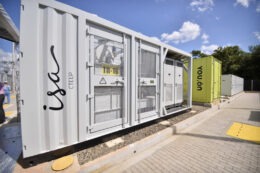
Developed by Manoa, which is 100% owned by Brawn, along with HD Renewable Energy Japan and Brawn itself, the Helios BESS uses Tesla Megapack 2XL units and was built by Hokkaidenko Corporation, with construction beginning in April 2024.
Scott Reinhart, CEO of Brawn, said: “Successful completion of our first standalone EHV BESS asset emphasizes our commitment to sustainable infrastructure investment in Japan. Brawn will continue to develop our additional 1GW pipeline of EHV and High Voltage assets throughout Japan, for commercial operations between 2026 and 2030.”
Dean Cooper, Head of Manoa Energy and COO of Brawn, said: “Japan’s energy storage sector is experiencing rapid acceleration, positioning Japan among the world’s most dynamic energy storage markets. Manoa Energy is excited to be part of Japan’s energy transition momentum, as the country emphasizes battery energy storage systems as a strategic priority for its critical energy infrastructure.”
Helios acting as a true merchant asset without a contracted offtaker offers a relatively early test of whether Japan’s grid and power markets can support utility-scale batteries on market revenues alone.
Japan’s policy framework has gradually shifted toward supporting storage, most visibly through the Long-Term Decarbonization Auctions. A more unusual subsidy was recently announced to advance storage when tied to new perovskite-type solar PV installations.. A recent unusual subsidy was announced to advance storage when tied to new perovskite-type solar PV installations.
Written by





Popular Posts