Home energy management systems advance: New products and features from EcoFlow, Tibber, Fenecon


The evolution of the residential battery storage stack has seen strong developments around design, safety, functionality, and cost, both in terms of the physical batteries and hybrid inverters, but also software features. The battle over home energy management systems, or HEMS, is as fierce as the hardware battery and cell tech side, and includes both manufacturers, but also software from third parties that offer potentially better everyday experiences — think of using Apple’s CarPlay to control maps and music versus existing in-car software.
This week alone saw three companies, from EcoFlow, Tibber, and Fenecon, drop new products or features for their systems.
EcoFlow: New visual hub, and EV integration
At Solar Solutions Düsseldorf, EcoFlow announced its continued focus on visibility and orchestration of the home energy stack with the new PowerInsight 2 Smart Home Monitor.
The PowerInsight 2 serves as both a touch-screen controller and a window into EcoFlow’s HEMS activity. The new tablet-like model offers key updates over the original, as it serves as the visual command center for the ecosystem, including a larger battery, an 11-inch touch screen with higher resolution for visual fidelity, and more. One feature for smart homes is Matter v1.4 compatibility, meaning control over EcoFlow’s ecosystem, along with compatible lights, plugs, and other smart devices.
And in terms of expanding HEMS interoperability, EV charger manufacturer go-e is now integrated, which allows the EcoFlow system to directly orchestrate EV charging sessions, utilizing solar surplus and dynamic pricing windows to reduce mobility costs, without requiring middleware.
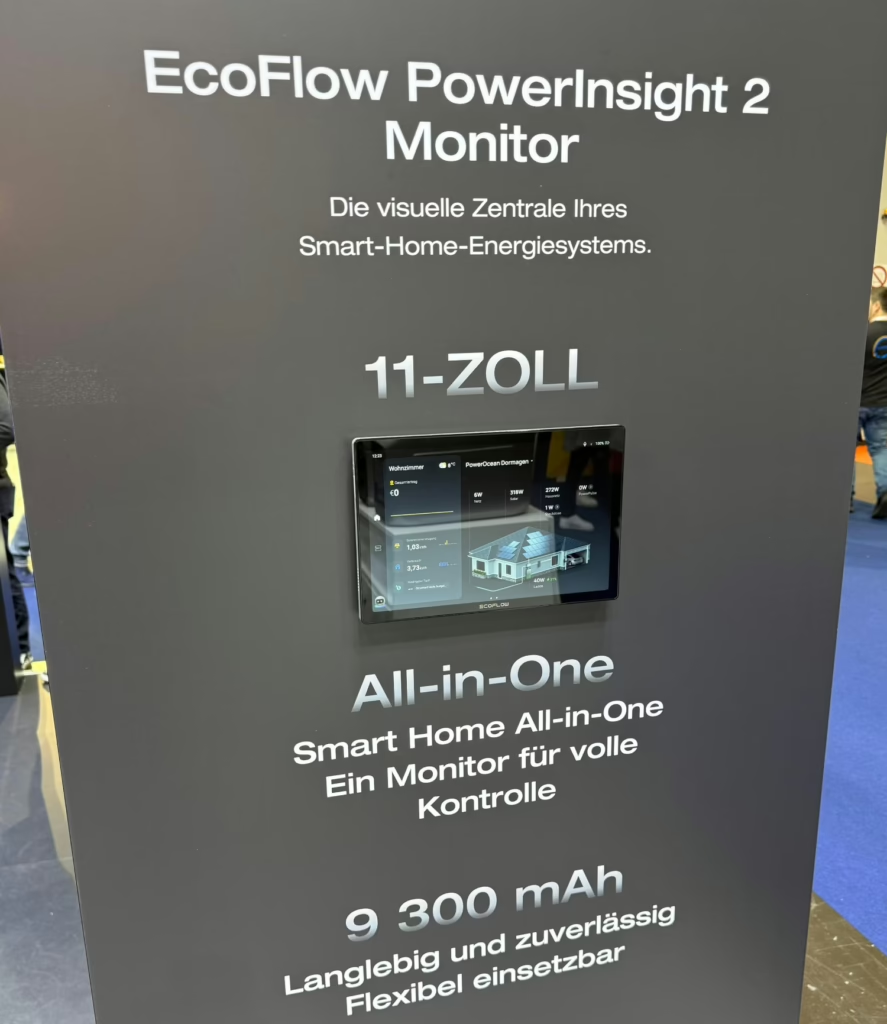
Image: EcoFlow’s Powerinsight 2 as shown at its booth in Germany with its 11-inch display and 9300 mAh battery for flexible usage (image supplied)
Tibber: Unlocking Grid Arbitrage for Batteries
Tibber rolled out a software update targeting the owners of third-party battery storage systems. The new “Smart Battery” feature helps Tibber customers and users catch up to other systems, and now allows compatible batteries to charge directly from the grid during periods of low or negative electricity prices, rather than relying solely on solar surplus.
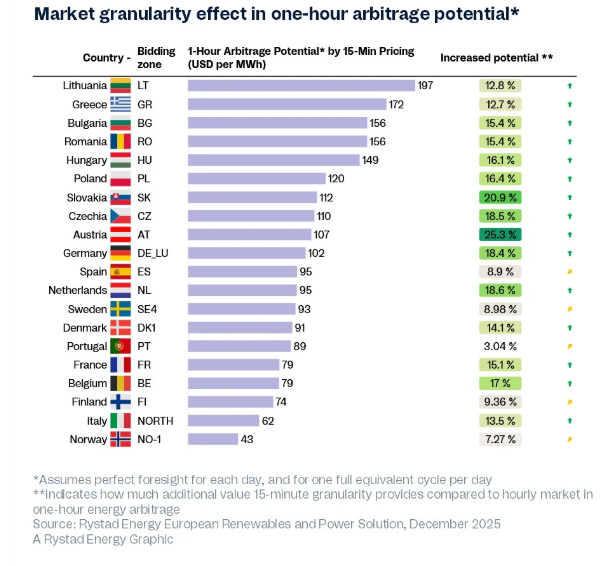
The system makes decision checks every 15 minutes to charge the battery as cheaply as possible, including from the grid or waiting for local PV generation. Tibber claims this grid arbitrage approach can generate savings of up to 740 euros per year for the average user, after a three-month test phase with 1,200 existing customers. Part of the switch aligns with the day-ahead European electricity market switching to 15-minute intervals.
Tibber is also launching the Smart Battery feature with compatibility for Kostal and Solax inverters, with further integrations planned for 2026. More information from pv magazine Germany (in German).
Fenecon: Solving solar and storage in winter
German storage specialist Fenecon has updated its FEMS (Fenecon Energy Management System) with a new ‘Energy Roadmap’ specifically engineered for the winter months. Recognizing that standard PV-optimization logic often fails when solar production drops in winter, the update focuses on intelligent grid charging.
The updated FEMS utilizes improved weather forecasting and historical consumption pattern recognition, improving accuracy by a reported 55%, to fill the battery from the grid during nighttime windows when grid power is cheap, avoiding peak-price grid power. The update has been and will continue to be pushed over-the-air to active systems automatically.
The company confirmed to ESS News that the new and improved forecast model is both for systems in Germany and those also working outside of Germany. More information from pv magazine Germany (in German).
Written by






Popular Posts