Tropical paradise gets 24/7 electricity via 6.69 MWh hybrid microgrid

The Manila Electric Company (Meralco) has announced it will energize over 1,000 households, businesses, and essential facilities on Cagbalete Island in Mauban, Quezon, a prized location just some hours travel from Manilla in the Philippines.
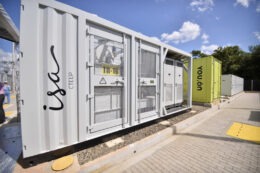
Meralco said it signed a microgrid service contract with the National Power Corporation (Napocor), which includes a 6.69 MWh battery energy storage system (BESS) with a 2.8 MWp solar photovoltaic (PV) array. Four 0.25 MW diesel backup units are also part of the project, in order to supply round-the-clock energy to the island.
Operations are expected to begin in December 2025, with the Cagbalete project set to achieve 100 percent household electrification for the island for the first time.
Meralco executive vice president and chief operating officer (COO) Ronnie Aperocho said that the project delivers hope and a brighter future for residents of Cagbalete Island.
“This is more than electricity – it’s about giving the light of love, joy, and hope to our fellow Filipinos in Cagbalete Island,” Aperocho said.
“Through this collaboration, more households will have a brighter Christmas, and soon, the entire island will benefit from stable and reliable electricity that will power their lives for the better.”
The Philippines had previously been the home of one of the world’s largest grid-scale solar and storage projects with the 3.5 GW PV / 4.5 GWh BESS Meralco Terra Solar Project, which was financed in
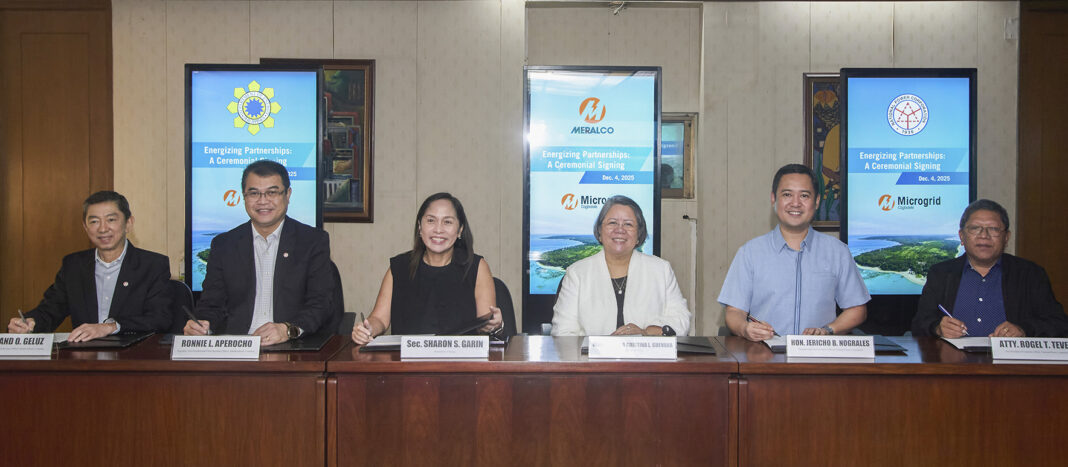
Government officials, including Philippines Department of Energy (DOE) (DOE) secretary Sharon Garin and Napocor president and CEO Jericho Nograles, witnessed the signing ceremony. The DOE emphasized that the microgrid will allow subsidies for the project under the universal charge for missionary electrification (UCME), to ensure affordability for residents of Cagbalete Island.
“The responsibilities outlined in the agreement: design, construction, operation, billing, maintenance, guaranteed dependable capacity, and the 24/7 delivery of electricity to all existing and future households; these are not light commitments,” Nograles said.
“They reflect a strong confidence in the mission and a readiness to support communities that rely on us for progress.”
Garin outlined that the project is proof that remote communities do not have to be left in the dark.
“Cagbalete Island is proof that off-grid communities do not have to be left behind,” Garin said. “With the right policies and partnerships, we can power inclusive growth, support local industries, and give our people the tools they need to build a better future.”
Written by





Popular Posts