Could Arctic-proven storage be the answer to Europe’s winter energy puzzle?

We in the UK and Europe love to complain about the cold, but when the mercury really does drop, the challenge goes beyond turning up the thermostat. Every winter, there is a critical and escalating system imbalance at play. We see massive simultaneous load increase just as key renewable sources often see a dip – solar generation is minimised due to shorter, cloudier days and wind speeds can be too low to rely on to meet surging demand.
Historically, this has forced grid operators to lean on fast-acting gas peaker plants – costly, carbon-intensive assets that fire up for just a few hours to keep the lights on. This reliance underscores a fundamental weakness: our system lacks the flexibility to maintain grid frequency when demand spikes and renewables lag.
Enter BESS: A Strategic Shock Absorber
For many, the answer lies in Battery Energy Storage Systems (BESS) – a solution that can step in to guarantee fast-response, high-capacity, clean power exactly when the weather makes other sources unreliable. Indeed, the UK’s National Energy System Operator (NESO) has confirmed that stronger winter grid margins forecasted for 2025 are largely due to the connection of new BESS capacity.
A winter evening on the grid
So, what does flexibility look like in practice? Imagine a typical winter evening: temperatures plunge, millions of households begin to return from work, ovens warm up and heating systems kick in. Meanwhile commercial sites are still humming, and the grid braces for that familiar peak window between 4pm and 7pm. Given the season, add another layer into the equation – electric vans and fleet vehicles plugging into recharge for the next day’s delivery routes.
This is the moment when BESS stops being a simple battery and becomes a critical shock absorber for the grid, stepping in to keep supply and demand in balance. Storage can deliver essential services during these critical hours:
- Instantaneous supply – When a cold snap hits and demand spikes, conventional power plants take time to ramp up. BESS, however, discharges its stored energy in milliseconds, preventing dangerous frequency drops.
- Bridging the renewable gap – BESS acts as a reserve power plant, having stored clean energy (perhaps from an offshore wind farm on a windy night or from a sunnier day earlier in the week) and delivering it cleanly to keep the lights on.
- Strategic resource management – By deploying large-scale storage, we reduce the grid’s reliance on costly gas peaker plants, making the system cleaner, and stabilising prices for consumers during peak winter consumption.
The strategic importance of BESS in winter is becoming evident. So, if Europe’s energy transition will increasingly depend on storage, the question is whether BESS can deliver even when winter pushes systems to their limits. Our experience near the Arctic Circle provides the answer.
Lessons from the Arctic Circle
Europe may not face Arctic extremes, but lessons learned from the region – where systems endure sub-zero stress – are directly applicable to ensuring winter reliability across the continent. When storage can perform flawlessly in one of the harshest climates on Earth, it gives grid operators confidence that the same technology can handle Europe’s seasonal peaks with ease.
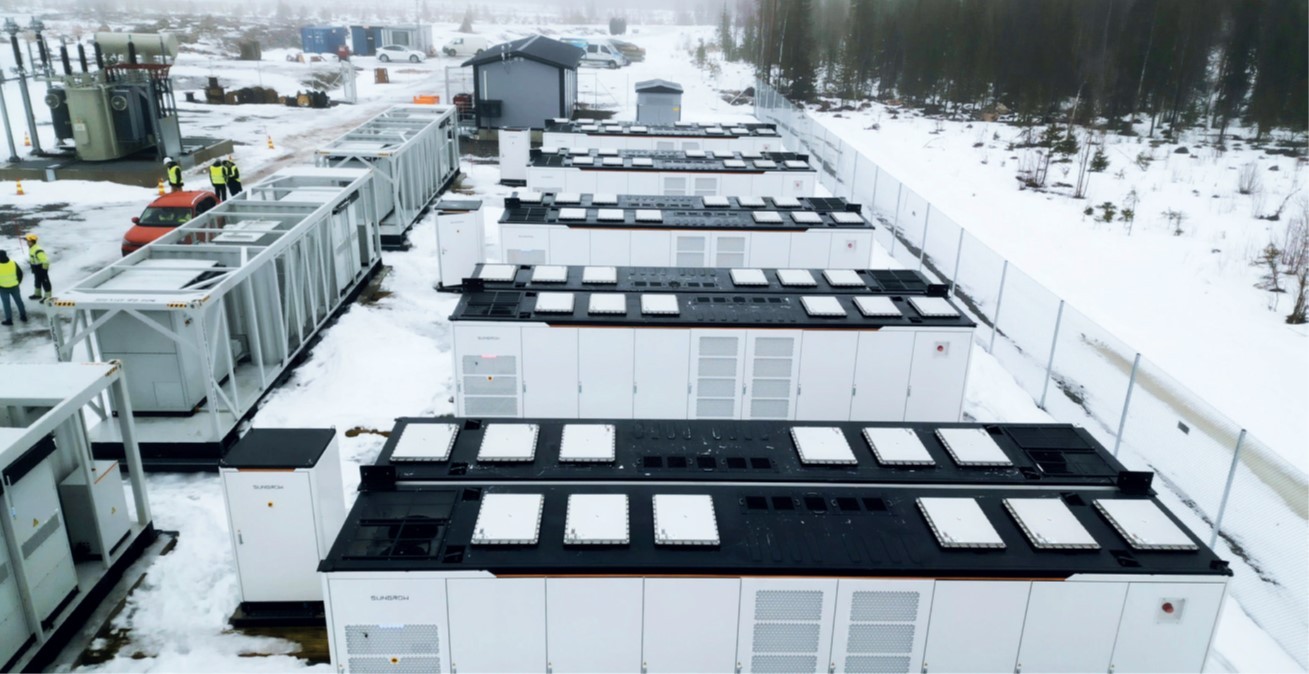
Take our deployment in Simo, Finland, just 100 kilometres from the Arctic Circle. If BESS can perform reliably there, it can handle the rest of Europe’s cold snaps with ease. The project, a 60 MWh installation delivering 30 MW of output, uses Sungrow’s PowerTitan liquid-cooled system with lithium iron phosphate batteries, housed in pre-assembled 20-foot containers for rapid installation.
Operating in such extreme conditions taught us invaluable lessons about designing for winter reliability. Firstly, liquid cooling is essential to prevent them thermal stress and ensure consistent performance in sub-zero temperatures. Second, modular, pre-assembled modular units simplify logistics and reduce on-site work in remote areas. And finally, low-maintenance architecture minimises intervention, critical for regions where winter access can be challenging.
These same principles are what make BESS a practical solution for Europe’s winter peaks. They reduce operational risk, extend system life, and ensure flexibility when demand surges and renewable sources dip. Projects like Simo demonstrates that with the right engineering, BESS can thrive even in the harshest conditions.
Why this matters now
Winter reliability remains a sticking point on Europe’s transition to cleaner energy, and without flexible resources to meet seasonal peaks, we risk higher costs, greater carbon emissions, and supply insecurity.
There may not be a silver bullet, but battery storage is fast becoming a vital piece of the puzzle for a stable and sustainable grid during winter. It complements renewables, supports decarbonisation, and provides the agility that traditional assets cannot match.
Looking ahead, the industry must work together to understand how quickly we can scale the technology and draw from deployments in some of the harshest climates to ensure systems are engineered for resilience. For Europe, the lesson is clear: by engineering systems for resilience now, we can ensure that when winter bites, the lights—powered by clean, reliable BESS—stay on.
About the author:
James Li is Director ESS Europe at Sungrow. With extensive expertise in renewable energy and power system engineering, James leads the development and execution of a Europe-wide strategy for energy storage systems. In his role, James is responsible for building and managing a skilled team, overseeing the design and consultancy for ESS solutions, and collaborating with product, sales, marketing, and project delivery teams to ensure seamless implementation across regions.
Written by





Popular Posts