Azerbaijan makes progress on big BESS rollout, Kyrgyzstan begins ESS strategy

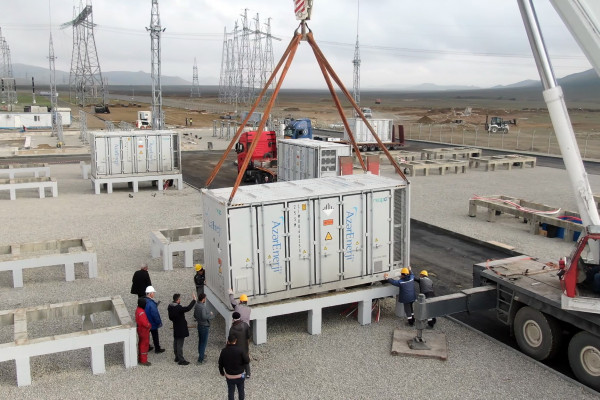
Azerbaijan’s electrical power producer AzerEnergy has confirmed the purchase and installation of several large battery energy storage systems (BESS), which it says will be put into operation in the Absheron and Agdash regions in the coming months.
ESS News reported in September 2025 that AzerEnergy had commenced building a series of BESS projects with a total capacity of 250 MW/500 MWh.
The systems are strategically located near substations. The batteries are being built near the 500 kV Absheron substation near the capital of Baku and the 220 kV substation located in central Azerbaijan. The first batch of batteries has already been delivered, AzerEnergy confirmed.
The equipment was assembled in China before being loaded onto ships and transported to Azerbaijan. Each BESS weighs 36 tons. 15% of the storage systems have already been delivered and the remaining 85% will be delivered and installed by April 2026, the company said.
The organization added that Azerbaijan’s renewable energy buildout is continuing rapidly, and the creation of large-scale BESS are key to the strategy. AzerEnergy said the batteries are the largest to have been developed in Azerbaijan to date, adding that they would increase the stability of the nation’s energy system, maintaining frequency, stability, covering peak loads and smoothing the load schedule during hours of solar energy decline.
Meanwhile, in Central Asia, Kyrgyzstan’s government has signed a memorandum of understanding (MoU) aimed at developing energy storage systems, according to the country’s national news agency, Kabar. The MoU signing ceremony was attended by representatives of big companies in the energy storage industry, including CATL, Ampace, and YXL.
Kyrgyzstan’s First Deputy Chairman of the Cabinet of Ministers Daniyar Amangeldiev and the Minister of Energy Taalaibek Ibraev also attended.
A pilot project has already been launched under the deal, Kabar reported. The pilot features a 100 kW energy storage unit with 200% capacity installed in test mode. The unit is powered by rooftop solar panels, delivering 100 kW of electricity for two hours and 15 minutes.
Kyrgyzstan’s electricity network is aging and needs modernization, according to the International Energy Agency (IEA). Much of the country’s power comes from hydroelectric sources and coal. However, the government is moving towards renewables and in September 2025, The Central Times of Asia reported that the Kyrgyz Ministry of Economy and Commerce signed a memorandum of cooperation with Russia’s state atomic energy corporation Rosatom, Energy Solutions Kyrgyzstan LLC, and Elbrus Construction Company LLC to explore the development of lithium battery and energy storage system production.
Written by





Popular Posts