Azerbaijan starts work on its largest battery projects, Uzbekistan to host first major wind+storage hub

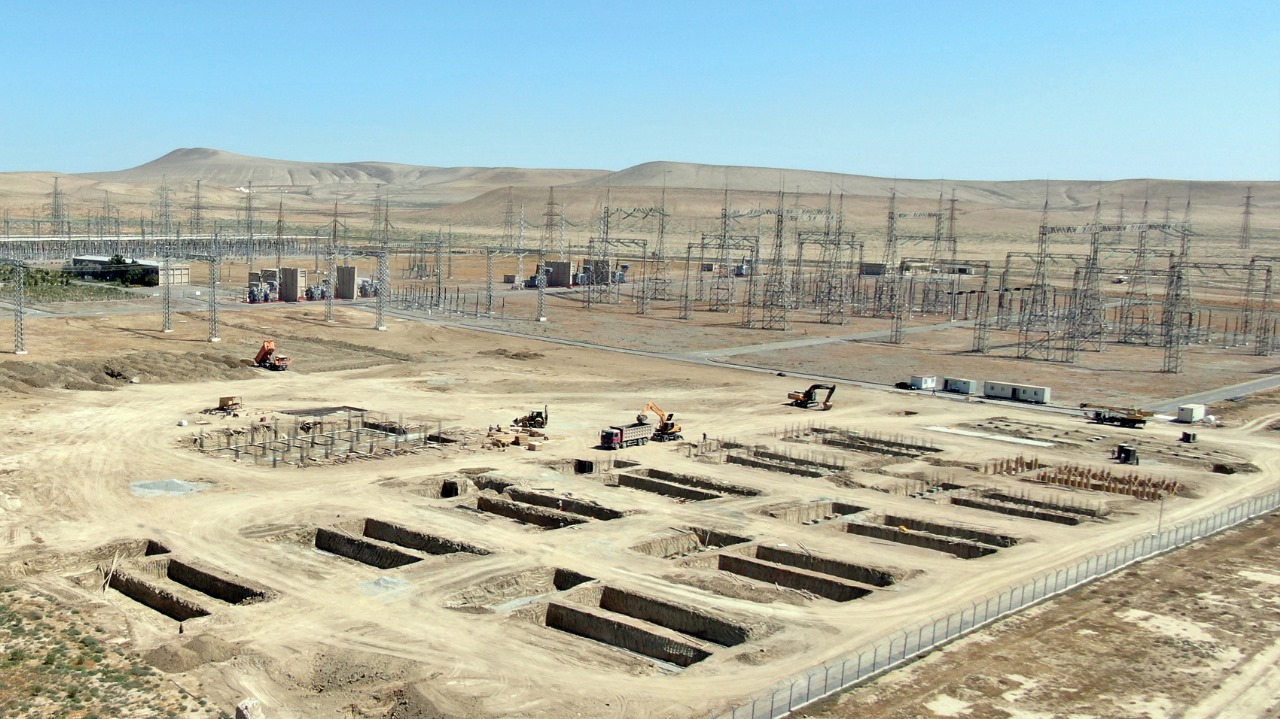
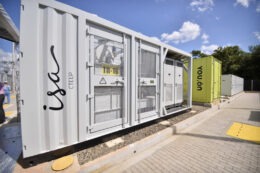
State-owned electricity generation and transmission company AzerEnergy is building a 250 MW/500 MWh battery energy storage system (BESS) projects – the largest of their kind in Azerbaijan to date.
The systems are being built on two key locations – the 500 kV Absheron substation near the capital and the 220 kV Agdash substation in central Azerbaijan. According to AzerEnergy, construction is in progress, and key system components are being delivered to the sites.
“The deployment of battery systems at this scale marks a first not only for Azerbaijan, but for the entire Commonwealth of Independent States (CIS) region,” the utility said in a press release.
These BESS installations will improve grid stability, enable frequency regulation, compensate for active power deficits, meet peak loads, and smooth load curves during sunset hours. Both sites will also have black start capability to help restore the grid in the event of a major outage.
AzerEnergy notes that these projects will strengthen the country’s energy independence and ensure reliable operation of the grid in both parallel and island modes within the synchronous power zone shared with neighboring CIS countries.
As part of broader decarbonization efforts, AzerEnergy aims to integrate 2 GW of solar and wind power into the national grid by 2027. To support this goal, it is constructing the 500/330 kV Navahi Energy Junction – one of the country’s largest substations – featuring high-voltage transmission lines that extend across Azerbaijan.
Uzbekistan leads on wind+battery integration
While AzerEnergy touts its project as the region’s largest BESS, a significantly bigger standalone battery system is taking shape in neighboring Uzbekistan. During COP29 in Baku, Saudi-based developer ACWA Power received contractual priority to develop a 2 GWh BESS project, allowing the company to offer competitive tariffs. The agreement is valid for two years, with the option for extension by mutual consent. Both parties will collaborate on feasibility studies to identify optimal locations.
In its latest move, ACWA Power, in partnership with the Asian Development Bank (ADB), has signed a $51 million loan package to develop the Nukus 2 Wind and Battery Energy Storage Facility in the Qoraozak district of the Republic of Karakalpakstan, Uzbekistan.
The project, initiated last year by ACWA Power Beruniy Wind FE LLC, includes a 200 MW wind farm and a 100 MWh battery storage system, along with associated transmission infrastructure. It is billed as Central Asia’s first utility-scale wind + BESS project.
The financing includes: $25.4 million from ADB’s ordinary capital resources and $25.4 million from the Leading Asia’s Private Infrastructure Fund 2 (administered by ADB).
Additional parallel lenders include the Asian Infrastructure Investment Bank (AIIB), Dutch Entrepreneurial Development Bank (FMO), Standard Chartered, and Saudi EXIM Bank.
As part of its support for Uzbekistan’s energy sector, ADB also provided a $7.5 million credit guarantee backed by the Uzbek government. This guarantee was included in the bidding process to reduce financial risk and increase competition, which helped secure a low tariff for the Nukus 2 project.
“This project marks a significant step in Uzbekistan’s transition to a low-carbon energy future,” said ADB Country Director for Uzbekistan, Kanokpan Lao-Araya. “By combining wind energy with a battery energy storage system, the project will enhance grid stability, improve energy reliability, and support the country’s goal of achieving 54% renewable energy in its electricity mix by 2030.”
Uzbekistan’s BESS pipeline expands
Though still in early stages, Uzbekistan’s rollout of battery storage is gaining momentum. In May 2024, Nur Bukhara Solar PV LLC FE, a project company owned by Masdar, set out to build a 63 MW battery energy storage system alongside a 250 MW solar plant in the Alat district of the Bukhara region, billed as Uzbekistan’s first big BESS project.
Most of the major announcements, however, came from the Saudi Arabian developer itself. In 2024, ACWA Power landed financing for the Tashkent Riverside project, which includes a 200 MW solar plant and a 500 MWh BESS, and secured funding from International Finance Corporation for the construction of a 1 GW solar plant, 668 MW battery system, and 500 km of transmission lines in Uzbekistan.
ACWA Power also agreed with Japan’s Sumitomo Corp to develop 2.5 GW of renewable energy projects with 968 MW of battery storage in Uzbekistan, representing a combined investment of $4.2 billion.
By 2030, Uzbekistan aims to install 25 GW of renewable energy capacity. In February 2025, the country’s share of renewables in the energy mix stood at 16%.
Written by





Popular Posts