China powers up world’s largest liquid air storage project

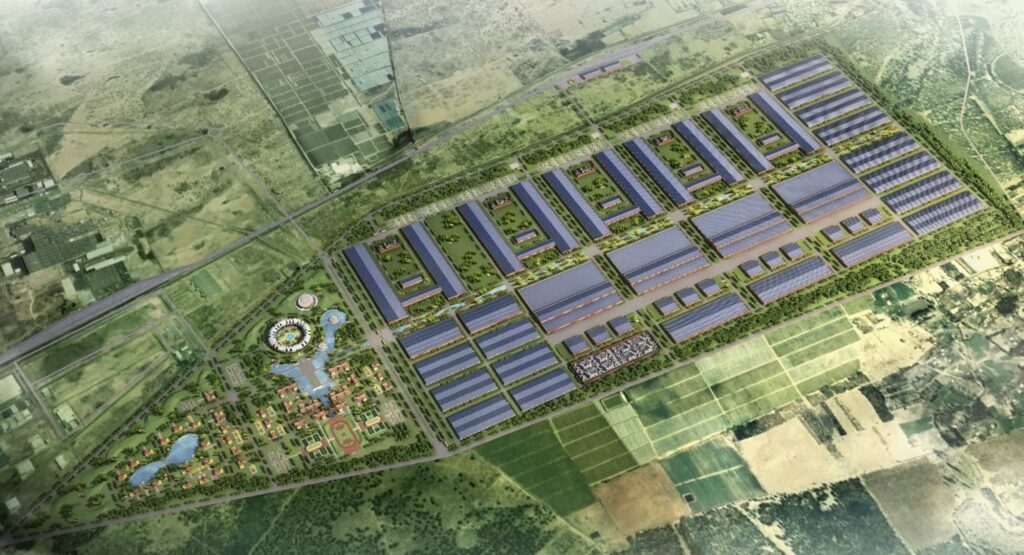
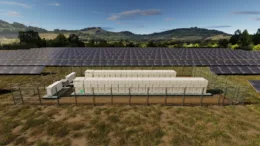
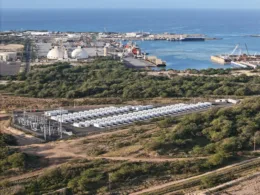
In a major milestone for long-duration energy storage, China has activated the world’s largest liquid-air energy storage facility, known as the Super Air Power Bank. Built by China Green Development Investment Group (CGDI) in collaboration with the Technical Institute of Physics and Chemistry of the Chinese Academy of Sciences (TIPC-CAS), the facility is located in the Gobi Desert near Golmud city, in Qinghai Province.
The plant works by compressing and cooling air to –194°C, liquefying it, and storing it in specialized tanks. When electricity is needed, the liquid air expands over 750 times its original volume, driving turbines to generate power. Essentially, the project transforms air into an energy storage carrier under extreme cold.
During off-peak hours, excess electricity powers compressors to pressurize purified air into high-pressure, high-temperature gas. This gas is then cooled and liquefied in a cold box before being stored in low-temperature atmospheric-pressure tanks. The heat generated during compression is captured in high-pressure spherical tanks. When peak electricity demand arrives, the liquefied air is pressurized and vaporized. Assisted by both the recovered heat and cold-storage medium, it forms high-pressure, high-temperature gas that drives expanders to generate electricity.
The 60 MW/600 MWh Super Air Power Bank can run continuously for 10 hours, generating approximately 180 GWh annually, enough to power around 30,000 homes. The facility will play a critical role in balancing fluctuations from renewable energy sources such as solar and wind.
CGDI reported that the project overcame technical bottlenecks in ultra-low-temperature cascade cold storage, developed an atmospheric-pressure low-temperature storage system, and solved core challenges in air storage and constant-pressure release.
Construction began on July 1, 2023, and the high-altitude environment posed numerous engineering challenges. By integrating seven internationally innovative technologies with fully independent intellectual property rights, the team successfully scaled the technology from the hundred-kilowatt level to the ten-thousand-kilowatt level.
Now, CGDI announced that all infrastructure and equipment installation, using fully domestically produced components, is now complete, and the facility has entered the intensive commissioning stage.
Globally, liquid air energy storage (LAES) remains at a nascent or early commercial stage. Most projects operate at pilot or small commercial scales, with few large-scale plants currently in operation. Another notable project under construction is Highview Power’s 300 MWh LAES plant in the UK.
LAES offers several advantages: it can store electricity for 10+ hours or even days, and does not require specific geology like compressed air energy storage (CAES). Round-trip efficiency averages 50–60%, reaching 60–70% with advanced heat recovery systems. However, LAES still faces challenges, including high upfront capital costs due to cryogenic tanks and compressors, and limited commercial experience worldwide.
More about
Written by


Popular Posts