Anker Solix S2000 review: 2 kWh power station built for the long haul
Portable power stations have settled into a familiar shape over the past few years. A 2 kWh, ~2 kW unit from one of the big four — Anker Solix, EcoFlow, Bluetti, or Jackery — has become the default size for a home backup-and-camping crossover. The new entrant in this slot from Anker, the S2000, doesn’t try to upend that formula. Instead, it pushes on two fronts that matter more the longer you actually live with one of these devices: cycle life and idle losses.
The headline numbers are 2,009.6 Wh of LiFePO₄ capacity, a 1,500 W AC inverter, and, per Anker, 10,000 charge cycles with a 15-year design life from next-generation 314 Ah cells.
Active idle power draws sit at 6 W with AC outputs on and roughly 2 W with all outlets disabled, under Anker’s “OptiSave” branding first seen on last year’s C2000 Gen 2.
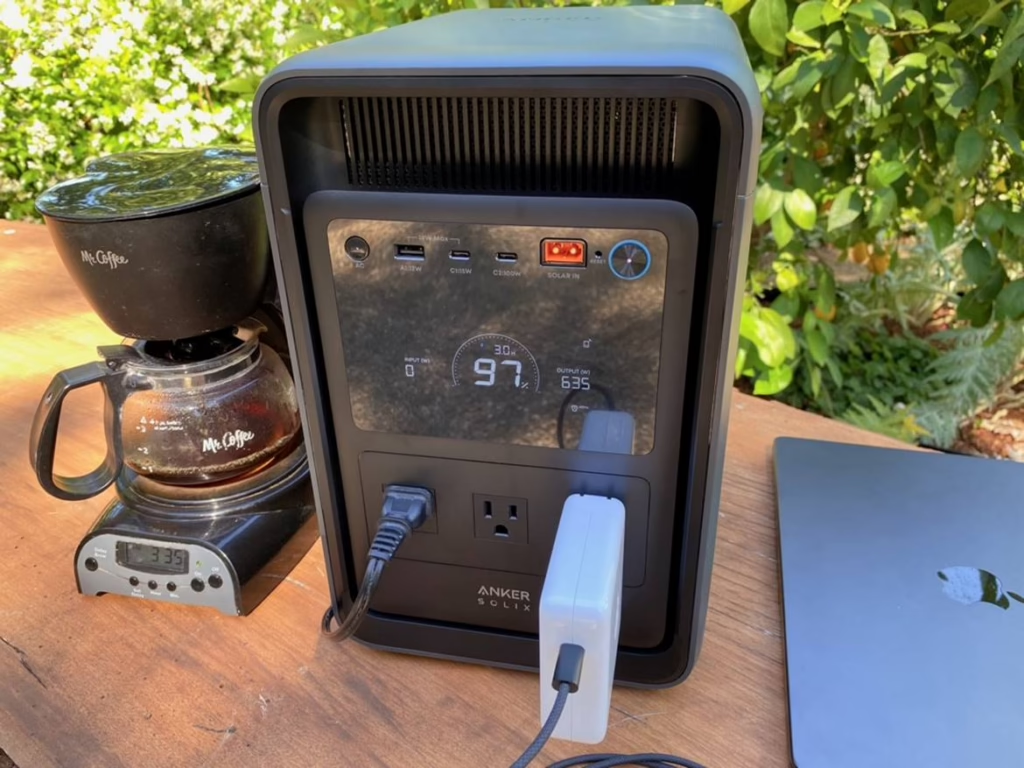
A coffee maker pulls 635 W from the S2000 — comfortably under the 1,500 W AC ceiling and a typical campsite-grade load. Image: ESS News
Where the C2000 Gen 2 chased peak output (2.4 kW continuous, 4 kW surge) and a 58-minute recharge, the S2000 trades some of that headroom for what looks like a longer-living, lower-overhead unit aimed squarely at fridge-class loads and partial-home backup. It is, in other words, a different product despite the similar package — and after several days of running it as a UPS, an energy monitor, and a workshop power source, it earns most of the claims on the spec sheet.
Form factor and first impressions
The S2000 measures 8.2 × 11.1 × 12.7 inches (208 × 282 × 323 mm) and weighs 35.7 lbs (16.2 kg). That’s compact for the class, and in practice, it’s the first portable power station this reviewer has lived with, and the density is genuinely surprising — a useful reminder of how much energy 2 kWh of LFP actually represents. Anker’s marketing presents the unit as light enough to carry solo, and it is, but you will notice it. A second handle would be welcome for carrying it up stairs.
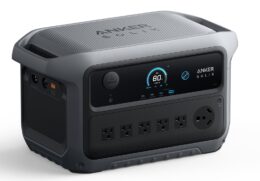
Build quality matches Anker’s track record with matte plastic shell, recessed handles, front-mounted display, and a sensible split between front and rear outlets. Five 120 V AC sockets sit across the unit (1,500 W total, 12.5 A). On the front face are three USB ports: a 100 W USB-C PD port, plus a 15 W 5 V USB-C and a 12 W 5 V USB-A that share a combined 18 W limit. There is no TT-30 RV plug, but at 1,500 W output the unit couldn’t supply what a TT-30 is designed for anyway.
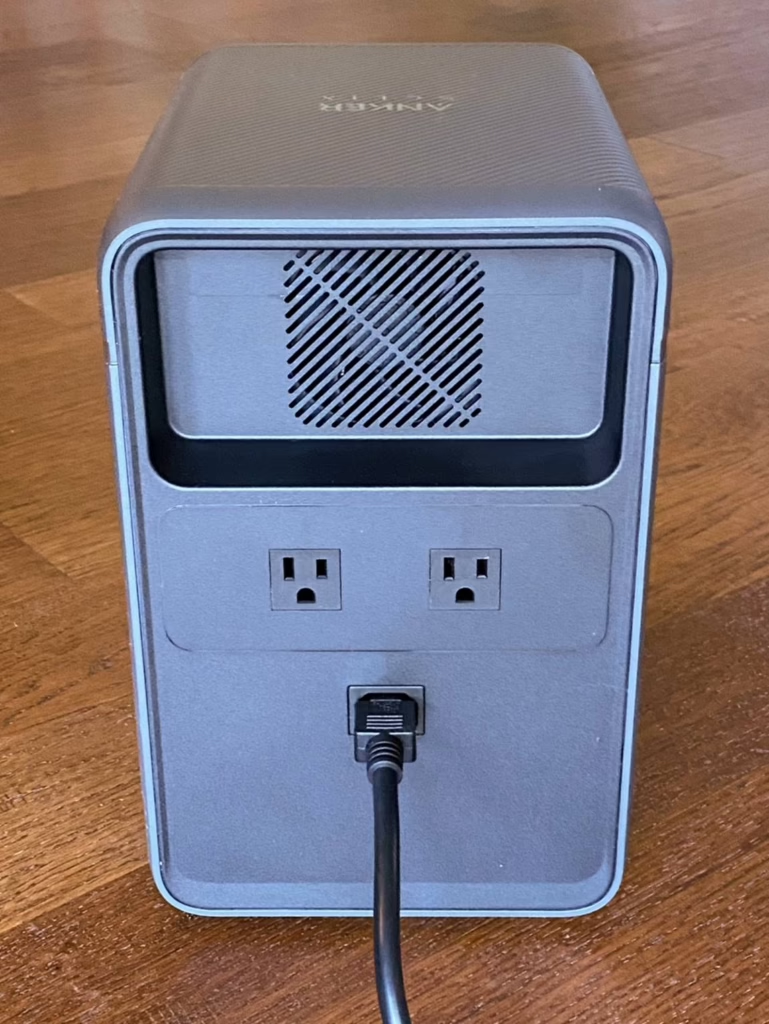
The rear panel contains the AC input, two AC outlets, and the cooling fan vent. Combined with three sockets on the front, the S2000 supports five AC loads in total — Anker’s split-orientation answer to cable clutter. Image: ESS News
App setup and AC-output
Pairing the S2000 with the Anker app was straightforward — connect to power, add a new device in the app, provide the unit a Wi-Fi SSID and password, and the device showed up on the dashboard after a firmware update. The Anker app remains the more polished entry in this category compared with most competitors’ offerings: clear navigation, sensible defaults, and a deep settings tree once you start exploring.
AC output is enabled separately from the unit’s main power state, via either a power-icon toggle in the app or a physical AC button on the front of the unit.
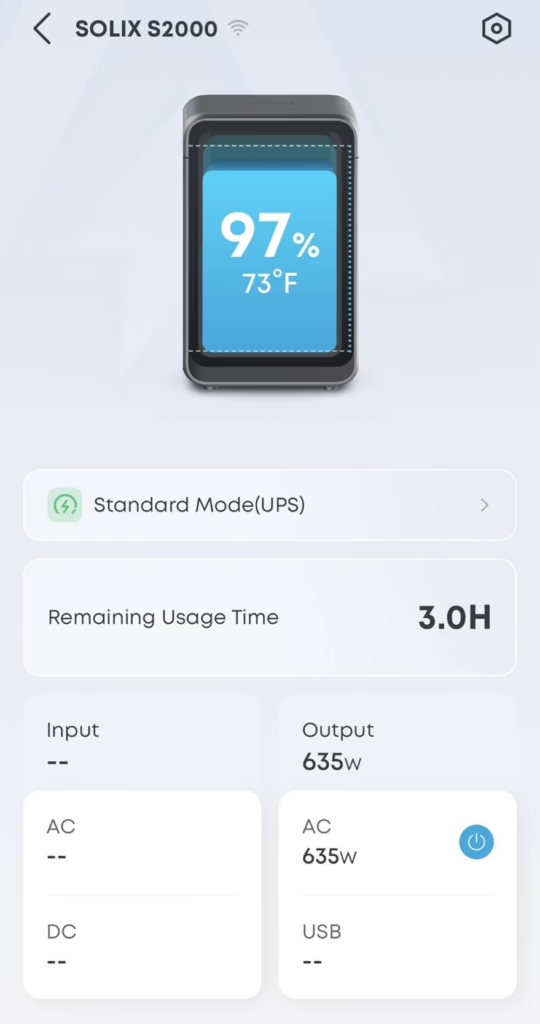
Real-time output of 635 W to the coffee maker, with three hours of runtime remaining. The power-icon toggle mirrors the physical AC button on the front of the unit.
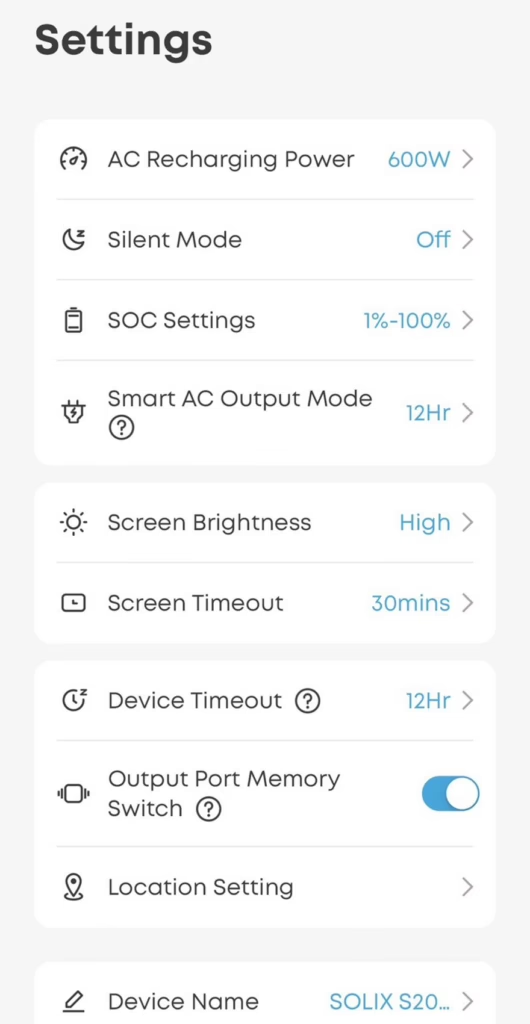
The app’s settings tree, including recharge power limits, charge ceiling and floor, and output behaviors.
Performance: quiet and competent
In day-to-day use, the S2000 fades into the background — which is exactly what you want. Fans only spin up under real load or fast charging, and at idle the unit is silent. The front display and app both surface real-time AC input and output in watts, which also worked well for spot-checking the approximate draw of connected devices.
The UPS function is rated at a 10 ms switchover, and in testing — simulating outages by pulling the AC input — office equipment all rode through without interruption. Anker doesn’t market this as a true online double-conversion UPS, and it isn’t, but for routine grid blips and short outages it behaves as a competent line-interactive UPS would.
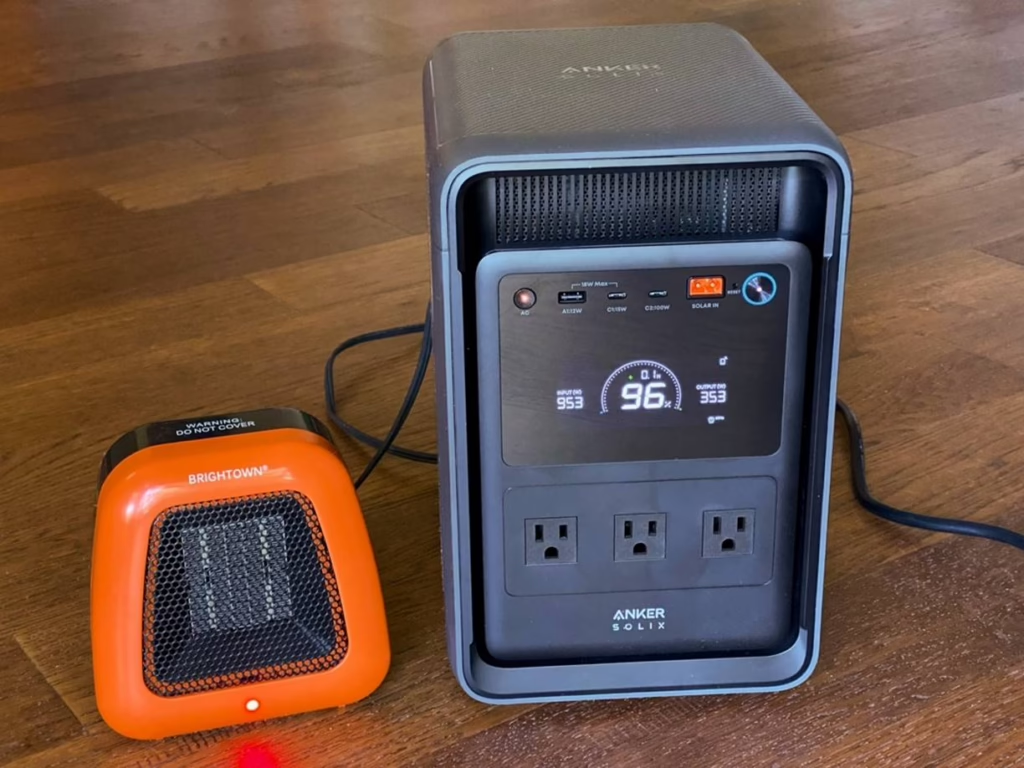
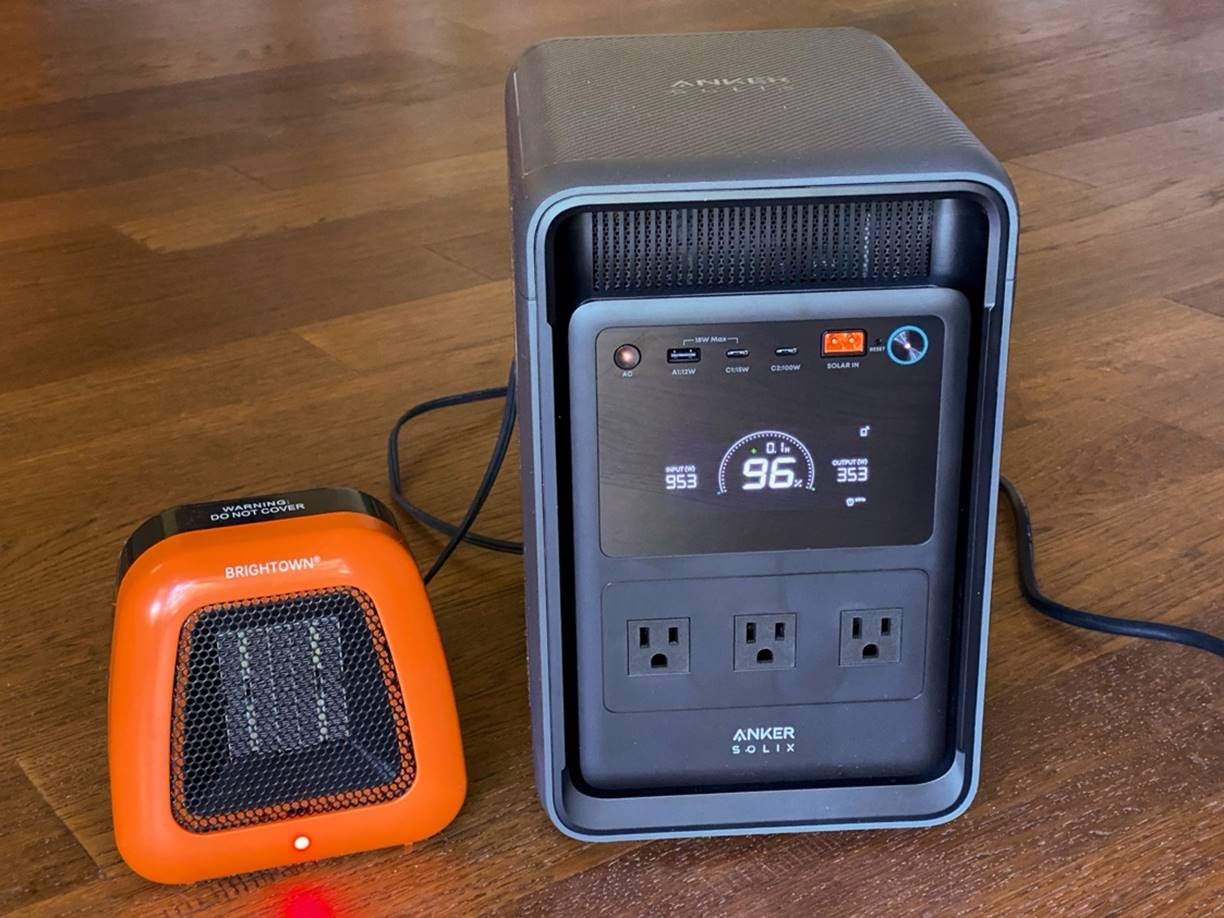
Bypass charging in action: 953 W drawn from the wall — 353 W to a space heater load, 600 W into the battery at 96% SOC. The unit estimated six minutes to full.
One small honest note: under sustained AC load in a small, closed home-office, there is a slight warm-electronics smell within a few feet of the unit during the first several hours of operation. It’s the familiar new-electronics break-in odor, not anything alarming — internal temperatures stayed within the spec’d -4 to 104 °F (-20 to 40 °C) discharging range — and it faded over the first day.
Modes and scheduling: where it gets interesting
Beyond the basics, the Anker app exposes a useful set of charging behaviors that elevate the S2000 from a backup brick to something closer to a small energy-management device:
- Time-of-Use mode lets you define peak, mid-peak, and off-peak windows, and the unit charges during the cheap hours.
- Custom schedules allow finer-grained control — useful for users wanting to personalize battery management where TOU presets don’t map cleanly.
- State-of-charge ceilings and floors can be set for long-term cell health (e.g., charge to 80%, discharge floor at 20%).
- Storm Guard behaviors are available if the unit has a stable internet connection.
For a household on a time-of-use rate — and in California, where this review took place — the practical implication is real. Parking a fridge and a few essentials behind the S2000 during the late afternoon / evening peak window is a plausible if marginal arbitrage. The S2000 isn’t large enough to meaningfully shift household consumption, but it can comfortably carry a refrigerator, a router, and a couple of light fixtures across the peak block on a daily cycle without breaking a sweat — and over the rated 10,000 cycles, that’s a lot of avoided peak kWh.
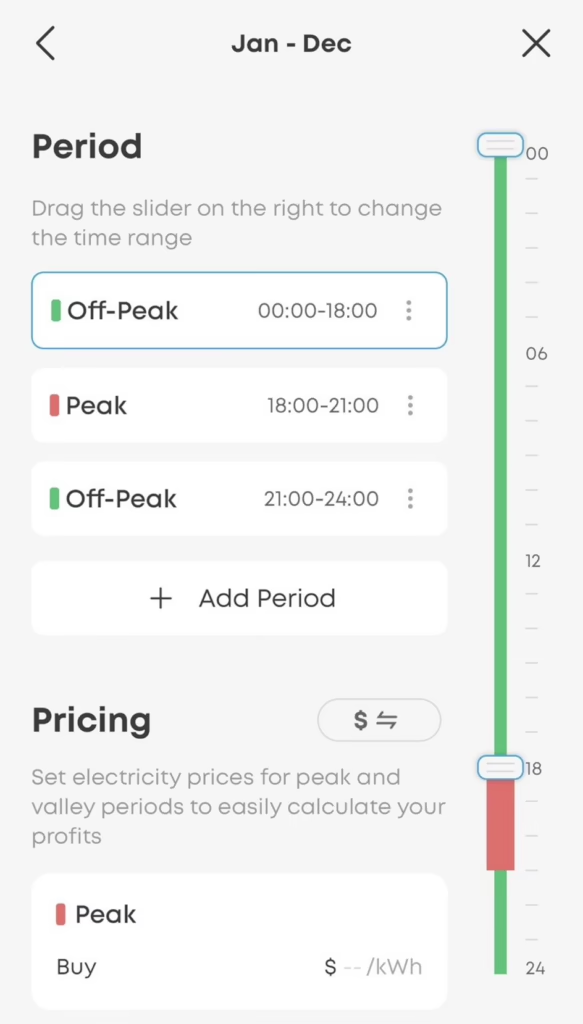
Configuring time-of-use windows. Off-peak and peak hours can be mapped to the local utility rate schedule; the unit charges in the cheap windows.
Charging, idle, and the spec sheet
Anker rates AC charging at 1,150 W max in standard mode and 1,600 W in “Ultra-Fast” charging, with bypass mode passing through up to 1,800 W. In practice, the unit reached 80% in roughly 1.2 hours and 100% in 1.7 hours from a standard 20 A household circuit, consistent with Anker’s claim. Solar input is via MPPT across 11–60 V, with a two-tier current limit (8.2 A below 28 V, 12.5 A above) and a 400 W overall ceiling — modest compared to the 800 W on the C2000 Gen 2 and the 1 kW on Bluetti’s recent fridge-focused unit. If serious off-grid solar charging is the priority, this is the spec to weigh carefully.
Idle: To put real numbers behind the OptiSave idle operation claims, the S2000 was charged to 100%, disconnected from the wall, AC output enabled with no loads connected, and left to sit for 10 hours. State of charge dropped to 99%, implying an average draw of about 2 W — under Anker’s 6 W “AC On” spec. That’s a solid outcome when you want to rely on having it run with AC on as a UPS-level backup without crushing your charge.
Where it fits
Two use cases stood out during testing:
- Outage backup for essentials. During a simulated outage with office equipment, the S2000 sat at roughly 350 W draw and projected over five hours of runtime. For households that currently lean on a portable gasoline or propane generator for fridge-and-phones during power outages, this is a credible quiet replacement — no fueling, no exhaust, no spoiled food.
- Car-camping and base-camp power. Charged at home before a weekend trip, the S2000 comfortably handles lighting, phone charging, and a 1200 W coffee maker. The 35.7 lb weight is manageable for one person to load into a car, but not to take backpacking, as you’d expect.
The unit is not a whole-home backup solution, and Anker isn’t positioning it as that. Nor is it trying to be something for every scenario as it focuses on long life-span, so it’s also not the right pick if the priority is high-surge inverter capacity; 1,500 W continuous keeps it out of running for hair-dryers-plus-microwave loads that the C2000 Gen 2’s 2.4 kW handles without complaint.
Pricing and availability
The Anker Solix S2000 is available for early-bird signup starting May 19 through June 1 at Ankersolix.com. Subscribers will receive an exclusive code on launch day (June 2) to purchase under $600. The S2000 will be available at Ankersolix.com and Amazon from June 2 at a launch price of $649 through June 22. MSRP: $1,199.
Key specs at a glance
- Capacity: 2,009.6 Wh / 314 Ah LFP (LiFePO₄), next-generation cells
- AC output: 120 V, 12.5 A, 60 Hz, 1,500 W total across 5 outlets
- AC input: 1,150 W standard, 1,600 W ultra-fast, 1,800 W bypass
- Solar / MPPT input: 11–28 V at 8.2 A or 28–60 V at 12.5 A, 400 W max
- USB: 1 × USB-C PD, 100 W (5/9/15/20 V); 1 × USB-C, 5 V/3 A (15 W); 1 × USB-A, 5 V/2.4 A (12 W). USB-C and USB-A share an 18 W combined cap
- UPS switchover: 10 ms
- Recharge: ~1.2 hr to 80%, ~1.7 hr to 100% (AC)
- Idle (OptiSave): ~6 W with AC enabled, ~2 W with all outlets off
- Cycle life: 10,000 cycles, 15-year design life (Anker spec)
- Dimensions / weight: 8.2 × 11.1 × 12.7 in (208 × 282 × 323 mm) / 35.7 lb (16.2 kg)
- Operating temperature: -4 to 104 °F (-20 to 40 °C) discharge; 32 to 104 °F (0 to 40 °C) charge
Written by





Popular Posts