Ukraine deploys 1.5 GW of solar in 2025, adding to rapid battery build-out


Ukraine installed around 1.5 GW of solar power in 2025, according to estimates from the Solar Energy Association of Ukraine (SEAU).
The association told pv magazine that in the absence of official statistics, as businesses and homeowners installing solar for self-consumption are not required to register their generation capacities, the figure is based on its own market analysis.
The 1.5 GW represents substantial growth in Ukraine’s solar market, after around 800 MW was added in 2024, and takes cumulative capacity to in excess of 8.5 GW.
SEAU said the C&I and utility-scale segments demonstrated the strongest developments in 2025, particularly when combined with battery energy storage systems (BESS), while the residential market remained stable.
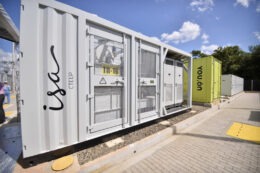
Ukraine commissioned its first megawatt-scale projects with BESS last year, SEAU said, while hybrid solar-plus-storage systems were deployed across industrial and agriculture customers, as well as municipalities and residential consumers. The country’s largest battery project to date was energized in September.
Such projects have been support by the abolishment of VAT and import duties on both PV modules and BESS, first implemented in July 2024 and since extended until 2028. Ukraine also launched concessional lending programs for the construction solar plants and energy storage systems last year, primarily through state-owned banks, as well as grant programs via the Decarbonization Fund of Ukraine.
The association explained that the risks of electricity shortages and blackouts were a key market driver last year, and are set to remain a leading driver this year. Further scaling of solar-plus-storage projects is anticipated, as businesses and communities continue to seek autonomy and energy independence.
Another market driver has been the development of the ancillary services market for frequency containment reserve (FCR) and automatic frequency restoration reserve (aFRR) each offering five-year contracts denominated in euros. SEAU shared that companies which won long-term procurements via auctions held by state-owned electricity transmission system operator NPC Ukrenergo in 2024 installed 398 MW of energy storage capacity last year.
The association said it would recommend further development of the ancillary services market, as well as the simplification of connection and licensing procedures for solar-plus-storage projects to support Ukraine’s solar market further. It also recommended legislative implementation of effective war risk insurance mechanisms and the development of auction mechanisms and corporate power purchase agreements.
Describing 2025 as a “turning point” in Ukraine’s solar market, SEAU added that its expects more solar capacity to be commissioned in 2026 than in 2025, anticipating at least 1.5 GW of new solar and more than 3 GWh of BESS by the end of the year. “Despite the war, the market demonstrates high resilience and investment attractiveness, particularly in the segment of hybrid and distributed solutions,” the association told pv magazine.
In December, the International Energy Agency published a report covering three strategies for accelerating deployment of distributed solar-plus-BESS in Ukraine.
Written by





Popular Posts