100 MW Hertz 1 battery enters operation after Estonia–Finland grid incident

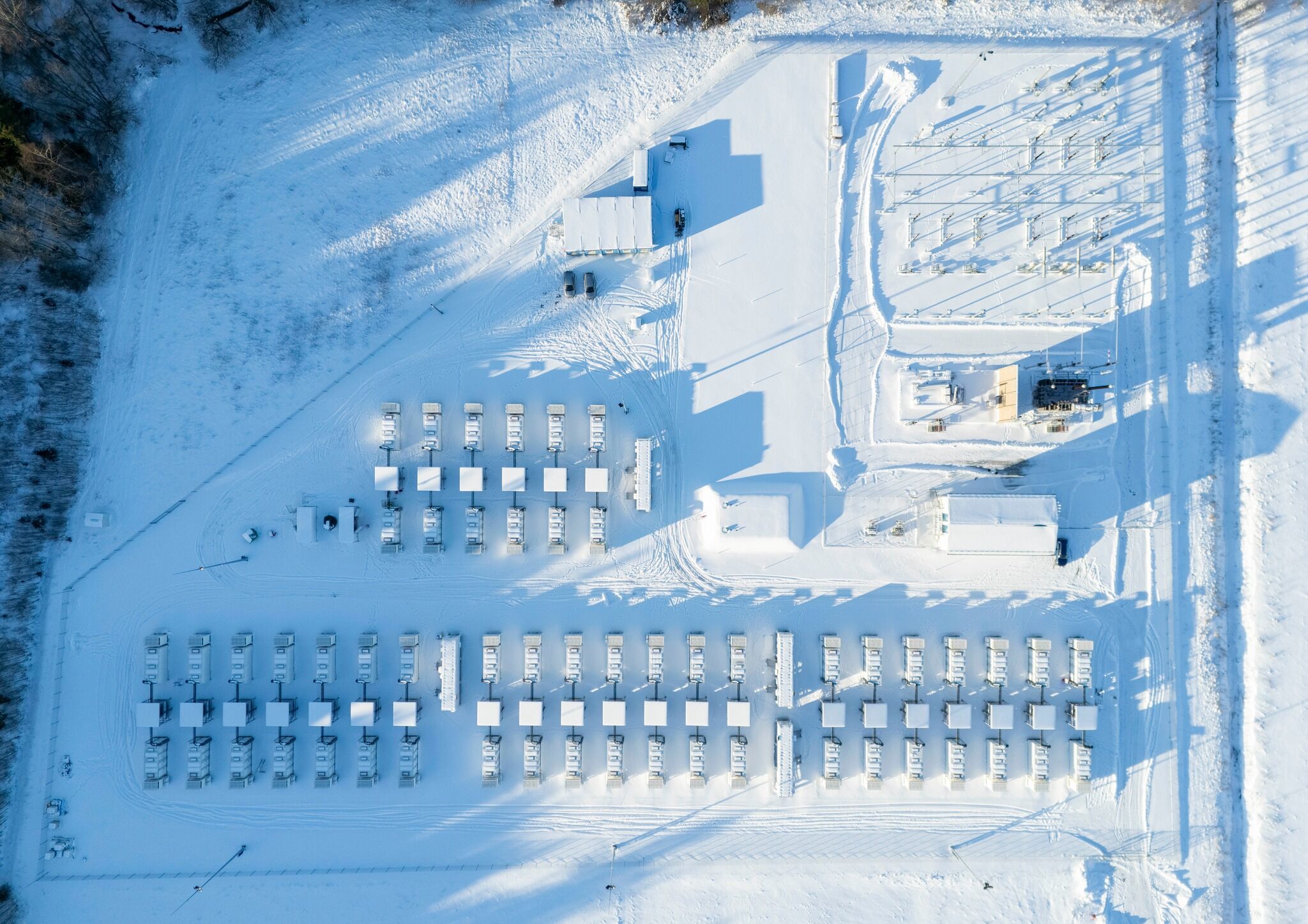
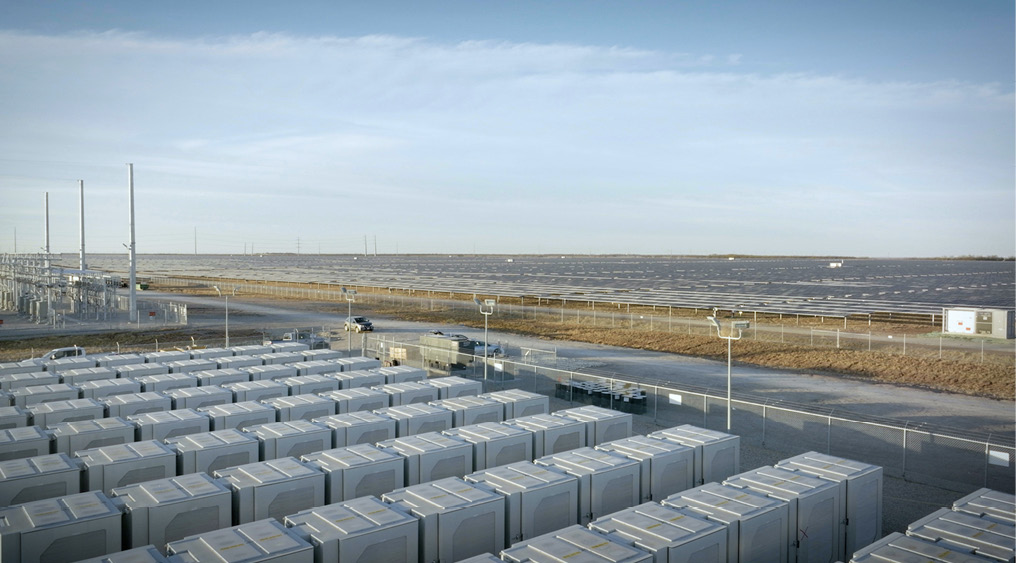
Estonian renewable energy developer Evecon, together with French independent power producer Corsica Sole and international investment fund Mirova, on 3 February opened a one of the largest battery energy storage facility in the Baltics in the Estonian parish of Kiisa, just south of Tallinn.
The 100 MW/200 MWh Hertz 1 project is the first of two strategic installations forming the Baltic Storage Platform. Both Hertz 1 and its sister project, Hertz 2 – each with the same power output and capacity – are designed to stabilize the regional power system following the Baltics’ synchronization with the European continental grid.
“The project proves two things. Firstly – private investors are capable and interested in backing large energy projects in Estonia. Secondly – the future is here. Ten years ago this would have been the largest lithium-ion battery electric park in the world, thirty years ago this would have been science fiction,” said Andres Sutt, minister of energy and the environment of the Republic of Estonia.
The project faced a setback during final grid connection testing on 20 January, when a fault caused the DC cables to trip. The disturbance temporarily affected Estonia’s power system, causing both EstLink connections with Finland to shut down and resulting in a loss of roughly 1,000 MW of power within seconds, equivalent to about 20% of the Baltic region’s winter electricity load. The shortfall was initially offset by support from the continental European grid, with the 500 MW AC connection between Poland and Lithuania operating at double capacity, followed by deployment of reserve capacity within the Baltic states.
Construction of the €100 million project began in mid-2024 and was supported by a landmark €85.6 million financing package secured in 2025 from the European Bank for Reconstruction and Development (EBRD), the Nordic Investment Bank (NIB), and Edmond de Rothschild Asset Management.
Hertz 1 features 54 battery containers supplied by Nidec Conversion and connects to the Estonian transmission network (Elering) via a 330 kV underground AC cable – the first of its kind in Estonia at this voltage. A major construction milestone was the delivery and installation of a 126-ton transformer.
Following the incident, Evecon CEO Karl-Joonatan Kvell emphasized that the fault occurred during the testing and configuration phase, not during normal operations. He noted the battery park is designed to meet all applicable standards, and that compliance tests are intended to validate system performance under real-world conditions. He added that primary responsibility for the incident lies with technology provider Nidec Conversion.
Now operational, Hertz 1 provides fast-response frequency regulation services to stabilize the Estonian grid. The facility is designed to operate across a wide range of electricity and ancillary services markets, including frequency containment reserve (FCR), automatic and manual frequency restoration reserves (aFRR and mFRR), as well as intraday and day-ahead markets, enabling flexible and responsive support for the power system.
This operational flexibility allows the project to support grid stability, market efficiency, and the integration of renewable energy, while helping mitigate electricity price volatility.
“As of today, Estonia’s energy security is significantly stronger. Thanks to Hertz 1, our power system has gained resilience comparable to adding a new large power plant to the grid,” said Karl-Joonatan Kvell.
While Hertz 1 begins full operations, construction of its sister project, Hertz 2 in Aruküla, is already underway. Once both projects are completed by the end of 2026, the combined capacity will reach 200 MW / 400 MWh, establishing one of the key battery storage clusters in Continental Europe.
Written by


Popular Posts