ERCOT BESS interconnection applications drop 50% in H2 2025 as faults in the boom emerge

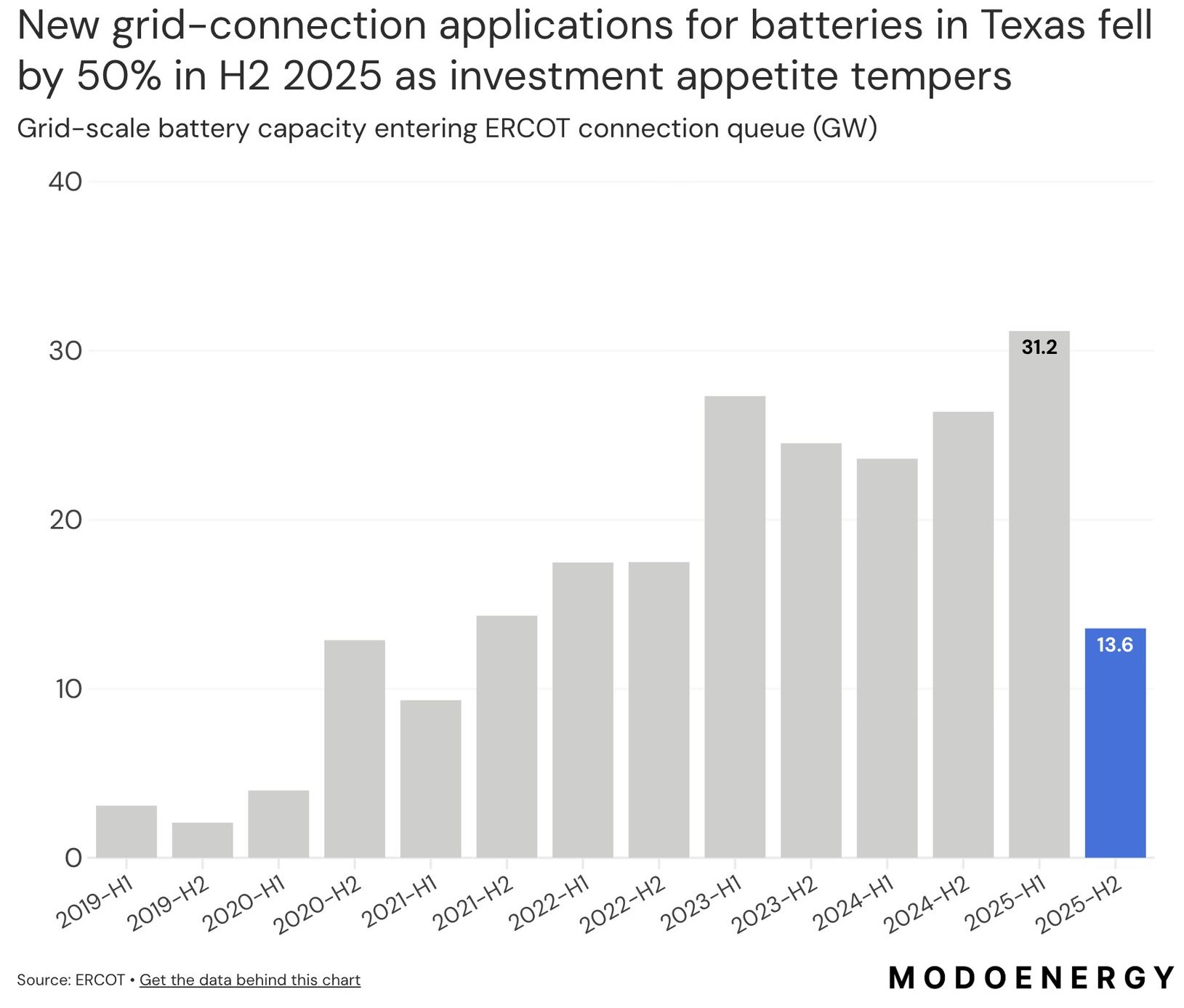
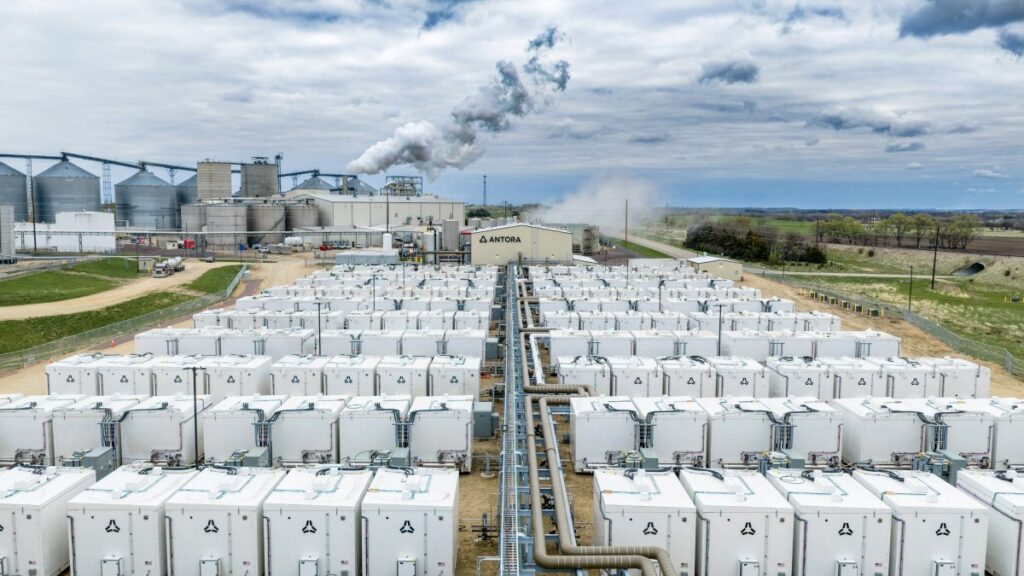
Texas nearly doubled its battery fleet in 2025, with 6 GW of new capacity coming online to total 13.9 GW and 22.9 GWh of operational grid-scale BESS capacity in early 2026, according to data from market research firm Modo Energy’s ERCOT Annual Buildout Report. It’s a record. The Electric Reliability Council of Texas’ (ERCOT) interconnection process is fast, but that makes it fragile.
According to Ovais Kashif, a US West research lead at Modo Energy, much of last year’s buildout reflects much older decision making.
“The record capacity delivered in 2025 came from projects financed three to five years ago, when battery revenues were much higher,” Kashif told ESS News. Now, the market remains more vulnerable to political shocks and the timeline after construction has remained the same for the past five years. As a result, he said, new interconnection applications in H2 fell 50% compared to H1, due to political hurdles like the loss of tax credits.
Lower merchant revenues, which dropped from $192/kW in 2023 to an average of $43/kW in 2024 and 2025, also discouraged new capital from entering the market. Even so, projects already in the queue kept chugging along and ERCOT remains the quickest moving interconnection market in the country. Per a December report from Lawrence Berkeley National Laboratory, the ISO processed a whopping 90 GW of draft or executed interconnection agreements (IA) in 2024, which was likely helped by its “connect and manage” approach that lets projects interconnect without waiting for network upgrades.
But clearing the queue doesn’t always mean successful delivery.
Over the past six years, ERCOT has received 1,470 battery interconnection applications; 1,354 of these were “large generators” over 10 MW that were subject to the full study process. Of the 453 large projects that have exited the queue so far, only 27% are operational, meaning nearly three projects have failed for every one that reached the grid.
Almost half of the current large-battery queue is now classified as “inactive,” having had no update in the past year and no signed IA. 70% of inactive batteries that exited the queue were cancelled before ever signing one.
Even after signing, there’s no guarantee. Though IAs have historically been near-guarantees of project completion, Modo found that 19 projects have dropped out after receiving an IA in the past 18 months, compared with just three before June 2024. Now, the firm estimates that only about 85% of battery capacity with a signed IA today will ultimately be built, though Kashif said most attrition happens after this milestone.
“Typically, projects cancel before construction begins after securing an IA,” he said, as projects need to provide further financial commitments and notice to proceed. That raises the confidence bar for completion.
The timing of interconnection is also changing. Kashif noted that delays have primarily lengthened at the full interconnection study stage, which is before projects receive their IA. Large batteries coming online today have spent a median of 4.1 years in the ERCOT queue, up from about 3.5 years recently. Delays are accumulating around the IA stage. Where projects once took roughly 1.8 years after signing an IA to reach operation, it now takes around 2.5 years.
That distinction matters. Now, risk in the queue occurs earlier during the study phase rather than during buildout. Smaller batteries are in luck, however. Those under 10 MW, which are classified as distributed generation resources (DGR) are moving faster at much higher success rates, with Modo data finding that 96% of DGR projects having exited the queue reached operation. All 18 DGRs currently in the queue are likely to be built.
Looking ahead, Modo projects between 40 and 55 GW of operational battery capacity in ERCOT by 2029 depending on either historical attrition and delay patterns (the high end) or assumptions that only projects with signed IAs will proceed.
“I’ll revise the view if we see cancellation rates increase at earlier stages of the queue,” Kashif said.
Written by



Popular Posts