EU BESS: Ireland’s first four-hour battery online, 225 MWh for Poland, Wärtsilä’s 100 MWh

Poland’s Mosty Energy Group has detailed plans to purchase and integrate energy storage systems with a total capacity of 68 MW/225 MWh into the country’s power grid. Andrew Michael Kowalik, President of the Mosty Group, made the announcement on the company’s website to accompany its 2025 financial results.
According to preliminary, unaudited financial data, Mosty Group generated PLN 157.5 million of consolidated revenues in 2025. “In 2025, we generated over PLN 157 million of consolidated revenues, with our main business, related to the energy industry, bringing more than PLN 91 million” said Kowalik, adding that this result was at a comparable level from 2024.
“The volume of electricity production in 2025 increased to 150.5 MWh against 142.93 MWh last year,” he continued, adding: “We intend to maintain the current pace of development on the RES market at home and abroad, in which we will be supported by the development of energy storage infrastructure.”
He said the energy storage systems will be installed at selected existing installations belonging to the Mosty Group and estimated that the first deliveries as part of the 225 MWh buildout would come in March this year. “In the coming years, energy storage will increasingly support RES installations in improving profitability, as well as creating conditions for profit by arbitrage and providing system services.”
Wärtsilä’s Belgium battery
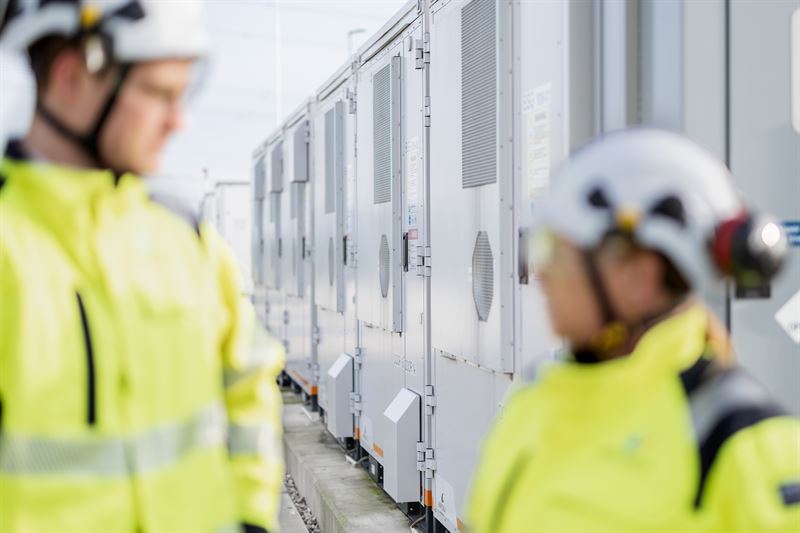
Meanwhile, in Belgium, Wärtsilä Energy Storage has begun construction on the 50 MW/100 MWh Gramme 1 Storage facility. The order for the BESS was booked in the second quarter of 2025. The project’s Belgian developer, Kallima Group, stated that Wärtsilä coming on board would prove the company’s commitment to what its managing director, Gillaume Poncelet, described as “dependable, flexible energy in Belgium.”
“This collaboration highlights the growing role of battery energy storage in supporting Belgium’s electricity system. By delivering essential ancillary services, the system will play a vital role in balancing the grid,” added Poncelet. The BESS is expected to be completed in mid 2027.
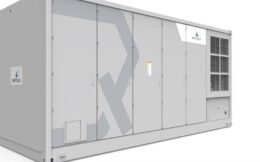
Gramme 1 will use Wärtsilä’s GridSolve Quantum2 energy storage system, which is a fully integrated DC block BESS powered by Wärtsilä’s control and optimization software, GEMS. The Quantum2 is housed in 20-foot ISO containers and is compliant with UL 9540A, NFPA 855 fire safety standards as well as IEC 62443-4 cybersecurity standards.
Wärtsilä will deliver the project under an engineered equipment delivery (EEQ) contract, with guaranteed asset performance under a separate long-term service agreement.
The Gramme 1 project is Wärtsilä’s first energy storage project participating in Belgium’s capacity remuneration mechanism (CRM), a framework designed to ensure Belgium’s energy supply remains secure and assets can deliver grid services such as frequency and voltage support. Last October, Belgium’s transmission system operator Elia published the results of three separate CRM auctions for the supply of projects from 2026 out to 2030.
With this project underway, Wärtsilä’s energy storage portfolio in Europe now exceeds 2.7 GWh. The Nasdaq-Helsinki listed company released the latest generation of its Quantum product range – the Quantum3 BESS – in 2024.
Ireland long-duration
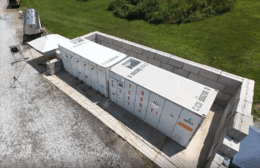
Ireland’s slowly growing energy storage sector marked the official opening of the country’s first four-hour duration grid-scale BESS. The 22 MW Cushaling battery is co-located with the 55.8 MW Cushaling Wind Farm in County Offaly, and it will help stabilize the grid by storing excess wind production, preventing curtailment.
Its operator, Statkraft, also operates the Kilathmoy BESS and the Kelwin-2 BESS in Ireland. A report by Irish state media, RTE, claimed that the Cushaling battery “has already demonstrated exceptionally strong response times.”
Ireland’s grid operator can switch it on and off in less than one tenth of a second.
Written by


Popular Posts