New German allowances give further boosts for plug-in PV and storage

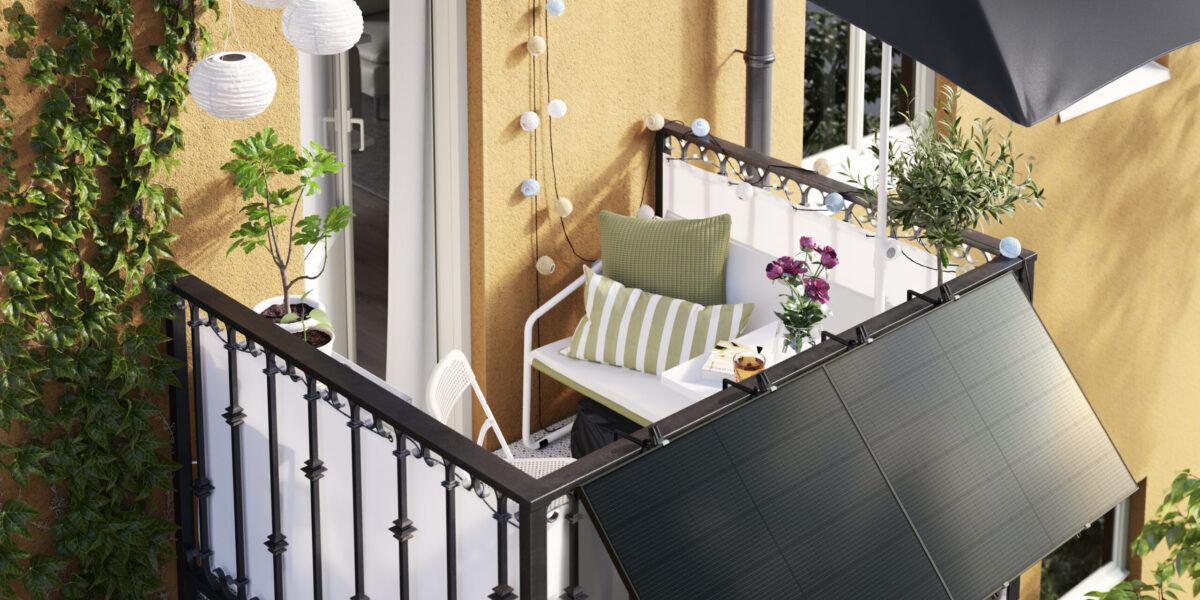
The latest update to the German grid connection standard, VDE-AR-N 4105:2026-03, significantly expands the technical scope for plug-in photovoltaic (PV) systems. While the 800 VA AC output limit remains the defining threshold for simplified registration, the new framework provides a clear legal pathway for integrating large-scale battery storage and “oversized” solar arrays.
Storage as the central component
The most impactful change for the industry in Germany is the formal inclusion of storage systems in the simplified registration process. Previously, capacity limits often deterred users from installing batteries larger than a few kilowatt-hours. Under the new rules, the 2,000 Wp limit for solar modules is no longer a restrictive cap for systems using the simplified notification form, provided the inverter hardware ensures the grid feed-in never exceeds 800 VA.
This allows for a configuration where a 5 kWp or even 10 kWp array charges a local battery unit during the day. The system then manages the discharge to cover household baseloads or peaks, while strictly limiting injection into the public grid to the permitted 800 VA. This “buffer” capability effectively maximizes self-consumption rates for apartments and small residential units that were previously underserved by traditional PV regulations.
Grid charging and dynamic tariffs
The updated standard also addresses the bidirectional capabilities of modern storage. Plug-in systems are now explicitly permitted to draw power from the grid to charge the battery.
For savvy consumers, this is a green light for officially okaying automated energy management tied to dynamic electricity prices. Systems can be programmed to charge from the grid during periods of negative or low prices and discharge during peak evening hours. This flexibility turns the plug-in battery from a simple PV accessory into an active participant in home energy optimization.
Technical compliance and safety
To maintain the “simplified” status (registration without an electrician), systems must meet several technical benchmarks:
- Smart Meter Requirement: Any system with a solar capacity exceeding 7 kWp must be equipped with a smart meter.
- Standards Compliance: Equipment must comply with DIN VDE V 0126-95 (product safety) and DIN VDE V 0100-551-1.
- Protective Functions: Hardware must include integrated NA protection (network and system protection) and real-time monitoring to prevent overloading the local circuit.
The registration process is also tiered. Systems below 2,000 Wp without storage and without a request for remuneration only require entry in the Market Master Data Register (MaStR). However, any system including battery storage, regardless of its size, must still be registered with the local grid operator, though this is now handled via a simplified, standardized form.
From pv magazine Germany.
Written by







Popular Posts