From patchwork to harmony: The case for aligning standards in energy storage

Energy storage safety is often discussed in terms of individual risks, incidents, or technologies. But the more fundamental challenge facing the industry today is not whether standards exist – it is consistency.
As battery energy storage systems scale rapidly, the industry finds itself navigating a growing number of standards, guidelines, and local interpretations, often covering the same risks in different ways. The result is friction, delay, and uncertainty at a time when deployment needs to accelerate.
A patchwork that nobody designed
One of the key challenges is that developers and operators are often forced to navigate a patchwork of standards, guidelines, and local interpretations. While regulations like the EU Battery Regulation (EU 2023/1542) are a major step forward, implementation timelines stretch through 2027 and beyond.
There are very real consequences and inefficiencies created because of this ongoing lack of harmonisation: approval timelines stretch and vary between countries (even regions); safety studies and site-level safety remain hyper-local; planning and permitting are devolved matters with differing rules; emergency services involvement varies and they often are not statutory consultees; and systems can become over-engineered to accommodate for such challenges. Ultimately the cost of these differences is passed down through the chain to owners, utilities and finally consumers.
Raising the bar beyond minimum compliance
We take the view that compliance is the floor – not the ceiling. Compliance alone is not enough to tackle the challenges the industry faces and instil long-term market confidence.
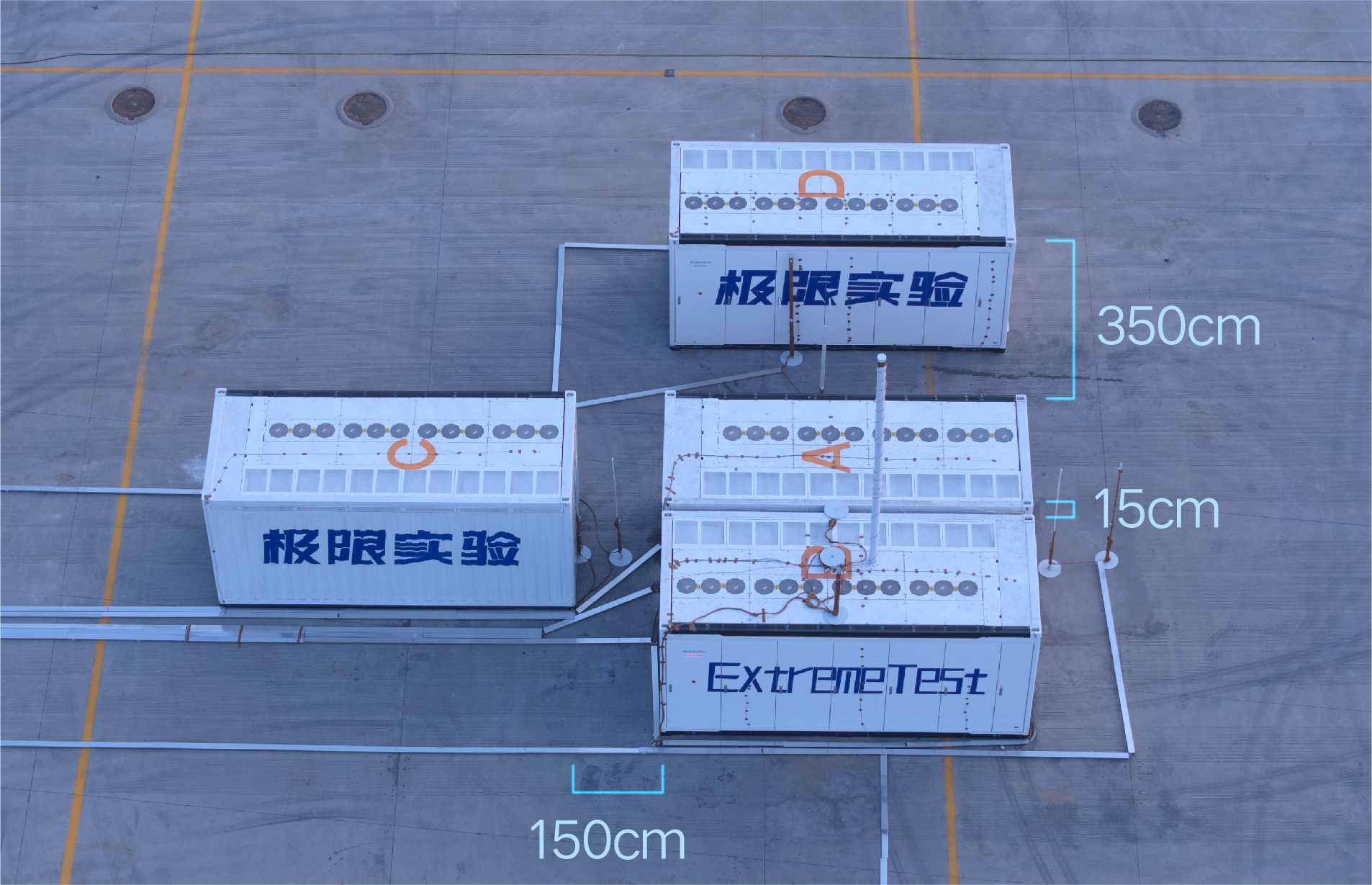
This means setting new safety benchmarks and validating through rigorous testing, from conducting the world’s largest and longest burn test to collaborating with third parties to develop the frameworks we need to address emerging and present risks.
Encouragingly, there is growing momentum across the industry to exceed minimum safety requirements. But this is a shared challenge, and real progress will only come if the industry moves forward together.
Industry-led alignment offers light at the end of the tunnel
Improving safety and security does not require lowering standards, but it does require aligning them. This is where an industry-led approach – one that brings together manufacturers, developers, validators and insurers – comes in.
While regulations continue to catch up, evolve and come into effect – the industry can provide a clear reference point for what best practice looks like, one that local authorities can adapt with confidence. Harmonised guidelines do not mean a one-size-fits-all solution, but they do mean shorter approval times, less duplication, and lower cost of deployment without compromising safety.
What this requires is transparency around test results and system behaviour as well as seeking independent third-party certification for validation – this can be for cybersecurity, fire safety and burn testing, thermal runaway propagation analysis or even the impact of extreme weather conditions.
As adoption increases; coming together to ensure collaboration and transparency on industry standards will only serve confidence among regulators, investors and communities alike creating a clearer pathway to deployment while reinforcing safety as a shared foundation for growth.
Using technology to enable and empower consistency
There is also an accelerator pedal available to the industry – technology itself.
Recent advances in technology have the potential to transform how safety is managed. Take artificial intelligence for instance – AI-enabled monitoring systems can now analyse thermal, gas, and smoke data in real time, enabling predictive insights that help prevent incidents before they happen, let alone escalate.
These tools not only improve safety outcomes but also support operational efficiency and asset performance. Crucially, digital safety systems generate consistent, high-quality data about how systems perform. Over time, this data can help inform manufacturers, regulators, and standards bodies, providing the foundation for evidence-based guidelines.
Ultimately, technology has a dual role: firstly, improving safety at the individual project level today and secondly, giving the industry the common language it needs to align on better regulation tomorrow.
Safety is a shared responsibility
Manufacturers must set the standards and go above and beyond. But it cannot rest solely on them and the technology they use. Developers and local authorities have a responsibility too to understand and communicate the safety measures built into their projects. Clear documentation, consistent operational procedures, and proactive engagement between all parties can significantly reduce uncertainty and build trust.
As BESS projects become more visible to the public, be that through those living near developments or reading about them, the industry’s ability to clearly explain how risks are mitigated will be increasingly important. Being able to highlight how we each benchmark against – and ideally improve on – industry best practices and prove alignment with recognised standards can only help.
The opportunity now is for the industry to lead proactively with the understanding that safety should not be a competitive differentiator. Rather, when treated as a shared foundation, it becomes an enabler – supporting faster deployment, stronger public confidence, and a more resilient energy system for all.
When the energy storage sector raises the bar together on safety, everybody wins.
About the author
Ken Stewart is senior manager ESS at Sungrow Europe.
Written by
Comments





Popular Posts