Australia’s busy BESS scene: Financial close on 2.4 GWh, OX2 starts 200 MWh build, more

Edify reaches financial close on twin solar and battery projects
Edify Energy announced it has secured financial close for its Smoky Creek and Guthrie’s Gap solar and battery projects in central Queensland, the first of the company’s projects to reach this stage since it was acquired by Canadian pension fund La Caisse in a $1.1 billion (USD 780 million) deal.
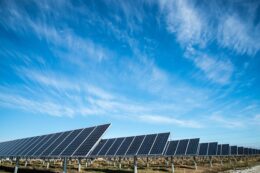
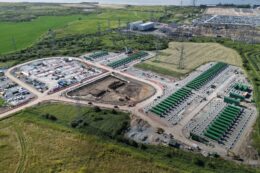
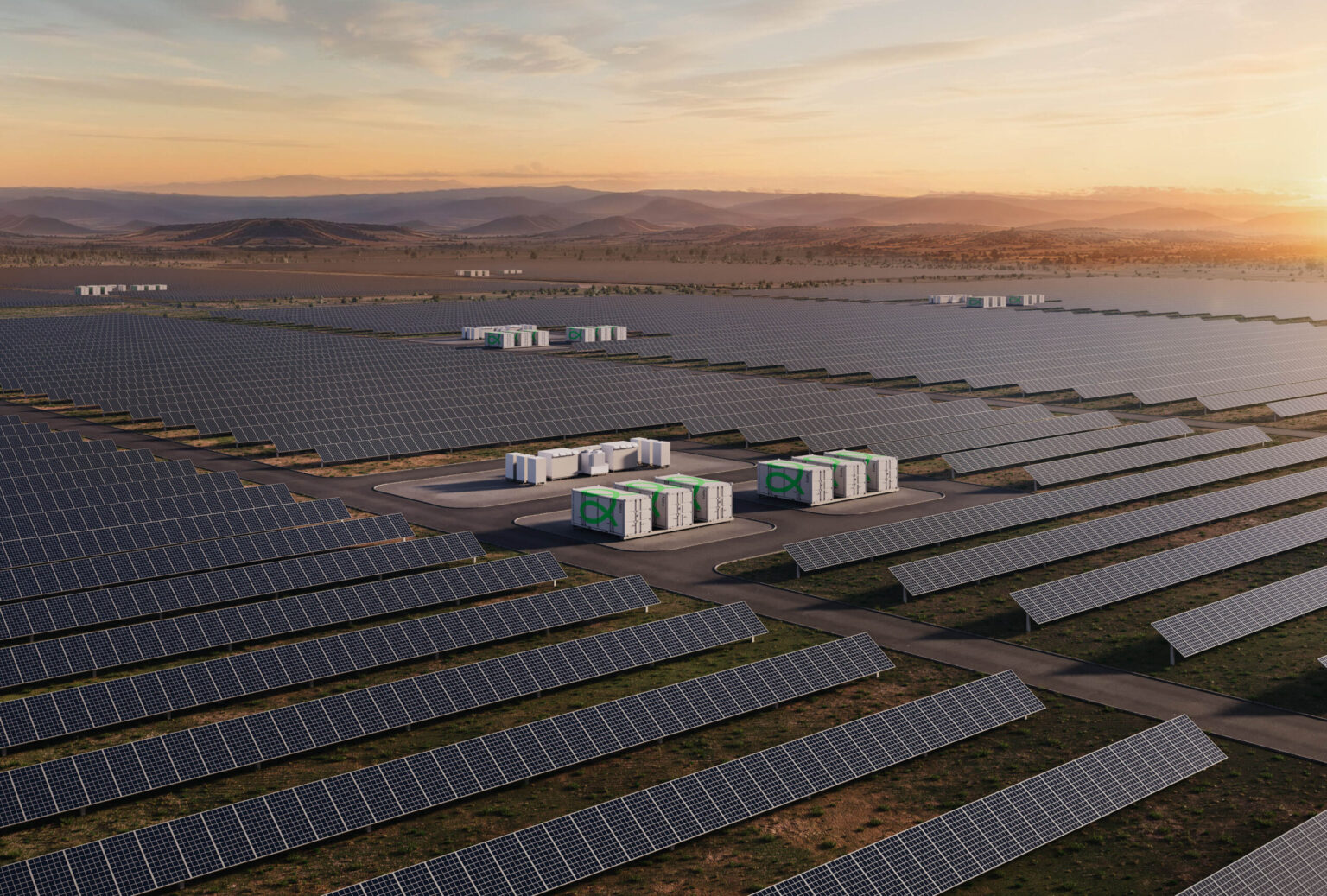
The neighbouring Smoky Creek and Guthrie’s Gap power stations, being constructed across an 1,800-hectare site near Biloela in central Queensland, will both feature 300 MW of solar and 300 MW / 1,200 MWh battery energy storage systems. The purpose-designed projects utilize DC-coupled hybrid configurations with grid-forming inverter technologies that Edify said will enhance the stability and resilience of the power network.
Pre-construction works have already commenced on both projects with DT Infrastructure awarded the engineering, procurement and construction (EPC) contracts. Edify is targeting delivery and operations in 2028.
Both the Smoky Creek and Guthrie’s Gap projects are supported by long-term underwriting agreements awarded as part of the federal government’s Capacity Investment Scheme and Edify has also locked in 20-year offtake agreements with mining giant Rio Tinto. Under the offtake deal, Rio will purchase 90% of the power and battery storage capacity for its aluminium smelting and refining operations in nearby Gladstone.
Sydney-headquartered Edify said financial close for the projects was achieved with the support of La Caisse and a syndicate of 14 domestic and international lenders, adding that the debt financing is being delivered under a “market-first greenfield renewable energy portfolio financing package.”
“The financing package reflects strong market confidence in the quality of the projects, La Caisse’s long-term investment thesis in Australia’s clean energy future and Edify’s market-leading track record in development and delivery capability,” the developer said.
OX2 starts building solar and battery project next to old coal mine
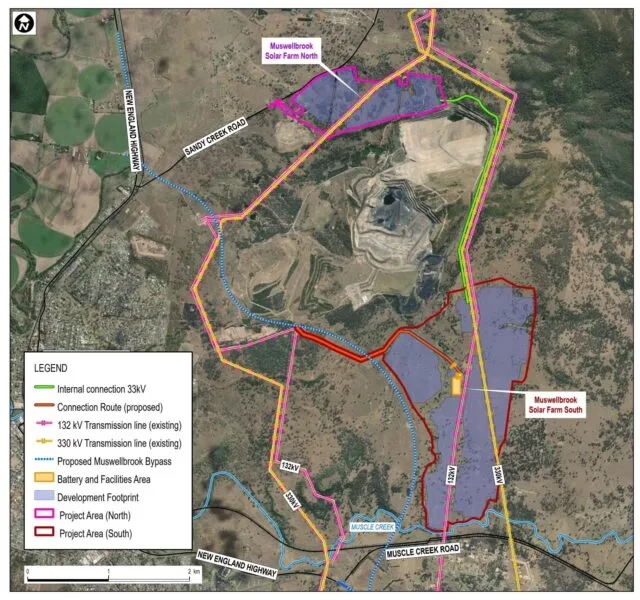
OX2 announced it has reached financial close on the Muswellbrook Solar Farm and battery project in the New South Wales Hunter region and construction of the estimated $302 million (USD 215.4 million) project would commence “immediately” with completion expected in 2028.
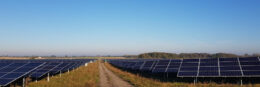
The Muswellbrook solar and battery project, being developed by OX2 in partnership with the Australian arm of Japanese resources and energy company Idemitsu, combines a 135 MW solar farm with a 100 MW, two-hour capacity battery energy storage system.
Once operational, the project is expected to produce about 347 GWh of clean electricity annually, enough to power approximately 52,000 homes.
That output is already accounted for with the solar and battery facility among nine Australian renewables projects to be signed up to power purchase agreements last month as part of a 430 MW deal with global tech giant Amazon.
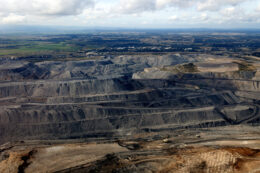
Being built on land adjacent to the Idemitsu-owned Muswellbrook coal mine, which ceased operations in 2022, the solar and battery project is part of broader plans to transition the site into a renewable energy precinct. Idemitsu is working with energy producer and retailer AGL to develop a 400 MW, eight-hour duration pumped hydro project at the site.
Enervest snaps up 300 MW battery as part of strategy shift
Enervest confirmed it has acquired the Northern Border Battery, a 300 MW large-scale battery energy storage project in advanced development, from a Sydney-based developer that has opted to remain anonymous.
The Northern Border Battery project is being developed near Bonshaw in the New South Wales (NSW) Northern Tablelands region, close to the Queensland border. It is to connect to the electricity grid via the nearby Dumaresq substation, a critical point in the Queensland to NSW interconnector.
Enervest said the “strategically located” battery will play a crucial role in integrating both traditional and renewable energy sources to the grid and help strengthen reliability and flexibility in the National Electricity Market (NEM) as ageing coal generators exit the energy system.
“With Australia’s largest coal-fired power station, Eraring, set to close in April 2029 and more than 27 GW of grid-scale storage projected to be required by 2030, the Northern Border Battery will be critical infrastructure for safeguarding system reliability, flexibility and security through the energy transition,” the developer said.
The project has already secured NSW Department of Planning, Housing & Infrastructure (DPHI) approval and Enervest said it is now advancing through the connection application process with Transgrid and Australian Energy Market Operator (AEMO).
Early works have begun on site with financial close targeted for late 2027. Construction of the battery energy storage system is expected to commence in early 2028.
The acquisition of the Northern Border Battery project marks a shift for Melbourne-based Enervest, which until now has primarily focused on developing third-party-owned projects.
The developer said the project will be one of the first assets retained on its own balance sheet under its own-and-operate model.
Enervest Chief Executive Officer Ross Warby said the move will further strengthening the company’s presence in Australia’s rapidly growing energy storage sector and complement its existing portfolio of utility scale and sub-five MW projects across the NEM.
“The acquisition of the Northern Border Battery represents a very significant milestone in Enervest’s long-term own-and-operate strategy and underscores our focus on attractive, high quality, investible projects that deliver lasting benefits,” he said.
“With a strong foundation established, we’re now delivering this project at pace to enhance grid resilience and support the next phase of the NEM as legacy generation exits the system.”
Enervest currently has 10 utility-scale battery energy storage projects under development as well as a substantive portfolio of sub-five MW distribution-connected batteries.
Written by


Comments




Popular Posts