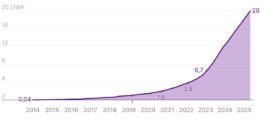
1Komma5° achieves 1 GW of shiftable load with its virtual power plant globally
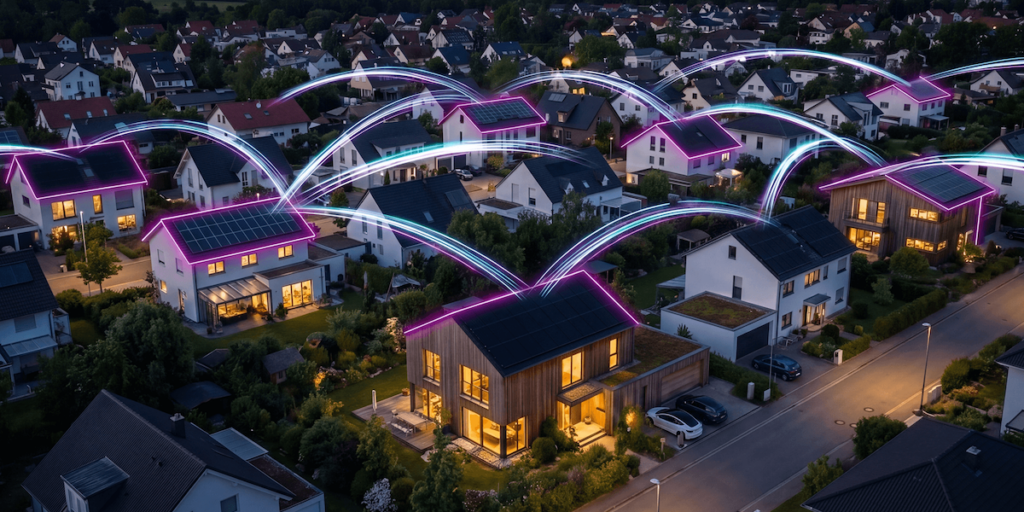
One of the biggest challenges for the energy transition right now is how to make the system more flexible. If this works with profitable business models, everyone benefits: those who provide the flexibility as well as those who consume or generate electricity.
Against this backdrop, the latest announcement from 1Komma5° must be understood. The company reports that it can now shift one gigawatt of power in its virtual power plant. This flexibility is provided by private end customers with their photovoltaic systems, battery storage, heat pumps, and wallboxes. One gigawatt represents roughly one-eightieth of the maximum peak load in Germany. “We can decide how to manage consumption and generation so that, by definition, the customer always receives the cheapest and cleanest electricity,” says co-founder and CEO Philipp Schröder in an interview with pv magazine . By 2030, the company aims to grow to a system-relevant, controllable capacity of 20 gigawatts. If the price signals are correct, this deployment will then also be beneficial for the electricity grid.
1Komma5° refers to its prosumer customers as subscribers. “Our subscribers pay a fixed monthly fee for optimization,” explains Schröder. “With Heartbeat AI, we can shift their consumption patterns so they either draw electricity from their photovoltaic system or during off-peak hours, or resell it directly at peak prices. This allows households to avoid price spikes and relieve pressure on the grid.” Heartbeat AI already controls over 100,000 systems.

The company achieves this high number of systems by opening its Heartbeat AI system—comprising an energy management system, marketing, and a dynamic electricity tariff—to installations not built by the company itself. According to Schröder, this was part of a three-step master plan from the outset.
In the first step, 1Komma5° began electrifying households and handling the energy-related processes itself. To ensure this worked, it took place within a closed ecosystem. “In the second step, we digitized and automated all these processes,” says Schröder. Finally, in the third step, the focus is on opening the system to everyone.
“A closed ecosystem always meant that installers and manufacturers couldn’t use Heartbeat AI for their customers, leaving potential untapped,” explains Schröder. The “energy intelligence” can already cover a large portion of the market. “After the end of the feed-in tariff, we want to be there for all market participants and thus control price signals for the masses – and we can do that.” Therefore, installers can now also offer the energy manager and benefit from it. Customers can then be connected to the “Heartbeat AI” optimization for a monthly fee of €14.99 – just like customers of 1Komma5° installation companies.
This also applies to existing systems. Anyone with compatible components can simply order and install “Heartbeat AI,” a small box, themselves. It’s as easy as installing an internet router and risk-free. If compatibility isn’t the case, it can simply be returned with a money-back guarantee. The potential is significant. There are around four and a half million systems in operation. “Five percent are Kostal systems, where ‘Heartbeat AI’ can be used immediately,” explains Schröder. For the new marketing opportunities, it might be worthwhile to supplement older, smaller storage systems with a new one, Schröder adds.
Implement direct marketing now
This would become even more relevant if feed-in tariffs were to be abolished in the future, something Schröder advocates. “The tariff creates incentives that are not beneficial to the grid, indeed, they are foolish. With ‘Heartbeat AI,’ we can compensate for the elimination of feed-in tariffs and even achieve better results in the free market,” he says.
To ensure that not only small self-consumption systems are built, the electricity from these small systems must be marketed just as directly as electricity from large systems is today. However, there are still significant problems, particularly with the registration processes, because grid operators are not implementing market communication. Therefore, a large part of the industry demands that this problem be resolved first.
Schröder sees things differently. He argues that one shouldn’t “get bogged down in the dysfunctionality of many distribution network operators.” He warns that some are using this as a specious argument “because they want to cling to the feed-in tariff for even longer.” If the transition isn’t made now, there’s a risk that nothing will happen at all. However, Schröder also supports the market premium model to cushion the high process costs until the complex processes are functioning properly. Market premiums are the equivalent of a feed-in tariff for directly marketed electricity. They thus promote the installations while simultaneously incentivizing market-friendly behavior.
Furthermore, Schröder expects that, at the same time as abolishing feed-in tariffs, policymakers will address the problem of network operators partially blocking the implementation of direct marketing. “If oligopolies or monopolies charge fees for network operation and metering point operation, then policymakers and society can and must demand that they are efficient. I believe they will manage this,” says Schröder. How best to achieve this, whether through penalties, incentives, or other means, is a decision for policymakers and the Federal Network Agency.
“We now have the opportunity to switch from government subsidies with misleading, unhelpful price signals to a model with accurate price signals set by the market,” Schröder continued. Several providers now exist that allow all installers to implement this, including 1Komma5°. This is also necessary for the many systems that went into operation by February 2025 and contribute to the much-criticized negative electricity prices. To encourage these systems to switch to the new direct marketing system, Schröder proposes an additional incentive. The solar industry must now offer a market-based system and move beyond its internal competition.
From pv magazine Germany.
Written by

Comments



Popular Posts