Italy’s storage market hinges on grids, permits, regulation, says Neoen


French renewable energy developer Neoen says the next phase of battery storage deployment in Italy will depend less on technology and financing availability and more on grid infrastructure, permitting and regulatory certainty.
Neoen has inaugurated its first solar project in Italy and started construction of its second battery energy storage system (BESS) in the country, marking what it describes as a shift toward greater integration between renewable generation and flexibility.
The company’s 7.4 MWp Arena Po solar plant in Pavia province began feeding electricity into the grid in early 2026 and is now fully operational. The project is expected to generate 11.9 GWh annually under a 10-year power purchase agreement (PPA) signed between Neoen and data center operator Equinix for a portfolio of projects in northern Italy.
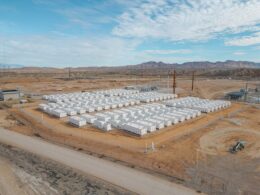
A few weeks later, Neoen announced the start of construction of Pasian di Prato Battery, a 25 MW/100 MWh BESS in Friuli-Venezia Giulia. The four-hour system secured a capacity market contract in February 2025 and is expected to begin operations in 2027.
The project will become Neoen’s second battery storage facility in Italy, following the 10 MW/40 MWh Broni Battery project, which is currently under construction.
Neoen said it has 120 MW of solar capacity and 2.3 GW of combined battery storage and solar capacity globally.
According to Andrea Bartolini, co-managing director of Neoen Italy, the company sees battery storage becoming a structural component of the Italian power system. He said the industry is moving beyond questions about whether storage will be needed and is now focused on how quickly the country can create the conditions required for deployment.
Grid constraints
Bartolini said the main barriers are no longer technology maturity or access to capital. Instead, he pointed to infrastructure constraints, administrative processes and regulatory uncertainty as the factors that will determine the pace of development.
He said solar-plus-storage projects can shift renewable generation over time, reduce grid congestion and provide flexibility services, but these benefits will only be realized if network development keeps pace with new renewable and storage capacity.
Neoen identified grid infrastructure as one of the main challenges facing storage deployment in Italy. The company said battery projects are advancing faster than transmission and distribution infrastructure, with limited available capacity and long connection timelines slowing projects that are otherwise ready for construction.
The developer said coordinated planning between grid investments and renewable energy deployment will be needed to avoid infrastructure upgrades only taking place after congestion problems emerge.
Neoen also highlighted permitting and regulatory uncertainty as a major challenge for investors.
The company said improvements have been made in recent years, but unpredictable timelines, inconsistent regional interpretations and ongoing regulatory changes continue to complicate investment decisions.
Neoen said clearer and more consistent rules around suitable development areas, the FER-X mechanism and future FER-Z framework could help provide greater market certainty.
Strategic flexibility
The company said the expansion of battery storage will also require stronger attention to safety standards, operating procedures and communication with local communities.
Neoen said digital tools will play an increasingly important role in improving battery reliability and performance, including advanced monitoring systems, predictive maintenance algorithms, remote control and intelligent charging and discharging management.
Neoen said market mechanisms that recognize the value of flexibility will be essential for continued storage deployment.
Both Pasian di Prato Battery and Broni Battery have secured Capacity Market contracts, which the company said have supported the development of its first Italian storage projects.
Neoen said future mechanisms, including Capacity Market auctions and Italy’s upcoming MACSE storage auctions, will be important in supporting investment and rewarding the system services provided by batteries.
The company said batteries should increasingly be viewed as grid infrastructure rather than simply as additions to renewable energy projects, providing services that support system stability and balance supply and demand.
Neoen said the energy transition will require a power system built around a broader mix of technologies with different operating characteristics rather than a small number of large dispatchable plants.
The company said flexibility will become a strategic infrastructure component, enabling higher shares of renewable energy while supporting reliability and security of supply.
Neoen said Italy remains one of Europe’s most promising markets for integrated solar and storage development, with the necessary financial and technological resources already available.
The company said the key challenge will be ensuring that infrastructure, regulation and permitting processes evolve at the same pace as technological innovation.
From pv magazine Italy
Written by



Popular Posts