Fox ESS taps Infineon for silicon carbide tech to boost home storage efficiency to 98.47%

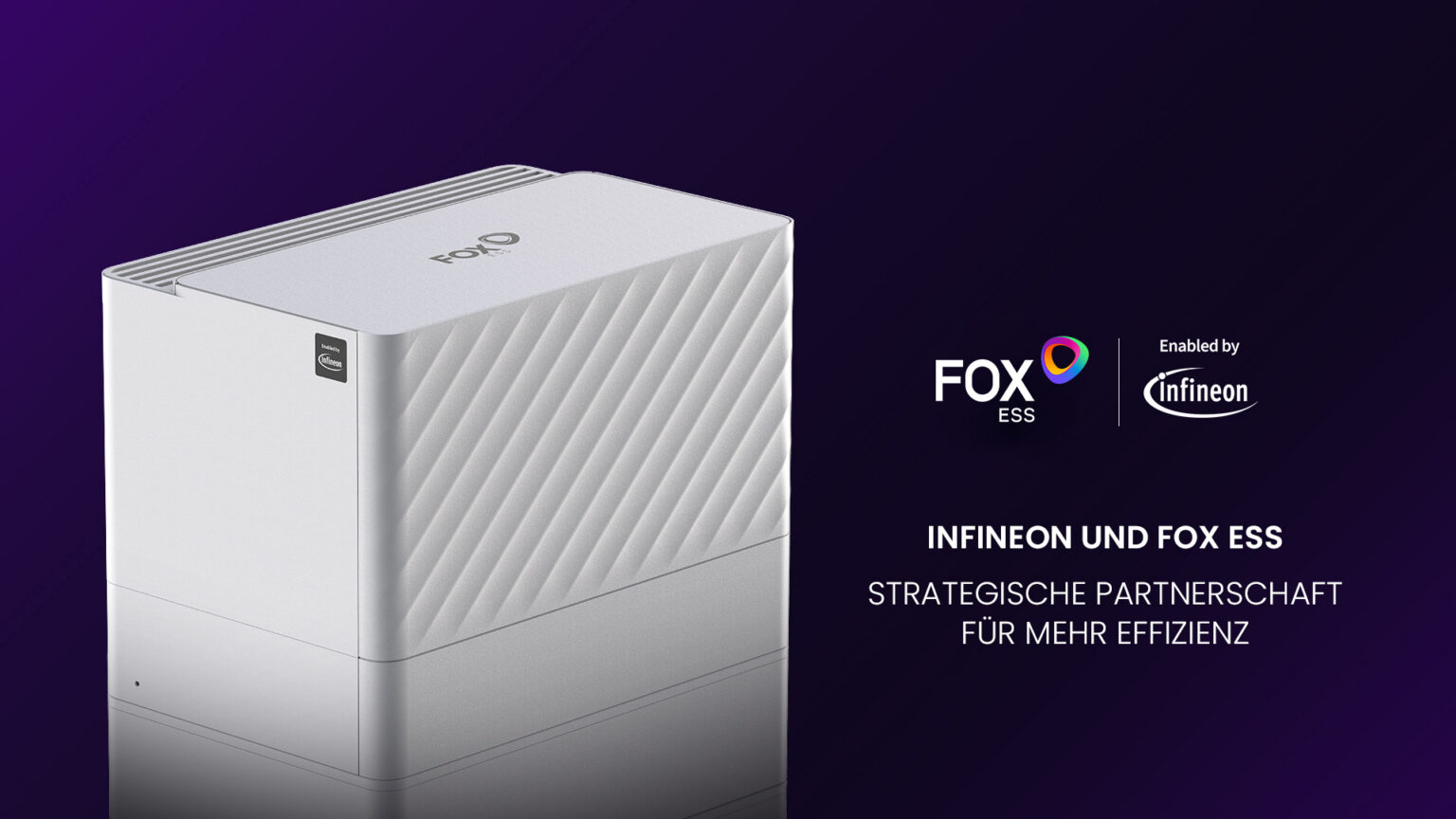
Infineon Technologies will supply its silicon carbide power semiconductors (SiC) to Chinese energy storage manufacturer Fox ESS for its future products, fo use in inverters. By using the ‘CoolSiC MOSFETs 1200 V G2’ in the ‘Q-DPAK-PACK,’ Fox ESS says its can reduce switching losses by 70 percent, the companies announced on Friday.
The Fox ESS PQ3-Ultra home storage system will therefore achieve a maximum inverter efficiency of up to 98.78% in grid-connected operation. The maximum efficiency during charging and discharging of the battery is up to 98.47%, the companies added.
“With our SiC MOSFETs in the Q-DPAK-PACK, we are enabling a new level of efficiency, thermal performance, and system design flexibility for home energy storage systems,” says Amit Raut, Application Manager Photovoltaic and Residential ESS at Infineon. “Fox ESS demonstrates how modern SiC technology can be translated into measurable improvements at the system level, thus supporting the wider adoption of clean energy solutions in homes worldwide.”
Read more: Silicon carbide’s second coming (from 2022).
Infineon’s semiconductors offer further improvements over typical silicon chips, with top-side cooling further improving thermal behavior, along with both better efficiency and power density. Infineon’s .XT interconnect technology reduces thermal resistance and junction temperature during battery storage operation. The companies further stated that bottom-side cooling also enables an optimized PCB layout, reducing parasitic effects and stray inductance.
According to its own figures, Fox ESS has installed more than 890,000 photovoltaic inverters and more than one million battery storage systems worldwide in the past three years.
The company also submitted its solution, consisting of the PQ-H3-Ultra-10.0 hybrid inverter and the EQ3300-5 battery storage system, to the ‘Storage Inspection 2026’ tests, which are offered annually by HTW Berlin and Aquu Research. The hybrid system achieved first place in the 10 kW power class. With a score of 97.0%, it also achieved the highest System Performance Index (SPI) ever determined in these tests.
Written by
Comments


Popular Posts