India’s energy storage market looks beyond the battery
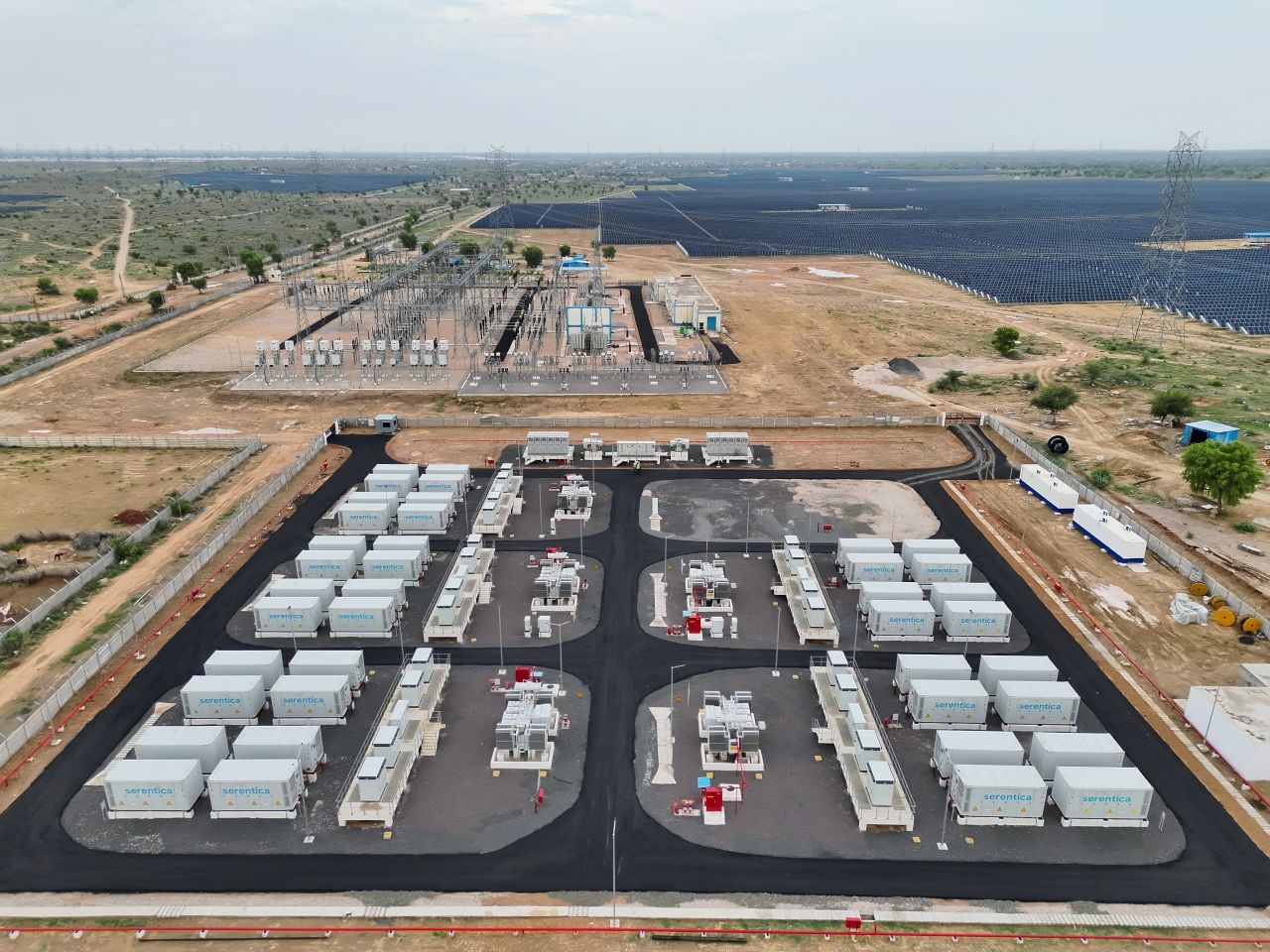
The scale of the requirement is significant. According to the Central Electricity Authority’s National Electricity Plan, India’s total energy-storage requirement is projected to rise from about 82 GWh in 2026-27 to 411.4 GWh by 2031-32, including 236.22 GWh of BESS. The government has also introduced viability-gap funding mechanisms to accelerate the deployment of battery storage alongside renewable energy.
This shift is already visible in procurement. Utilities and developers are moving towards larger, multi-hour storage projects, with tenders increasingly being structured around grid-scale applications. As deployment moves from individual projects towards a scaled ecosystem, however, the industry needs to look beyond the battery itself.
The electronics layer will increasingly determine how effectively a BESS performs.
A modern storage system is not simply a collection of cells. It is a combination of batteries, battery-management systems, power-conversion equipment, sensors, communication interfaces, thermal-management systems, protection systems and supervisory controls. These components have to work together continuously to monitor operating conditions, manage charging and discharging, maintain safety limits and communicate with the wider power system.
This makes the Battery Management System, or BMS, particularly important. As systems become larger and move towards higher voltages and longer-duration applications, BMS architecture has to manage increasingly complex parameters across battery modules and cells. Functions such as voltage and temperature monitoring, cell balancing, fault detection and protective control become critical to system performance.
The localisation conversation therefore needs to extend beyond cells and battery-pack assembly. It should increasingly include printed circuit board assemblies, BMS electronics, power-management systems, control boards, communication modules, testing equipment and complete electronic assemblies.
This is not simply a question of import substitution. A deeper domestic electronics ecosystem can also improve the ability to customize systems for Indian operating conditions and application requirements, while creating opportunities to develop components and subsystems that can eventually serve global markets.
Reliability will be central to this transition.
As BESS installations become larger, an electronics failure can have consequences beyond an individual component. It can affect system availability, operating efficiency and, depending on the application, grid performance. Manufacturing processes therefore need to place greater emphasis on inspection, functional testing, environmental validation and traceability.
Traceability is particularly important as storage systems move towards larger production volumes. Being able to identify the source, production history and test results of critical electronic assemblies can support faster fault diagnosis and improve accountability across the supply chain. For systems expected to operate for many years, this becomes part of the broader reliability architecture.
India’s standards ecosystem is evolving alongside the market. Standards and regulatory frameworks covering electrical energy-storage systems, battery-management systems and safety requirements are becoming increasingly important as deployment expands. This will help create greater consistency around system design, testing and performance.
The same principle applies to power electronics. Storage systems need efficient conversion between stored DC energy and the AC electricity used by the grid or end applications. As renewable generation increases and storage takes on a larger role in balancing intermittent supply, the performance of inverters, converters, protection systems and control electronics becomes increasingly significant.
This also changes the nature of the manufacturing opportunity. The energy-storage value chain should not be viewed only through the lens of battery chemistry and gigawatt-hours. There is a parallel value chain developing around the battery, covering design, PCBA, embedded controls, power electronics, sensing, communication, testing and system integration.
For India, building this layer will require closer integration between battery manufacturers, electronics manufacturers, system integrators, technology providers and testing institutions. It will also require investment in engineering capabilities and manufacturing processes that can meet the documentation, quality and traceability requirements of grid-scale applications.
The energy transition is often measured in gigawatts and gigawatt-hours. Those numbers capture the scale of deployment, but not the electronics that make those systems controllable, safe and reliable.
As India’s BESS market moves from tenders towards large-scale execution, strengthening this electronics backbone will be an important part of ensuring that storage capacity translates into dependable energy infrastructure.
The views and opinions expressed in this article are the author’s own, and do not necessarily reflect those held by pv magazine.
From pv magazine India
Written by

Comments