Brazil’s grid operator sets validation rules for BESS models

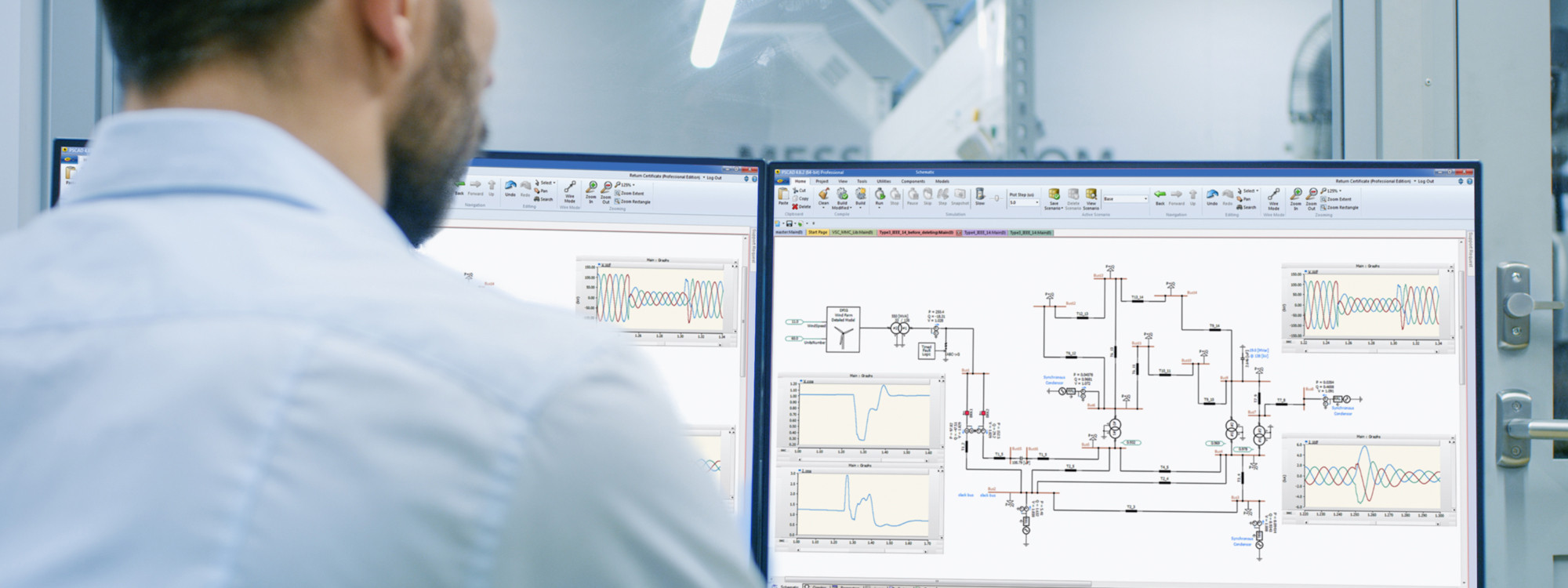
Brazil’s National Electric System Operator (ONS) has defined guidelines for validating computational models used in electrical studies of solar, wind and battery energy storage system (BESS) projects. The procedure sets criteria for checking whether simulations accurately represent real equipment behavior and allows validation to be carried out once per equipment family, without repeating the process for every project.
The models are mathematical representations used to simulate how power plants respond to grid conditions, including changes in voltage and frequency and system disturbances. The studies help ONS assess plant behavior and identify potential constraints on the safe operation of Brazil’s National Interconnected System (SIN).
Reliable simulations depend on the quality of models supplied by manufacturers and project operators. If a computational model does not reflect actual equipment behavior, studies may produce inaccurate results and undermine assessments of grid operating conditions.
The issue has gained importance as more renewable energy capacity connects to the grid through inverters. ONS has previously identified discrepancies between performance reported by project operators and the actual behavior of renewable power plants, with implications for generation dispatch and energy transmission.
Two-stage process
The guidelines establish two validation levels, N1 and N2. The first compares real equipment behavior with a detailed computational model, while the second checks compatibility between that model and another representation used in dynamic power system studies.
At N1, tests compare real equipment with an electromagnetic transient model developed in the PSCAD simulation environment. The aim is to verify that the model accurately reproduces the equipment’s observed electrical responses.
At N2, the electromagnetic model is compared with a positive-sequence dynamic phasor model used in other grid analyses. This stage is intended to ensure compatibility between the computational representations used in electrical studies.
Both stages require simulation files, test records, a model manual and a validation report. Specific deliverables include PSCAD models for N1 and ANATEM/Organon models for N2.
A key provision allows validation to be carried out once for each equipment family, provided the manufacturer and version are the same. This would remove the need to repeat the process for every project using equipment that meets those conditions.
The approach could reduce duplicated testing and technical analysis for manufacturers and project developers while standardizing the documentation used by the system operator. Model validation does not, however, automatically remove other studies or requirements applicable to each project’s grid connection.
The guidelines also cover validation of the power plant controller (PPC), which coordinates the operation of inverters at solar plants or wind turbines at wind farms.
At N1, the controller can be validated together with the inverter or wind turbine, or through a separate process. At N2, the assessment must consider the integrated system.
Grid-forming mode
For battery energy storage systems, ONS requires validation in grid-forming mode. In this configuration, an inverter can establish voltage and frequency references, supporting the electrical behavior of the grid.
Grid-following mode, in which equipment tracks references established by the grid, is treated as a degraded operating condition for the purposes of the guidelines. The document therefore waives the requirement to submit a model and carry out specific validation for that mode.
The provision comes as Brazil prepares for further growth in energy storage, including projects that could provide operational flexibility and grid support.
ONS has made available a validation guide for wind, solar and BESS projects, along with Technical Note ONS NT-ONS DPL 0436/2026, which sets minimum requirements for power-electronics-based equipment models used in electromagnetic transient studies.
The documents are available through the SINtegre portal, under installation integration and pre-operational studies. According to information published about the initiative, manufacturers and industry participants can submit questions on the guidelines until Nov. 10, 2026. ONS plans to publish responses in a supporting document by Nov. 30.
The initiative aims to improve the consistency of models used in electrical studies and standardize the technical assessment of equipment connected to Brazil’s interconnected grid through power electronics.
From pv magazine Brazil
More about
Written by
Comments



Popular Posts