Singapore targets 1 GWh of energy storage by 2030, opens industry consultation

Singapore’s Energy Market Authority (EMA) has begun a process to scale the city-state’s energy storage capacity from approximately 350 MWh today to around 1 GWh by 2030 with a consultation now open.
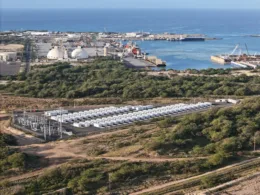
EMA published its short Energy Storage Systems Vision and Industry Consultation Paper, noting it currently operates a 326 MWh BESS on Jurong Island, which recently expanded from 285 MWh to 326 MWh using vertical battery stacking. It also has an estimated 18 MWh of residential, commercial and industrial BESS from distributed resources.
With a goal of 1 GWh of storage, the regulator is seeking to deploy ESS “where it creates system and economic value,” and is open to new technologies that suit the distinct disadvantages of land in the country.
The paper calls on industry stakeholders to propose commercially viable technologies, business models, and project structures before the consultation closes on January 29, 2027. EMA is also forming an industry-led Energy Storage Workgroup to address regulatory, technical, and physical barriers to deployment.
Grid flexibility for Singapore is more than just the city’s growth, with a projected rise in large, discrete electricity loads from semiconductor manufacturing, data centers, and transport electrification, and a growing share of domestic solar PV, all factors.
Under the new framework, EMA intends to review existing market rules, expand access to energy market data, and establish new operational requirements that allow storage assets to be centrally controlled by the grid operator depending on their size and system role. EMA also granted conditional approval to Sembcorp Utilities for the Vietnam-Malaysia-Singapore (VMS) corridor, which will import up to 1.3 GW of clean power by 2035 by pairing Vietnamese offshore wind with solar PV and utility-scale BESS located in Malaysia.
The consultation paper highlights three primary operational roles for new systems: fast-response frequency and stability support to counter solar fluctuations, peak shaving in network-constrained zones including localized methodologies for heavy electric vehicle charging, and aggregation via VPPs.
Puah Kok Keong, Chief Executive of EMA, said the authority wants to partner with private companies to turn concepts into bankable projects that can be deployed at scale. “Singapore’s need for flexibility in the power system is growing,” Puah said. “By doing so, we can strengthen power system reliability while making better use of every storage.”
Written by
Comments

Popular Posts