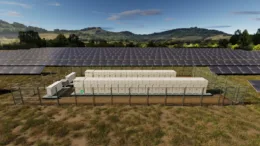
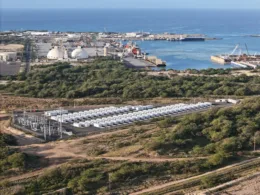
Delta advances 400 MW/800 MWh battery project in Australia

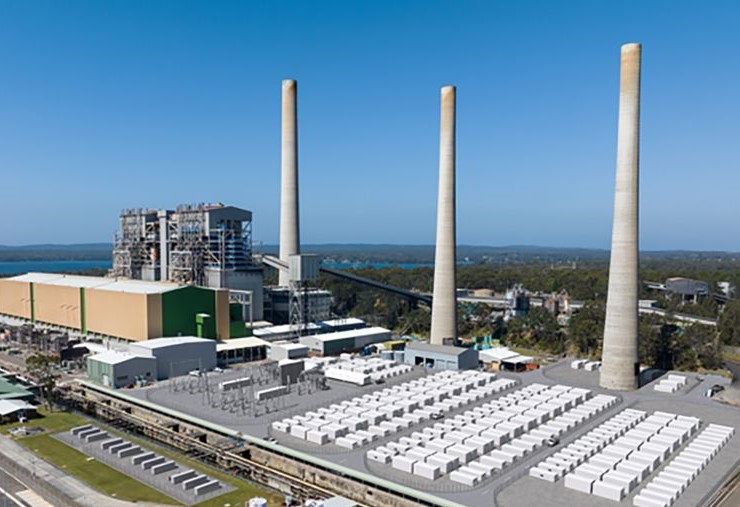
Delta Electricity, owned by Czech company Sev.en Global Investments, has lodged a development application and environmental impact statement (EIS) for a large-scale battery energy storage system (BESS) to be built at the site of the Vales Point power station in the New South Wales (NSW) Hunter region.
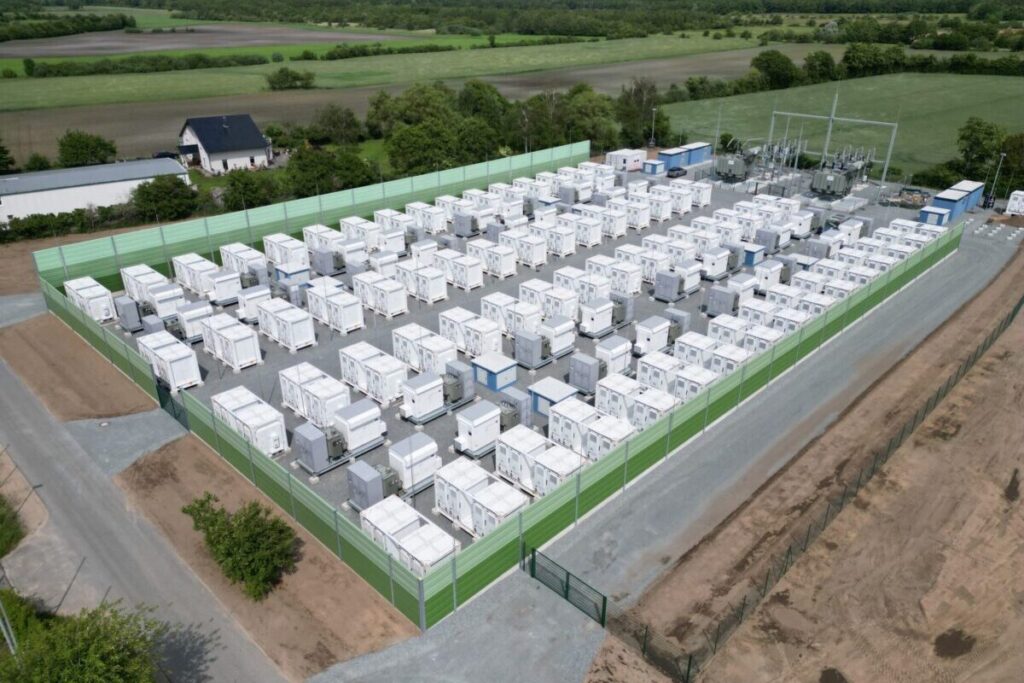
Developed in partnership with South Korean industrial giant Samsung C&T, the proposed BESS will provide up to 400 MW/800 MWh energy storage capacity.
Delta said once operational, the Vales Point BESS will operate 24/7 to help strengthen grid reliability and support renewable energy generation as part of the region’s evolving role in NSW’s energy transition
“Australia’s energy mix and landscape is changing significantly and this project will be a key part of this change,” the company said. “The battery will support the energy transition by strengthening the grid, improving energy reliability and helping manage the significant supply volatility created by an energy system dominated by variable renewable energy.”
The Vales Point battery will take advantage of existing grid infrastructure with Delta noting the site is “uniquely positioned” to participate in the energy transition after the coal-fired units are closed. The site is a hub for transmission infrastructure and located within the Hunter-Central Coast Renewable Energy Zone, which is expected to deliver 1 GW of additional network transfer capacity by 2028.
The State Significant Development Application (SSDA) and supporting EIS for the proposed Vales Point BESS have now been lodged with the NSW Department of Planning, Housing and Infrastructure for assessment.
Delta said the submission follows 18 months of “extensive technical and environmental studies” and is a major step forward for the project.
The proposed Vales Point BESS reflects a broader shift among utilities toward pairing generation assets with battery capacity as the grid transitions away from coal-fired baseload power.
It follows other coal plant operators also choosing battery energy storage, including the nearby 850 MW/1,680 MWh Waratah Super Battery, the AGL Energy-owned 500 MW/1,000 MWh Liddell BESS, and Origin Energy’s Eraring battery that will ultimately deliver a facility rated at 1,200 MW/8,600 MWh. EnergyAustralia also has plans to install a 500 MW/2,000 MWh BESS adjacent to its Mt Piper coal-fired power station in NSW’s central west.
Other projects include the 150 MW/150 MWh BESS built at the site of retired coal-fired Hazelwood power station in Victoria’s Latrobe Valley, and the 300 MW/600 MWh Tarong and 300 MW/1,200 MWh Stanwell batteries in Queensland.
Delta has announced it will shut down the Vales Point power station in 2033. The 1,320 MW plant provides about 4% of Australia’s electricity needs.
More about
Written by
Comments


Popular Posts