Canadian Solar targets 1 GW of BESS supply for Brazil battery auction

Canadian Solar, through its e-Storage division, aims to supply at least 1 GW of battery energy storage system (BESS) capacity for Brazil’s first capacity reserve auction dedicated to batteries, scheduled for Dec. 2. The company has been developing partnerships to supply storage systems to auction participants since January 2025.
e-Storage has a potential pipeline exceeding 2 GW of battery power across partner projects in Brazil, including projects involving some of the country’s largest independent power producers. The pipeline represents more than 8 GWh of storage capacity, e-Storage Latin America and Caribbean Managing Director Rob Bell told pv magazine Brasil.
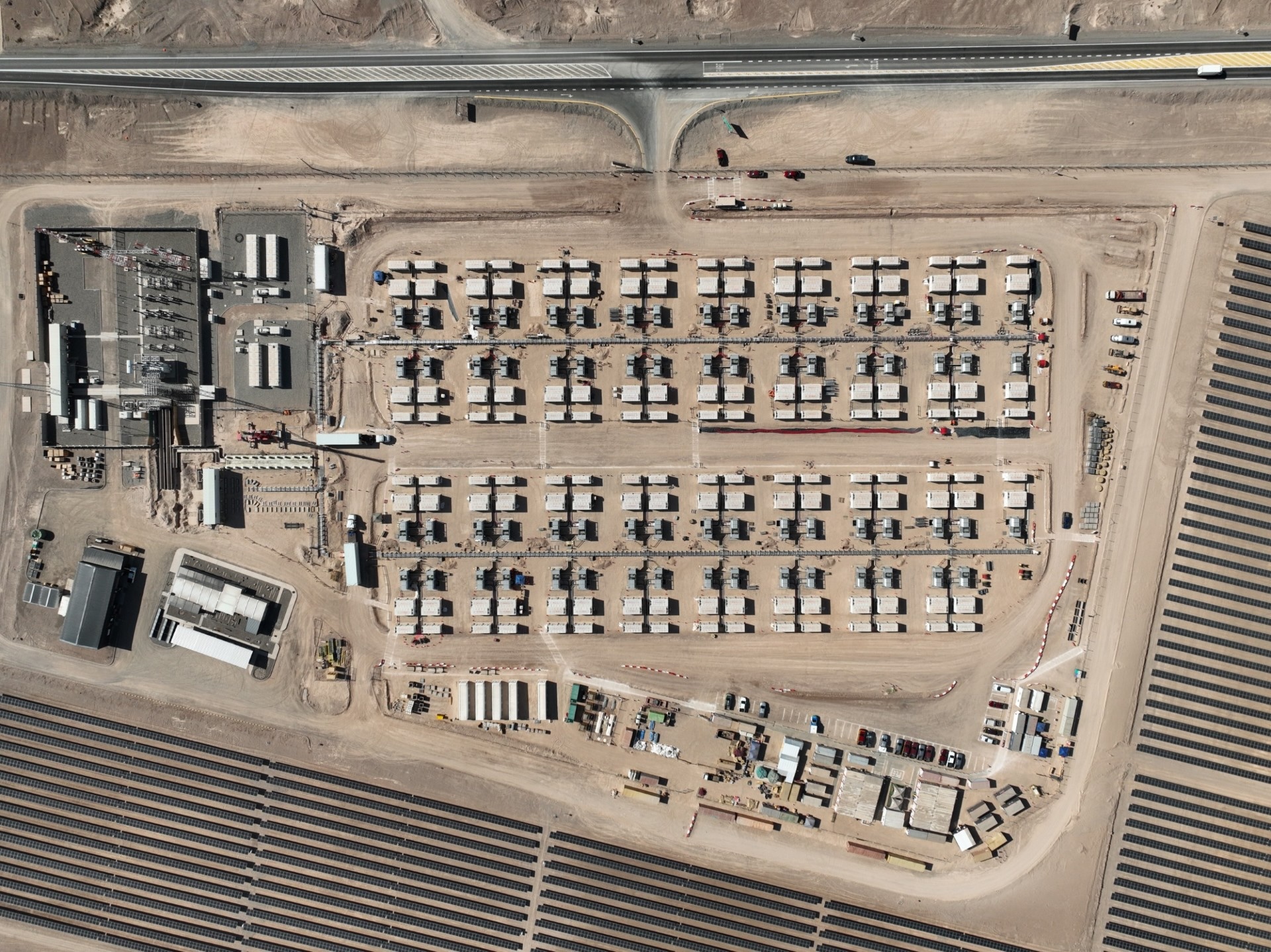
The company is drawing on its experience in Chile to develop relationships with Brazilian customers. e-Storage is commissioning about 1.5 GWh of storage projects in Chile and has hosted more than 10 visits by Brazilian customers to those sites to demonstrate its solutions and share project implementation experience, according to Rafael Moura, the company’s senior business development manager for Latin America.
Local content
In the first week of November, e-Storage obtained a CFI code from Brazil’s National Bank for Economic and Social Development (BNDES), certifying that its solution meets the auction’s local-content requirements and qualifies for the bank’s incentivized financing lines.
The company chose Route 1 of the BNDES accreditation process, which allows the battery containers on the direct-current (DC) side of the system to be imported. Its first accredited configuration has a power rating of 10 MW and uses a power conversion system (PCS) imported from Germany, alongside a locally manufactured medium-voltage skid (MV Skid). A second configuration, now entering the accreditation process, uses both a locally manufactured PCS and MV Skid.
Bell said the technology and supplier choices reflect Brazilian customers’ demand for technical flexibility and equipment from internationally established manufacturers. He also pointed to the suppliers’ technical capabilities and experience with the specific requirements of Brazil’s electricity grid.
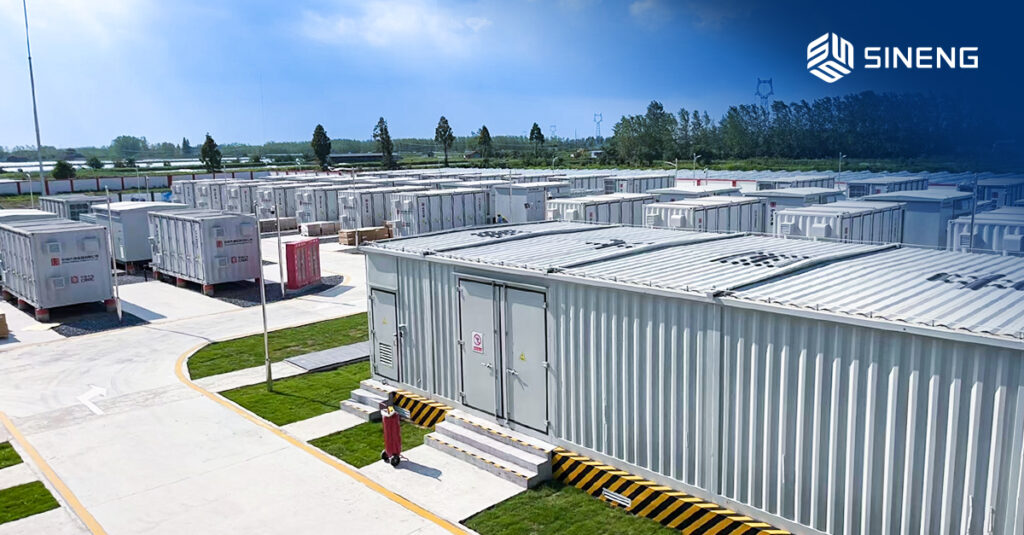
Both configurations use e-Storage’s SolBank battery containers, manufactured in China. Local partners supply and integrate the alternating-current (AC) side of the systems, including transformers and MV Skids.
The main difference between the two configurations is the sourcing of the PCS. In the first configuration approved by BNDES, the PCS is imported while the MV Skid is locally manufactured. In the second, both components are sourced domestically. Both arrangements meet the equipment list and localization criteria established by BNDES for Route 1 accreditation.
e-Storage is maintaining two PCS suppliers to reduce supply-chain risks and increase its ability to meet the volume of projects it is targeting. Bell said relying on a single supplier could constrain the company’s ability to fulfill local-content requirements, while the two configurations give it greater flexibility to supply the volume being offered to the market.
Moura said the company selected 10 MW and 5 MW blocks to allow different combinations based on project power requirements and customer specifications.
e-Storage expects most of the National Interconnected System’s capacity procurement for 2028 to be directed toward the first auction, which is restricted to solutions meeting domestic-content requirements. Moura anticipates that approximately 80% of the capacity will be contracted through the localized auction and the remaining 20% through a second auction without the same restriction, scheduled for Dec. 4.
The expected split prompted e-Storage to accelerate preparations for the domestic-content requirements while retaining supply options for both procurement models.
Moura acknowledged that systems meeting local-content requirements may have higher initial capital expenditure (CapEx) than fully imported alternatives. However, he said the financing conditions available through BNDES accreditation could narrow the overall cost difference.
The company’s localization strategy extends beyond the first battery auction. Moura pointed to potential capacity procurement opportunities in 2027, 2028 and 2029, which could also include battery storage, as a basis for continued investment in the local supply chain.
Bell said e-Storage intends to increase its domestic-content contribution progressively, initially through regional partners and later by establishing its own local infrastructure. He described the company’s plans in Brazil as a long-term commitment, with the aim of increasing the level of local transformation and contributing to the development of the country’s battery storage industry.
The company also sees opportunities for locally supplied systems beyond capacity auctions. Moura identified storage paired with distributed generation projects as a potential market and said credit lines and tax incentives could help improve the competitiveness of locally manufactured equipment.
Long-term performance
Alongside domestic-content requirements, e-Storage identifies safety, degradation and long-term performance as important factors in customers’ system selection. Its solutions use lithium iron phosphate (LFP) cells and have undergone large-scale fire testing, which assesses system behavior under severe fire conditions, according to Moura.
The company also offers long-term service agreements (LTSAs) lasting up to 20 or 25 years, depending on the contract. These agreements can include performance guarantees covering system capacity, efficiency and availability, as well as equipment commissioning.
Project assessments consider not only initial investment and delivery capacity but also battery degradation and the potential need to increase installed capacity during operation. e-Storage can include additional battery containers and equipment for augmentation in its contracts, allowing customers to add battery capacity to compensate for degradation over time.
Moura said system configuration depends on factors including the point of energy delivery, the 15-year contracting period envisaged for the auction and each customer’s financing strategy. e-Storage evaluates different sizing scenarios, including configurations with higher upfront investment to reduce future operating expenses and smaller initial installations that can be expanded later.
Bell said Brazil is a strategically important market for e-Storage in Latin America. The company is taking corporate-level steps to increase its market participation and establish itself as a long-term supplier of energy storage systems, he added.
From pv magazine Brazil
More about
Written by
Comments
Popular Posts