Tesla unveils Powercore medium-voltage power electronics platform

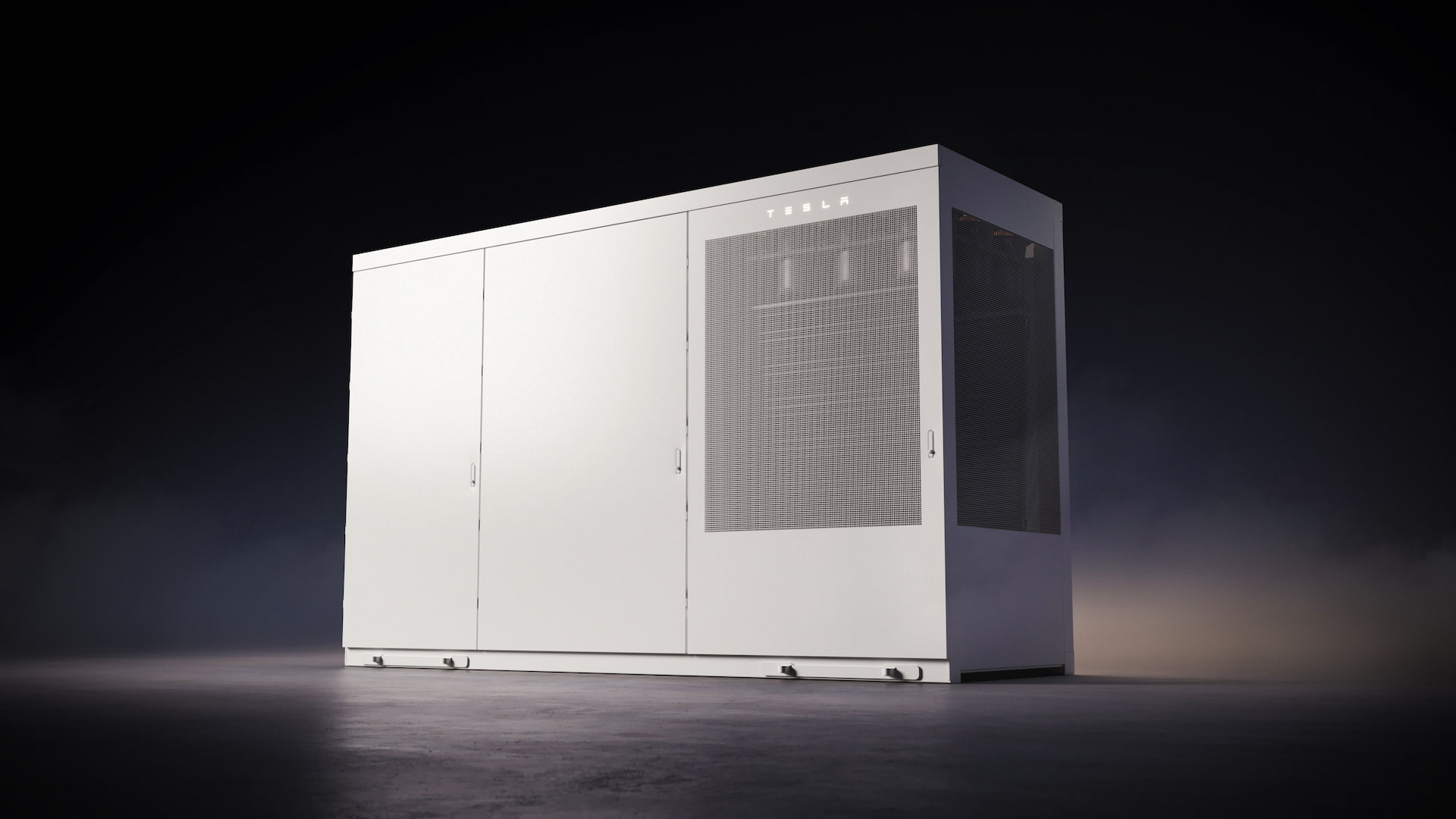
Tesla has announced the introduction of Powercore, a consolidated medium-voltage power electronics platform that combines a solid-state transformer, switchgear, and an inverter into a single enclosure rated for a nominal DC voltage of 800 V to 2,000 V and an AC voltage of 10 kV to 34.5 kV, providing up to 7.4 MW (9 MVA) of power at 34.5 kV AC.
Powercore will be manufactured at Tesla facilities in the United States and the company plans to have it in operation in 2027. The company said the platform is designed to operate from −40°C to 55°C and can be covered by a warranty of up to 25 years. Tesla has not provided a specific production start date.
The Powercore platform is aimed at numerous segments in the modern energy ecosystem, specifically targeting solar, energy storage, data center power and EV charging. Tesla said the Powercore offers unique benefits for each of these use cases, but the overarching advantage might be the ability to bypass the supply chain for conventional transformers. Limits to the availability of key inputs to transformer manufacturing have caused lead times of as long as four years, resulting in a bottleneck in grid modernization and renewable energy deployment.
“We’ve done 3 TW of power converters at Tesla,” said AJ Booth, the company’s head of energy and charging, in an interview with pv magazine. “We build all of our power converters in-house, and we wanted to use that capability to provide a bankable and reliable pathway for customers to confidently adopt what is fundamentally a new technology to the industry.”
Bringing the manufacturing of critical power infrastructure in-house could also catalyze growth in the company’s high-margin energy revenue, which represents roughly 10% of the company’s overall sales. Margins for the Energy Generation and Storage division have routinely outperformed those of the company’s core automotive business, despite experiencing some quarter-to-quarter volatility in revenue.
Streamlining utility-scale solar and storage deployments
For solar installations, Powercore accepts high-voltage direct current directly from solar arrays, combining the transformer, inverter and switchgear into a single product. The company said the hardware natively supports existing 1,500 V DC plants as well as emerging 2,000 V DC architectures. This eliminates the need for asset owners to purchase secondary inverters and transformers.
On the energy storage side, the platform is designed to integrate with Tesla Megapack batteries via DC bus connectors. The company said the two solutions can be delivered to a site pre-assembled, speeding up deployment and reducing manual on-site wiring. By simplifying site design and lowering labor costs, the integrated architecture can lead to improved project economics for developers while maintaining Tesla’s high equipment margins.
Advanced safety and grid-forming capabilities
Tesla said Powercore features the industry’s first built-in solid-state circuit breaker. The system can clear electrical faults in 100 microseconds — far faster than conventional transformer-fed protection.
“We think we’re safer because we can interrupt faults a thousand times faster than traditional equipment, which is extremely safe for personnel and for equipment due to our integrated solid-state circuit breaker design,” Booth said.
The platform also targets the power requirements of artificial intelligence computing. Tesla said Powercore is designed to sidestep the complicated method of stepping down grid voltage through multiple stages to power data center racks by reducing the conversion to a single step that takes grid power from the feeder and outputs 800 V DC power to the servers.
The company said it is working with NVIDIA to certify Powercore into the DSX Ready Program, which validates equipment that meets standards for integration with next-generation data centers. As of September, Tesla’s Megapack 2XL was one of only three battery energy storage system (BESS) offerings qualified under the DSX Ready program.
When paired with Megapack battery storage on the grid, Powercore uses Tesla’s grid-forming controls to provide synthetic inertia and reactive power support. Booth stated that managing a data centre’s dynamic loads with this paired system can smooth local voltage oscillations and stabilise the broader grid network.
“By adding a data center with Powercore and Megapack, we can provide a stiffer local grid and provide a more stable grid,” Booth said. “It’s actually better than if you didn’t put a data center there at all, which is the amazing thing that batteries can do for the grid.”
Tesla is presenting the new Powercore product this week at RE+ 2026 in Las Vegas.
Written by
Comments


Popular Posts