Poland caps how fast batteries can ramp in its secondary reserve market

Poland’s Energy Regulatory Office (URE) has approved grid code changes from transmission system operator Polskie Sieci Elektroenergetyczne (PSE) that limit how quickly batteries and other resources can ramp when providing automatic frequency restoration reserve (aFRR), a restriction the country’s storage association opposed.
URE approved the update to PSE’s transmission grid code on Nov. 18. The changes take effect on Dec. 1.
Under the new rules, aFRR providers must still activate within five minutes, but their ramp rate may not exceed their qualified control range divided by 2.5 minutes. In practice, a battery can no longer reach full aFRR output in less than 2.5 minutes.
PSE said fast-responding resources based on power electronics, including energy storage, could otherwise activate aFRR in under a second, which could destabilize local networks and the wider power system. PSE said the cap is a domestic stability measure rather than a requirement of Europe’s balancing platforms, and was timed to coincide with other reserve-market reforms.
The Polish Energy Storage Association (PSME) argued during consultation that the cap reduces the technical and market value of fast-responding batteries. It asked PSE for a system stability study, periodic review of the limit, exemptions or an alternative approach based on limiting overshoot. PSE rejected the request.
Market access
The update also splits Poland’s manual frequency restoration reserve (mFRR) into two products. One is a standard product designed to be compatible with MARI, the European platform for exchanging manually activated frequency restoration reserves, with a 2.5-minute preparation period, a 10-minute ramp, delivery of five to 20 minutes and a 10-minute deactivation.
The other is a domestic, non-standard product for Polish system needs, with its technical requirements set out in a separate PSE document. Requirements for frequency containment reserve are unchanged.
The changes also relax requirements for connecting balancing service providers to PSE’s load-frequency control (LFC) nodes. Generating units of at least 500 MW, or plants whose centrally dispatched units total at least 500 MW, must still connect through a local LFC node. Other balancing service providers can now connect through a remote node and must stream monitoring signals to PSE in real time.
PSME welcomed the change, saying it should lower entry barriers for small and medium-sized balancing service providers, including storage operators. PSE consulted on the changes from July 21 to Sept. 7.
Poland’s balancing market reform took effect on June 14, 2024, and PSE has since joined PICASSO, Europe’s platform for exchanging automatic frequency restoration reserve. Batteries have also become a major part of Poland’s capacity market. Storage accounted for 15% of capacity contracted in the main auction for delivery in 2028, according to URE, and the auction for 2029 catalyzed gigawatts of battery storage projects. In the main auction for delivery in 2030, however, Poland cut the availability factor for batteries to 13.39%, sharply reducing storage awards.
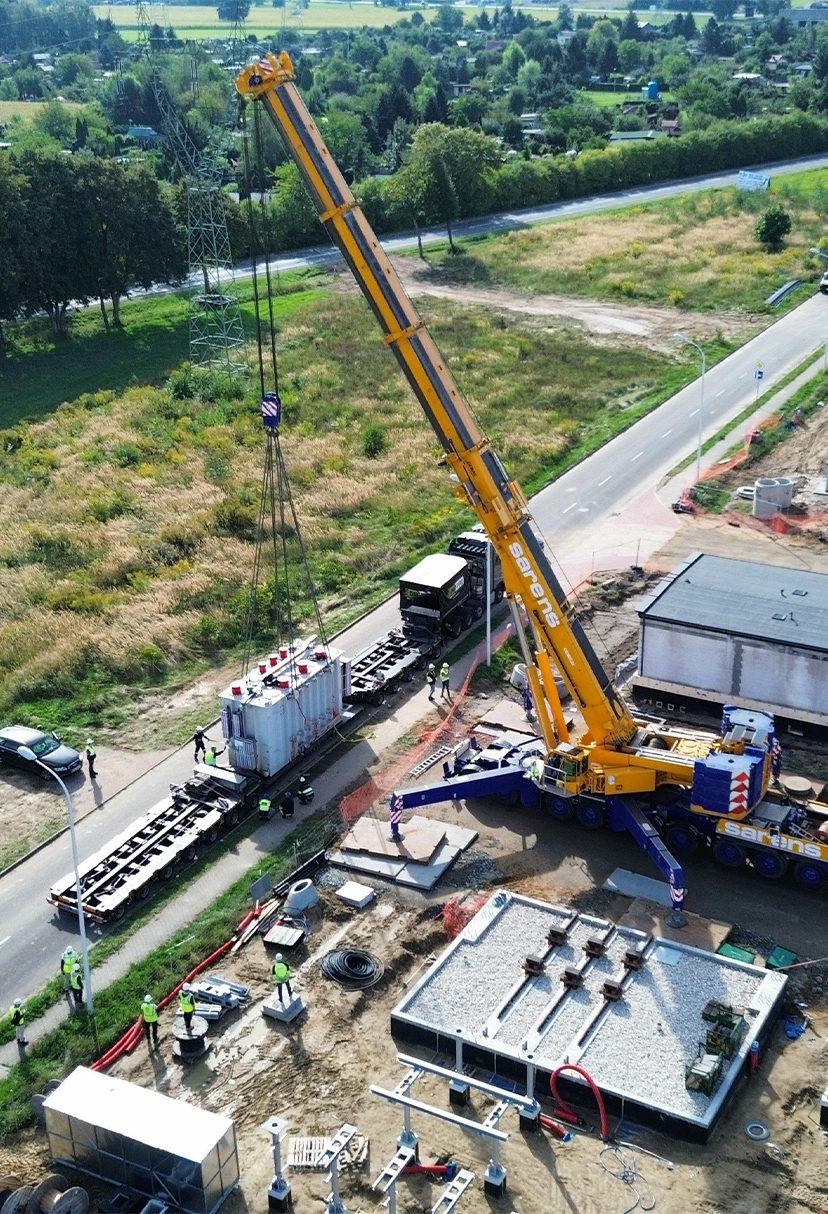
The rule changes land as Poland’s battery pipeline keeps growing. Polish utility Tauron secured financing for 1.5 GWh of battery storage projects in January, Spain’s Grenergy added 2.1 GWh of Polish projects to its European standalone storage pipeline the same month, and construction is underway at one of Poland’s largest battery storage projects.
More about
Written by
Comments