Chile moves on storage to ‘decarbonize the night’

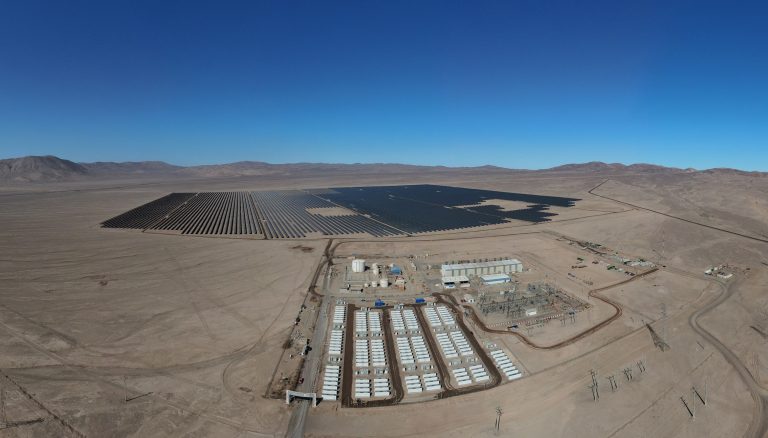
Solar and energy storage deployment is booming in Chile, spurred on by supportive government policy that has been markedly stable for 15 years. Indeed, the nation leads Latin America in this sector today, along with Brazil.
To put this in context, nonconventional renewable energy (NCRE), as it’s called in Chile, accounts for up to 17.3 GW of installed capacity in the Andean country, representing 48% of the total system and 40% of Chile’s electricity generation. Solar alone accounts for 10.9 GW of operational installed capacity, with an additional 3.2 GW under construction, according to the National Energy Commission’s June 2025 report on the NCRE sector.
Felipe Gallardo, director of studies at the Chilean Association of Renewable Energy and Storage (ACERA), said several factors have driven the growth of photovoltaics. One is the country’s abundant solar resources. Gallardo also points to “the decline in development costs experienced by renewable technologies, the favorable conditions for financing projects through long-term PPAs, and the activation of a coal power plant retirement plan currently underway.”
As in other parts of the world, Chile’s rapid installation of wind and solar capacity has been accompanied by a sharp rise in curtailment, as projects generate at the same time, crowding the country’s long, thin grid. Data from ACERA shows that 2024 ended with nearly 6,000 GWh of renewable energy curtailed. That number is set to increase in 2025, with the agency reporting that 2,421 GWh was curtailed in the first half of the year – a 20% increase over the same period in 2024.
Energy storage is already recognized as the most appropriate solution, with a report by grid operator Coordinador Eléctrico Nacional finding that 2 GW of battery storage could reduce the curtailment of renewables by up to 40% and save around $500 million per year in system operating costs.
Early target
In less than three years, Chile has come close to hitting this target, with 1 GW of energy storage systems in operation, 571 MW in the testing phase for grid interconnection, and 3.9 GW under construction.
These figures have led Chilean Energy Minister Diego Pardow to state that “in January 2026, we will meet the goal of 2 GW of storage” in operation. When the total project portfolio is considered, the goal of having 6 GW of operational storage systems by 2050 is already 81% met, with 5.47 GW expected to be completed by the end of 2026, leaving only 527 MW to go.
“Of this project portfolio, 26% corresponds to standalone storage projects, and 74% corresponds to hybrid plants that combine storage with renewable generation, mainly solar photovoltaic,” Gallardo told pv magazine. “Additionally, there are 23 GW in various stages of evaluation, which shows the industry’s strong interest in developing this type of project.”
Case studies
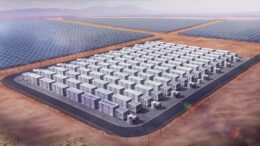
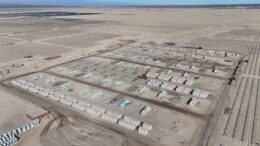
Undoubtedly, the most notable is the Oasis de Atacama project, developed by Spanish company Grenergy. Located in the Atacama Desert in northern Chile, this megaproject will have a total capacity of 2 GW of photovoltaic generation and 11 GWh of lithium-ion battery storage, distributed across seven phases. It is expected to annually produce around 5.5 TWh of energy, with a total investment exceeding $2.3 billion. All phases are expected to be operational between 2025 and 2026.
The BESS del Desierto plant is another emblematic project, also located in Atacama and developed by Atlas Renewable Energy. This project, with a capacity of 200 MW/800 MWh, was the first large-scale standalone energy storage plant in Latin America. Additionally, under power purchase agreements, part of the energy stored in BESS del Desierto will be used to power the operation of approximately 2,500 electric buses, directly contributing to the decarbonization of public transport in cities like Santiago.
Key challenges
Chile’s energy sector faces significant challenges in its transition to clean sources, particularly due to the gradual phase-out of thermal power plants. According to Gallardo, “carrying out an energy transition within tight deadlines brings a range of challenges in operational, regulatory, institutional, and tariff areas.” This situation calls for replacing coal-fired power generation – which accounts for 16% of electricity supply – with non-polluting renewable sources.
In this context, energy storage systems play a fundamental role.
“Storage systems are crucial as a complement to variable renewable generation, allowing us to ‘decarbonize the night,’” said Gallardo.
Flexible generation sources are needed to respond to demand peaks and ensure the sufficiency of the electrical system. “It will be necessary to have generation with a flexible dispatch profile, so it can be used during periods of highest system adequacy requirements,” he added.
Finally, the grid must maintain its robustness and adaptability – qualities historically provided by thermal power plants. Gallardo noted that “many of the security and resilience attributes historically contributed by conventional plants can be replaced by power electronics in combination with storage systems and renewable generation.” Achieving this, he argued, will require updating technical standards and the ancillary services market, incentivizing investment in clean technologies, and facilitating the integration of renewable energy.
From pv magazine print Issue 07 & 08 2025
Written by




Popular Posts