Hands-on with the Bluetti Apex 300 portable power station

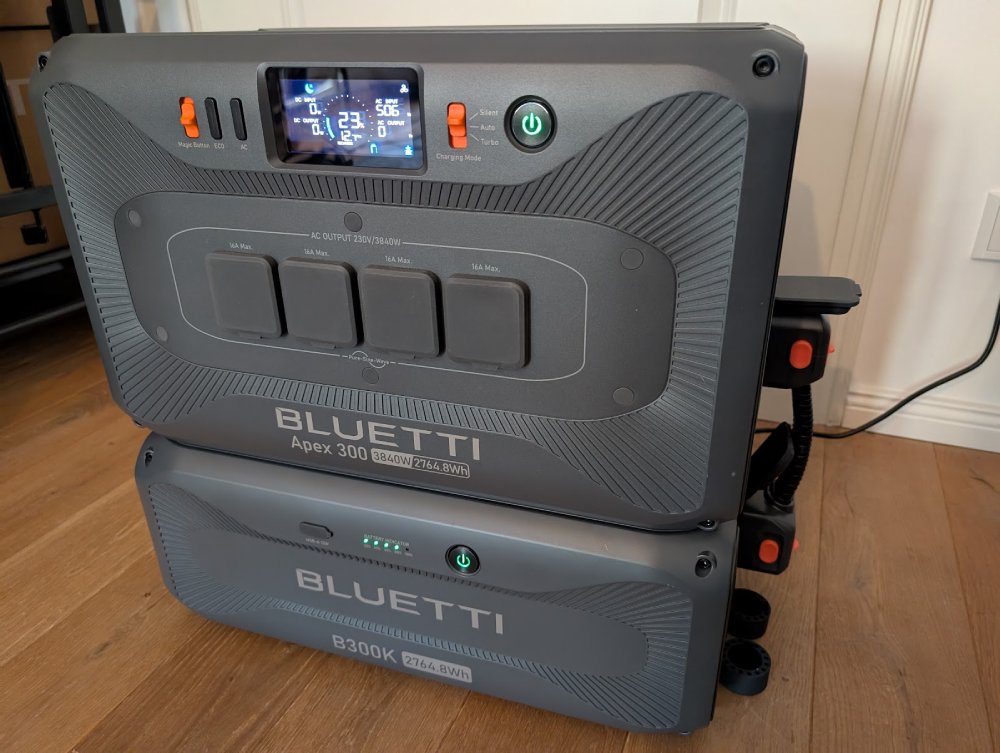
Portable power purveyor Bluetti’s Apex 300 is the latest take on a workhorse power station offering. With it now having general availability in the market, ESS News has gone a bit more in-depth with the unit and its accompanying offspring, the B300K expansion storage unit.
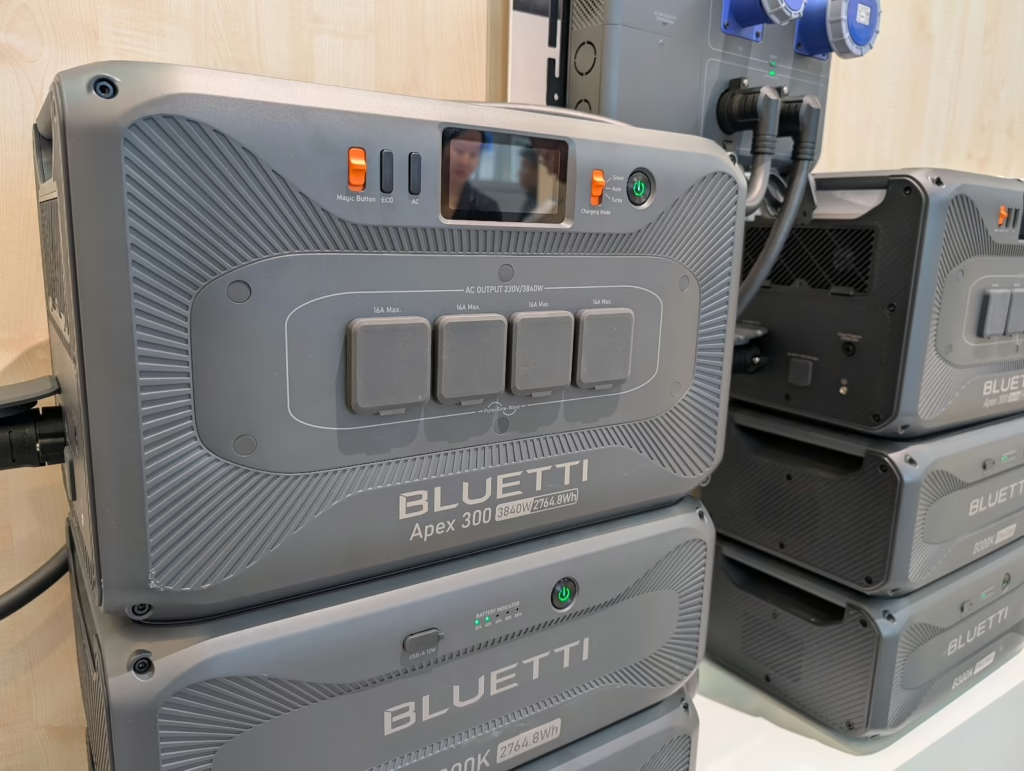
The Bluetti Apex 300, in case you missed previous coverage, is the base unit and the smarts of Bluetti’s latest portable power system. Alone, the Apex 300 packs 2.76 kWh of storage capacity via its lithium iron phosphate (LFP) batteries, and the inverter inside can output 3.84 kW peak power.
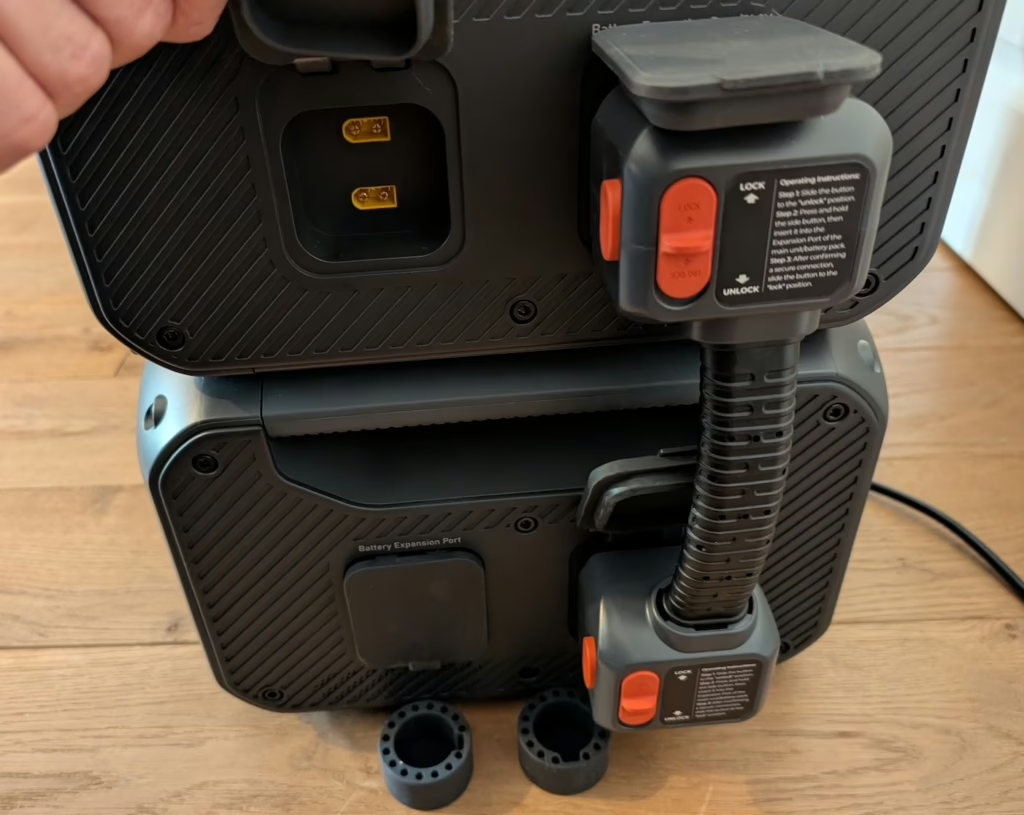
It’s enough by itself to do serious business, but the system comes alive with expansion ideas. You can add one or many B300K expansion batteries, plus expansion cables, to pack on another 2.76 kWh, and a duo will give you a total of just over 5 kWh of storage capacity.
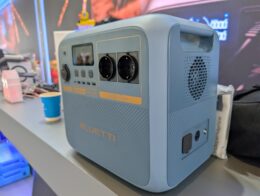
Unlike some others that limit you in expansion early on, Bluetti has made stacking part of the fun, and will let you connect up to three Apex 300s in parallel and add as many as 18 battery packs from the B300 range to deliver up to 58 kWh of storage and a total of 11.52 kW of output power. At a private location, Bluetti showed an Apex 300-based setup for testing at IFA 2025 plus a connected B300K, as you’ll see below:
Swiss Army knife inspired
The Apex 300 is trying to be a Swiss Army knife of portable power. The aim is to be versatile by giving you the ability to connect it to a smaller balcony photovoltaic system, a full larger-scale house PV system, along with the grid-connected, or even a small business solar system. There’s also full off-grid possibilities, and goes with an RV or serious road tripper option as well with off-grid operation. It has a 0ms UPS function in the US, and 20 ms UPS function in other regions – see our footnote for more here.
What’s also unusual is that the Apex 300 can deliver both 120 V and 240 V power, meaning not only is it set up for use in most grids around the world, but those stuck with 120 V power in the US user can make use of workhorse 240 V power for more heavy appliances like boilers, well pumps, and dryers.
Going hands-on with it at IFA 2025 revealed a few things. First impressions were good. It’s a quality device with lots of thoughtful design choices. The next impression, inevitably for many people, will be that the Apex 300 is heavy. It is 38 kg (84 lb). This is enough to test just how much you want to move it around. Add a few B300 batteries, which are a little lighter at 29.5 kg, and you have yourself a workout. It is weighty.
On the charging side, again, Bluetti aims for with flexibility. From the grid, recharging can take just 45 minutes, and the device has modes that can allow for fast charging and the use of fans to keep things cool, or you can switch to more silent modes that throttle down charging speed, but it’s quieter. You can do that via the associated app or from the buttons on the front. While the noise sounded much like white noise, sometimes you just need peace!
Self-consumption is a factor you don’t think about before you buy a station, but it is a constant factor. Idle powering of the computer main boards, along with inverters being on, can consume your needed storage if you don’t power the system down fully. Bluetti’s Apex 300 manual suggests “about 20 W” self-consumption, and we checked that. An idle Apex 300, with inverters on, consumed around 19.5 W per hour while we watched. That’s an improvement over competitors. (Also, you can fully power the system off if you need.)
Solar charging, accessories
On the all-important solar side, Bluetti had connected a 200 W portable solar panel for testing, which provided between 100 to 150 W charging depending on the sun, and worked as expected. The Apex 300 can take up to 2.4 kW of solar directly wired in, and you can do mains-plus-solar charging as well for up to 3.84 kW of charging. That said, most folks with more than two panels will need an optional SolarX 4K, a 4 kW solar charge controller, basically a device for handling a wider array of solar including bigger bifacial panels with higher voltages or Vmp.
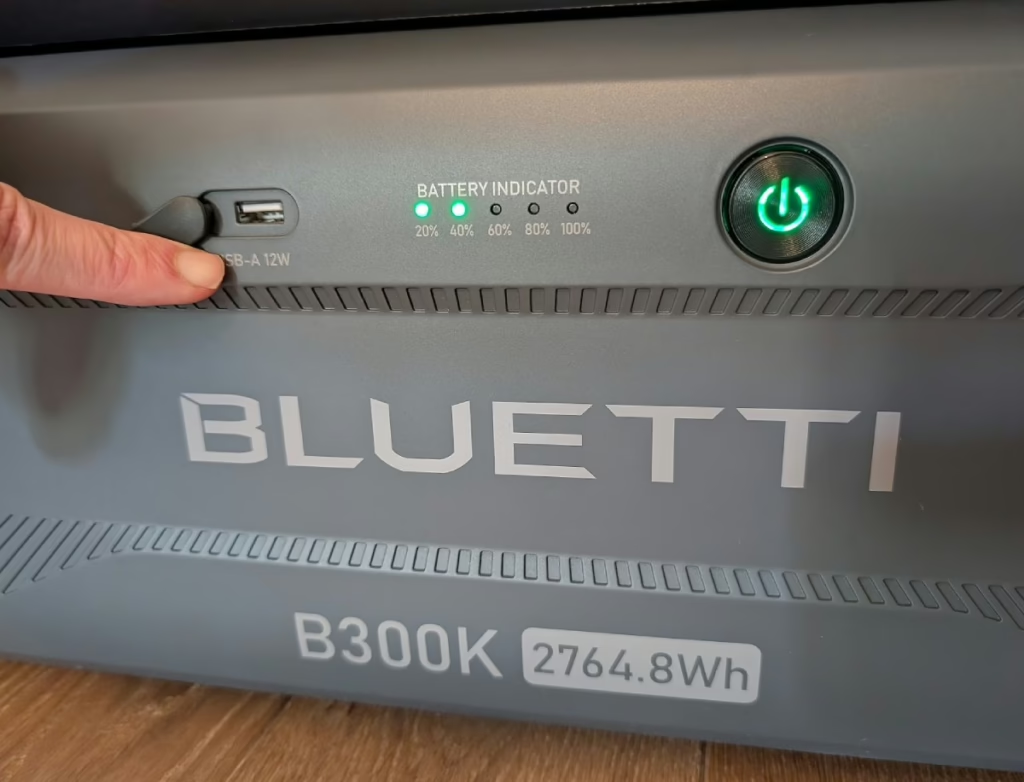
On the six AC outlets, including built-in NEMA TT-30R and NEMA 14-50R output ports. It also has a 12V/50A Anderson port. Interestingly, there’s no DC from the Apex 300 device, so no high- or low-wattage USB-C output ports, probably because Bluetti thinks you won’t be near your Apex 300 too often when it’s in use as it’ll be supplying AC-power to a home, RV, or heavy devices. Solving that involves getting a DC hub called Hub D1, more on that in a moment. Plus, the B300K has a 12 W USB-A port for some reason, which could be handy.
Bluetti has an optional app on iOS and Android that worked well. It provides detailed monitoring and settings options, plus you can do things like track your solar yield over time. There’s also an option to buy more accessories in the store in the app, some at discounts.
With accessories comes more options to charge from vehicles, generators, and EV stations. The list here is long, and a trolley (or “dolly”) for moving the units around more easily is just the start.
There are the Hub A1 for parallel connections, a Hub D1 (DC Power Hub) with nine outputs ports including cigarette lighter, USB-C. There’s an EV charging cable, and the aforementioned SolarX 4K, which became available in September.
Put simply, the list of accessories is long, comprehensive, and has a definite chance of confusing those who expect an all-in-one system.
Overall
The Apex 300 alone is a big-time, modular, expandable system aimed at users who can make it work for their needs. It will help to have a DIY approach (or know someone who does) and most will want to consider it when they find the need for portability. Competition comes from many places, like a more sleek battery backup home system such as a Tesla Powerwall 2 or a newer Enphase IQ Battery 10C system that finds a fit tucked away permanently. Of course, there are many others.
Make no mistake, though; while the Apex 300 is heavy and packed into a large rectangular brick, it is movable, unlike the full-home backup systems that are fixed in one place. That has its advantages. The building-block approach means that the sheer range of choices for pairing is a little overwhelming and not helped by hard-to-parse naming conventions. They must also be considered when costing up the system.
Still, this is an expandable system, and Bluetti has avoided an all-in-one device. Instead, it’s made it more price-friendly and given users the option to expand where it’s useful.
Footnote: The Apex 300 is available widely across Europe, North America, Australia, and UK, but some specs and details do change depending on local voltages and requirements including the aforementioned UPS functionality. Bluetti posted this graphic to Reddit showing the main differences. Another example is that you only receive extreme weather alerts in the US, not other regions.
Written by




Popular Posts