Utility-scale BESS to drive Czechia’s storage market

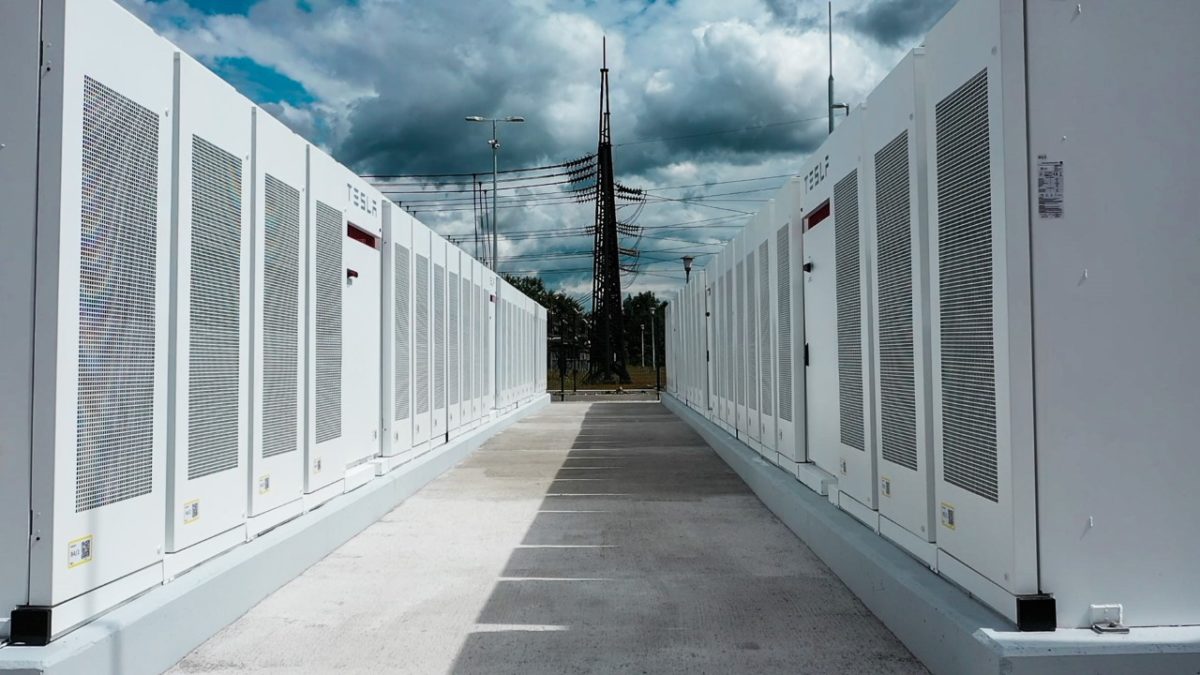
Czechia’s battery storage capacity is set to reach 6 GWh by the end of the decade, up from around 2.3 GWh today, according to analysis by Aurora Energy Research.
The country’s current battery fleet is made up almost entirely of behind-the-meter installations, with such systems accounting for 98% of installed capacity in 2024.
Aurora Energy says recent regulatory changes have opened the door for a major build-out in utility-scale battery energy storage systems (BESS). In March, amendments to Czechia’s Energy Act facilitated new revenue streams by permitting batteries to participate in wholesale markets and the ancillary FCR, aFRR and mFRR markets, while in August, connection procedures for BESS were sped up and simplified.
During a webinar presenting the analysts’ findings, Hanna Wojtyniak, Commercial Sales Associate for Aurora Energy, explained that these reforms “will transform Czechia from more of a small, policy-driven market into a large flexibility hub for Central Europe”.
Wojtyniak added that developers had anticipated these regulatory changes and started applying for grid connections earlier. “By mid-2025, over 1 GW of capacity was already reserved, which resulted in the grid being essentially full in some regions of Czechia,” Wojtyniak said. “This shows how high investor confidence is in the new framework.”
Czechia also ran its first standalone subsidy for storage this year, offering an €80 million ($93 million) budget. Patrycja Janowska, an Aurora Energy analyst, explained that the entire budget was used up within a couple of weeks, causing the allocation round to close the same month it opened after the submission of 700 applications.
“This only highlights the popularity of this type of asset, and we expect to see a similar level of demand next year as well,” Janowska said.
These favourable market conditions, alongside current price volatility and high financial service prices, indicate current strong revenue potential for utility-scale BESS. Stanislav Novak, a senior research analyst at Aurora Energy, explained that the Czech energy market has undergone a shift in recent years, with gas prices remaining around 1.5 times higher than pre-crisis levels, while renewable generation has surged, driving up market volatility.
“Daily price spreads are now four times what they were before the crisis,” Novak added. “Battery projects can capitalize on the daily price swings, and early movers are racing to secure an edge.”
Aurora Energy’s research calculates that a two hour BESS with a daily 1.5 cycle switched on next year could achieve full payback within five years, alongside an internal rate of return in excess of 15%, thanks to high balancing market prices and the wholesale market volatility.
But the analysts warned that the current pent-up demand means the ancillary services market, one of the primary revenue streams for batteries, is likely to saturate quickly. By 2030, annual revenues for a two hour BESS could be 36% lower than in 2026 due to this saturation.
“Projects coming to the system later than 2026 will need to adapt to new revenue streams, which means the importance of the wholesale market will rise,” Novak predicted.
Looking further ahead, Aurora Energy is anticipating that batteries will move from ancillary market preparation to focus on energy trading in day-ahead and intraday after 2030. Piotr Dobrzynski, Aurora’s market lead for Poland, Czechia and Slovakia, also told attendees of the webinar that standalone batteries may begin to depend on revenue streams that are not yet active in Czechia in the next decade, such as grid forming, black start or artificial inertia.
Written by



Popular Posts