The contract-fab model is heading for batteries

The battery industry has long chased the gigafactory model. Yet, many of the most successful technological innovations and industries have hit their stride by using a decidedly different one: outsource production to proven manufacturers.
The semiconductor industry in particular has embraced the foundry model, which has companies specialize in either design (also known as a “fabless” approach) or manufacturing and outsource the other element. It enables companies and manufacturers to develop more specialized expertise and reduce overall costs.
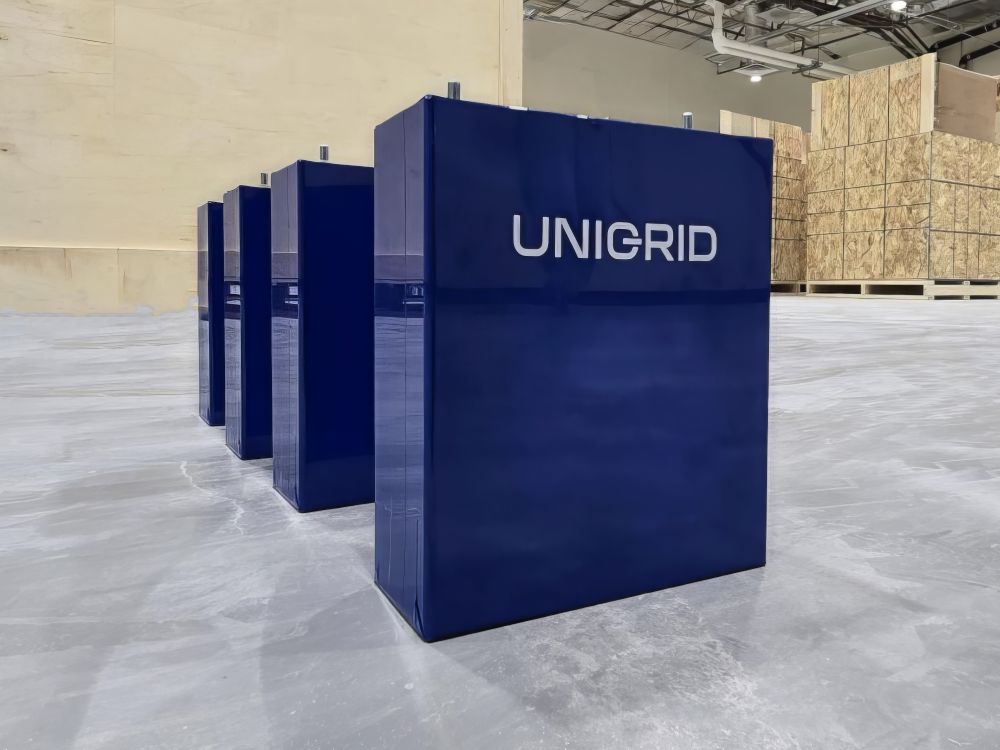
For Unigrid’s CEO, Darren Tan, following in their footsteps was the only logical path to getting the company’s sodium-ion batteries off the ground and scaling rapidly.
“We’re one of the few battery teams that use a 100% foundry approach and contract manufacturing,” he told ESS News. In the company’s early days, Tan learned that 1.3 terawatts worth of gigafactories were announced in 2021, yet only a tiny fraction of them came to fruition; most were cancelled or delayed. He didn’t want a Unigrid production plant to be among them. So, Tan explained, “we looked at tech companies in parallel industries and found that many of them had strong product designs and outsourced the manufacturing to someone else.”
It made sense to apply the same approach to the battery industry, he added, because “why not keep people working on what they’re good at?”
In his eyes, a main asset of American companies lies in their propensity for innovation and technological development. The push for industrialization and onshoring has led the industry to forget its roots, Tan said, adding that a company’s end product will likely be of higher quality if it’s been made by a variety of actors playing to their strengths rather than a single group trying to be a jack of all trades.
That’s why Unigrid outsources the vast majority of its manufacturing to Asian production facilities. Tan noted that in many Asian countries, factories are often underutilized and only operate part-time.
“They love taking service contracts,” he said, and a lot of traditional factories have pivoted to a foundry model that uses 1-3-month-long production cycles and earns better margins. While this approach can cost a battery company more up front (as high levels of due diligence and research are needed), it can also slash the go-to-market time.
“We’re past the point where customers are willing to wait five to 10 years for a battery that will be technologically obsolete by the time it arrives,” Tan added. With co-founder Erik Wu, Tan spun Unigrid out from UC San Diego in 2021; the company shipped out its first cells two years later.
Still, the company’s model isn’t for everyone. Switching manufacturers frequently risks intellectual property leakage; splitting up each step in the manufacturing process before bringing each component to the central warehouse for assembly can help reduce that possibility. Plus, doing so effectively can be difficult depending on system design.
“The foundry approach can only work if your IP can be made on existing factory lines,” he explained, noting that Unigrid’s sodium-ion cells use the same manufacturing infrastructure as lithium-ion batteries. While some software settings may need to be adjusted, that’s a relatively straightforward fix; creating new toolings (like those needed to construct solid-state batteries) is a different story.
Tan’s other recommendation for companies looking to dip a toe into the battery foundry world? Make an alternative, not a replacement.
“There’s a common misunderstanding that the new will always replace the old,” Tan said. “We’re often asked, ‘When will sodium batteries replace lithium-ion?’ Never, and we’re not looking to replace it. Sodium-ion’s path to success lies in going places that lithium-ion can’t go and letting it do things that lithium batteries can’t.”
Written by



Popular Posts