Batteries: The game has changed – and it’s not what you think

Until recently, even with different technologies, the battery industry followed a fairly simple logic: everyone was trying to improve the same things. The data was always greater range, faster charging, lower costs. It was a shared race, with technical variations, but a single direction.
Today this logic is breaking down.
Not because new chemistries have emerged in the absolute sense, but because the way they are developed and used has changed: we are no longer optimizing a single trajectory, but multiple trajectories simultaneously, sometimes with very different objectives. In practice, there is no longer a single benchmark. In some cases, charging speed matters, in others, energy density, and in still others, cost and scalability.
This is the real phase change: the competition is no longer about “who makes the best battery”, but about who can build the right system for each application.
There are more variants and options than ever. LFP [lithium iron phosphate] will continue to dominate where cost, safety, and durability matter; NMC [nickel manganese cobalt] and “condensed” or semi-solid variants where density and performance are crucial; sodium ion in contexts where scalability and raw material availability are crucial; solid-state in high-value segments, where weight and safety are more important than absolute cost. The competition, therefore, is no longer about “the best battery,” but about the ability to build coherent technology portfolios and actually bring them to production.
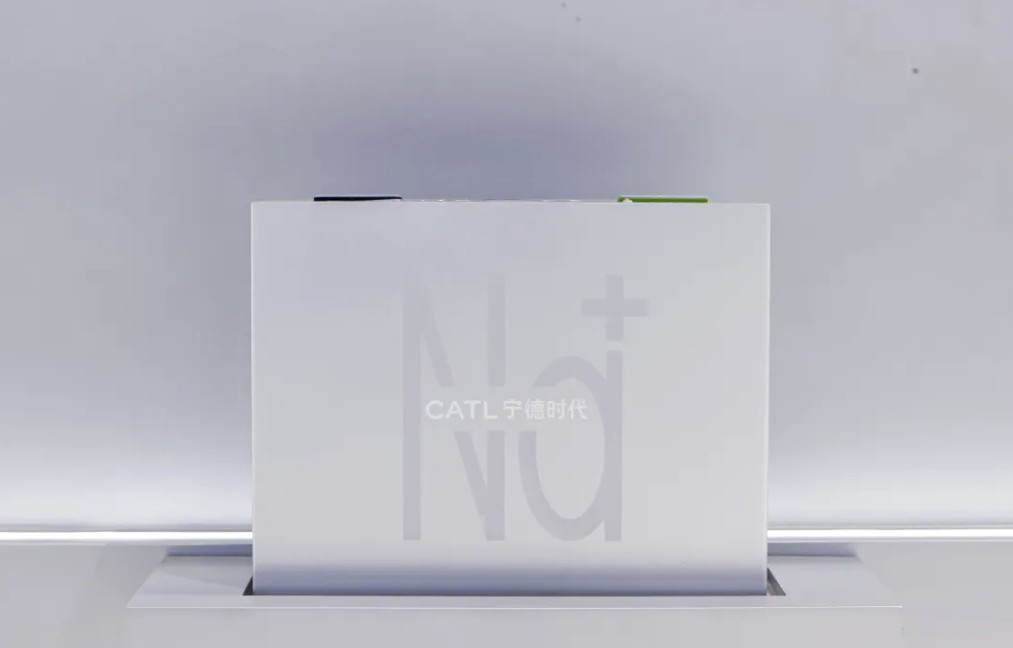
It is in this context that CATL’s Technology Day on April 21, 2026, should be read, as more than a product launch event and really the presentation of a comprehensive industrial vision. Shenxing III pushes extreme charging, with declared values up to 10°C and times of less than 4 minutes to reach 80%; Qilin III consolidates the premium segment with approximately 280 Wh/kg and ranges in the region of 1,000 km; Qilin Condensed raises the bar even further, up to 350 Wh/kg and declared ranges of up to 1,500 km; Freevoy II redefines the role of hybrids with up to 600 km of electric range and over 2,000 km of total range; Naxtra introduces mass production of sodium-ion, expected by the end of 2026.
The key, however, isn’t the numbers themselves but overall design. CATL is shifting focus from the battery as a component to the battery as a system. If ultra-fast charging becomes truly industrialized, range will cease to be the primary issue. If density increases without compromising safety, the positioning of premium cars will change. When CATL sodium-ion enters production, the cost structure and supply chains will change. And indeed, CATL isn’t just focusing on cells: it’s integrating ultra-high-power charging and battery swapping, also seeking to control the infrastructure that makes these technologies usable.
BYD’s strategy is different, but equally clear. The company is focusing on full vertical integration between battery, vehicle, and charging. With the Super e-Platform, it introduced 1,000 V architectures and charging systems up to 1 MW, with the stated goal of bringing the refueling experience closer to that of internal combustion vehicles. The updated second-generation Blade Battery moves in the same direction: long range, fast charging, and stable performance even at low temperatures. BYD isn’t aiming to be a one-size-fits-all supplier, but rather a manufacturer that demonstrates what happens when the entire system is designed together.
Alongside these two industrial models, a group of players is working primarily on the technological leap. Gotion High-Tech is one of the most active. It has already brought fast-charging solutions to market and, at the same time, is accelerating its efforts in semi-solid and solid-state, with declared densities of up to 350 Wh/kg and pilot lines already operational. The approach is clear: build a gradual industrial path towards solid-state, without waiting for a sudden technological breakthrough.
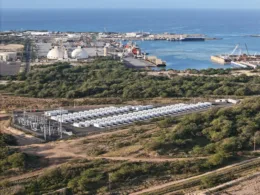
A similar logic is found in EVE Energy, which combines two trajectories: on the one hand, ultra-high-density grid storage – with systems of nearly 7 MWh in 20-foot containers – and on the other, the development of advanced batteries for high-value markets, such as drones, humanoid robots, and more. This is where new chemistries can enter first, where every kilogram saved and every increase in safety has a direct impact on the business model. It is precisely in these sectors that the most interesting effects are beginning to be seen. Professional drones, humanoid robots, and eVTOLs don’t have the cost constraints of mass-produced automotive vehicles, but they have much more stringent requirements regarding weight, range, and safety. It’s no coincidence that companies like Samsung SDI and LG Energy Solution are directing their most advanced roadmaps precisely toward these applications, clearly indicating that solid-state technology could arrive here before it does in cars.
Where the similarities with EV batteries stop
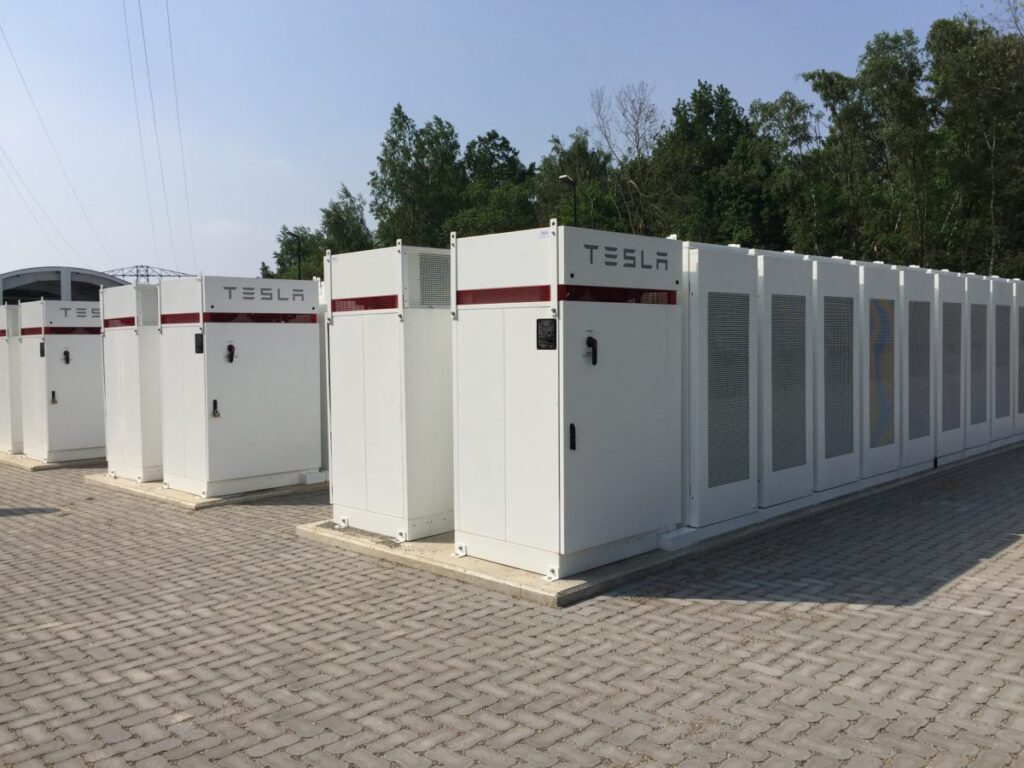
Meanwhile, the stationary storage sector is following a nearly opposite trajectory. The priority here is not the highest possible density, but the best balance between cost, cycles, security, and integration. LFP will remain dominant, but even here the leap is clear: 20-foot containers have gone from 3-4 MWh to over 6-7 MWh in just a few years, with some manufacturers already pushing even further. The effect is structural: less space, fewer components, lower system costs per MWh installed.
In this context, sodium-ion represents a key variable. Not for absolute performance, but for scalability. Greater availability of raw materials, less exposure to geopolitical constraints, potentially more stable costs. With mass production expected between 2026 and 2027, this technology is likely to quickly find its way into storage and less energy-intensive applications, helping to reshape the industry balance.
Prices are also confirming this shift. After a roughly 90% reduction in the last decade, battery packs have reached average levels around $100 per kWh, with storage already at lower levels. But the dynamic is no longer just a learning curve: it’s the result of industrial scale, cell size, and chemical diversity. In the coming years, the main driver will be the ability to produce at TWh scale while maintaining control over costs, supply chain, and integration.
Looking at the bigger picture, the shift is clear. Until yesterday, the sector was driven by a single logic. Today, it is increasingly segmented. Tomorrow – in five years – it will likely be organized as a true multi-market industrial platform: batteries for the grid, for mass-market cars, for premium products, for robotics, for light aircraft. And each segment will have its own leaders.
The battery, in other words, is no longer a simple component. It’s becoming the cross-cutting energy infrastructure of the next industrial cycle. And those who can master not only the technology, but also production, integration, and the grid will have an advantage that will be difficult to regain.
The phase change is not in the future, it is already underway, and as is evident, China is leading it.
From pv magazine Italy
Written by

Comments