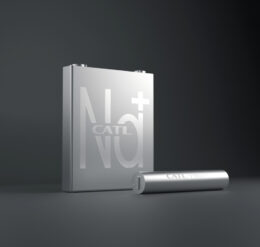
Sodium-ion batteries: Unigrid begins commercial-scale deliveries; Altris and Draslovka partner to scale Europe’s supply chain

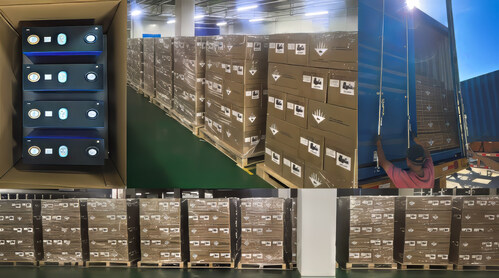
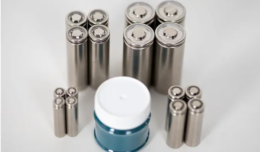
US startup Unigrid has begun commercial-scale international shipments of its proprietary NCO sodium-ion cells, which the company says makes it the first battery firm outside China to export sodium-ion technology at scale.
The move was enabled by critical transport certifications and Unigrid’s cost-efficient foundry manufacturing model. This approach allows it to scale rapidly without the capital burden of building its own factory. It also eliimnates the risk of starting a new greenfield facility or slowing down commerciliazion.
The San Diego-based firm announced in October 2025 that it had expanded its global manufacturing capacity tenfold, reaching 100 MWh per year, with a target of 1 GWh in 2026. Unigrid relies on Asian production facilities for the bulk of its manufacturing, citing that local factories are often underutilized and operate only on a part-time basis.
Commercialization accelerated last year after Unigrid secured UN38.3 transport certification for its sodium-ion cells. By the end of 2025, the company had swiftly progressed from pilot-scale production to commercial export volumes. The latest batch of Grade-A cells was shipped directly from foundries to customers in 40-foot ocean containers, marking some of the first commercial sodium-ion exports at several international ports. These ports, previously equipped only to handle conventional batteries like lithium-ion, had to navigate new procedures and declarations to accommodate the novel battery chemistry.
“This milestone validates a path for us to bring safe, scalable NCO sodium-ion technology to global markets,” said Darren H. S. Tan, CEO and co-founder of Unigrid. “Through collaboration with our foundry partners, we’ve proven that advanced battery chemistries can be commercialized without massive capital buildouts.”
With certification and global shipping hurdles cleared, Unigrid is set to begin delivering on its off-take agreements in 2026, the company said on Thursday.
Meanwhile, in Europe, Swedish sodium-ion developer Altris and Czech materials specialist Draslovka have formed a strategic partnership to establish Europe’s first industrial-scale sodium-ion cathode value chain. As part of the agreement -including a €19.3 million in-kind investment by Draslovka in Altris – the two companies will scale fully integrated production of Altris’ patented sodium-ion cathode active material at Draslovka’s Kolín facility in the Czech Republic.
Once ramped, the line will support production of up to 350 tonnes annually – a European-controlled supply equivalent to around 175 MWh of sodium-ion cell capacity, the partners said in a statement on Thursday.
The agreement also guarantees Altris long-term access to Draslovka’s licenses, process expertise, and a jointly developed plant design. Production is slated to begin in late Q3 or early Q4 2026.
“This alliance exemplifies how Altris is building a European sodium-ion value chain with leading industrial partners. Europe is no longer waiting for sodium-ion to mature elsewhere – we are industrialising it here, with Western manufacturing and Western supply. It reflects our strategy to focus on what we do best: delivering world-class cathode material that supports a more resilient European battery supply,” says Christer Bergquist, CEO of Altris.
Founded in 2017, the Uppsala University spinoff has developed a proprietary technology to produce Fennac (Prussian White) sodium-ion cathode matherial, which consists of sodium, iron carbon, and nitrogen.
Altris has been on a rapid growth journey since its foundation in 2017, developing its patented cathode material, Altris Prussian White, as well as electrolytes, battery cells, and production blueprints for sodium-ion batteries.
In 2023, the company presented a commercial-sized sodium-ion battery cell with an energy density of 160 Wh/kg. This achievement was made possible by Altris’ patented Prussian White cathode material with a capacity of more than 160 mAh/g.
Altris acted as a technology partner for the now-defunct Swedish battery maker Northvolt, helping develop its first-generation sodium-ion cells.
Meanwhile, Draslovka had previously partnered with Natron Energy, widely regarded as the most promising sodium-ion battery developer in the US before it filed for bankruptcy in September 2025.
Natron had ambitious plans to build the world’s first sodium-ion battery gigafactory, with Draslovka slated to supply the Prussian blue cathode material central to Natron’s proprietary technology. As part of the partnership, the Czech company had planned to develop new production facilities on both sides of the Atlantic to support Natron’s anticipated manufacturing scale-up.
Written by



Popular Posts