Texas lands its first battery-only virtual power plant

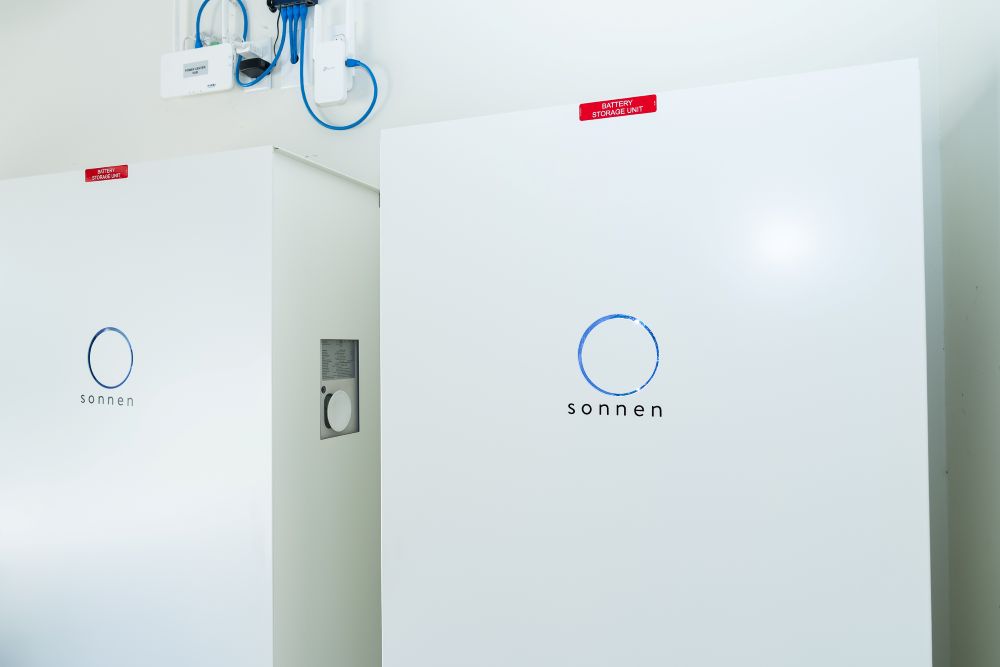
For little more than a monthly subscription to Netflix, homeowners and “solar orphans” in Texas can now tap into a new “battery-only” virtual power plant (VPP) program from clean energy financing company Solrite Energy and VPP-based energy storage system manufacturer sonnen.
The offering builds on the companies’ previously launched virtual power plant power purchase agreement (VPA) that already provides 3,000 customers across the Electric Reliability Council of Texas (ERCOT) service area with solar and storage at no upfront costs and $0.12 per kWh rates. Now, per a conversation with leadership from both companies, the partnership plans to provide another 10-12,000 homes across the state with three 60 kWh sonnen batteries throughout the rest of the year. Unlike the first part of the program, however, customers can opt to only install batteries and not solar.
“Unfortunately, over the last few years, we’ve seen some major installers and financiers in the solar industry go out of business,” said Regan George, Solrite’s CEO, in a conversation with ESS News. That’s left many homeowners in the lurch as “solar orphans.” He explained that most retail electricity contracts in Texas last a few years; homeowners who install solar might be able to participate in a solar buy-back plan under one contract, but providers aren’t required to provide a similar offer when that plan runs out.
“Solar orphans are injecting solar into the grid and losing money on it,” added Blake Richetta, the CEO of sonnen’s US division. The battery-only VPP will harness that power, harmonize it with grid operations and provide backup power for homeowners. In practice, that brings down electricity rates even more, which is “already really, really low” for anything homeowners draw from the grid. “The customer value proposition is bananas.”
Homes that aren’t able to install rooftop solar can also benefit from the program; according to George, Solrite is “primarily a VPP company that uses solar to charge the batteries,” and sometimes, logistically, that’s not feasible. Even without any solar attached, he explained, the 60 kWh batteries can provide a substantial backup.
Texas’ recent winter storm proved an optimal testbed to see if sonnen’s battery fleet could be successfully mobilized. In George’s words, it “passed with flying colors.” Ahead of the storm touching down, the companies stopped full VPP operations to deploy a protective backup power service that harnessed more solar power and used it to slowly charge batteries higher and higher.
Right before the storm, Richetta explained, they changed tack. Based on zipcode-level analysis, it made sense to swarm charge all the batteries to 100% on grid power. This was new territory. But it paid off. Some customers who experienced outages used less than 15% of their batteries capacity, meaning they could have had substantially longer outages and kept their homes powered up.
“We had a 100% success rate,” Regan added. “People were able to keep the lights and heat on, and it makes you feel good to see the dream come true in a way that facilitates an energy transition that works economically for the homeowner and the utility and works for us to be able to do so profitably while adding resilience.”
“It was really cool that we got to exercise that, and that Solrite showed their generosity by holding batteries out of the VPP even though there were a lot of opportunities to monetize for an extra day after the storm,” Richetta noted.
Still, Regan stressed that “not all VPPs are created equally.” Compared to the sonnen and Solrite program that he said offers 14-16 grid services, a simple demand-response program that provides 1-2 grid services looks like a “one-trick-pony” that performs a few times a year.
But building it wasn’t so easy.
“10 years ago, when I came over to sonnen from Tesla, it was like Americans had no idea what a VPP was and it was like an idea in a grid-science paper,” Richetta explained, pointing out that sonnen has had widespread VPP operations in Europe for many years. When the founder tells you to “make it real,” though, you find a way to do it. “It was very hard, but now look at what we’re doing. It’s so real and it’s so relevant now in the US, so it’s really our time.”
“Our goal is to be the largest VPP network in the world,” Regan added. “There’s no reason the United States couldn’t be. We have the largest grid network, so we should be the leaders in this.”
Written by






Popular Posts