Policy uncertainty bigger threat to battery supply chains than tariffs, says Unigrid CEO

One of the numbers that felt right but sounded shocking from BloombergNEF’s 2026 Sustainable Energy in America Factbook was the data point that the US experienced 87 trade and tariff policy changes on energy transition-related goods in 2025 alone.
In 2026, that has changed, with court rulings forcing widescale further change and unrest. For the US battery industry, tariffs are a problem, but not knowing what the tariffs will be in the next month or the next quarter is the real pain as the industry grapples with ambiguity around rules like FEOC, or foreign entity of concern requirements.
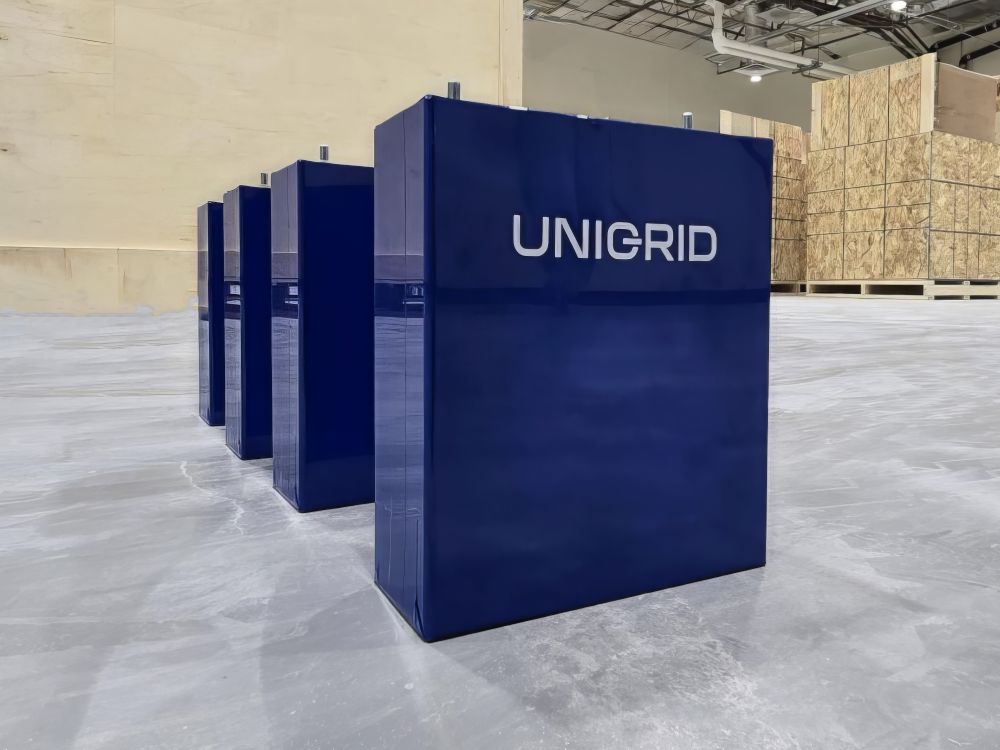
It’s the view of Darren Tan, CEO of San Diego-based Unigrid, which began commercial-scale sodium-ion shipments earlier this year, as one of the few sodium-ion battery manufacturers.
“It’s not the headline tariff number that does damage, it’s the unpredictability, as this kills business opportunities,” Tan told ESS News. “Our customers and suppliers can model costs and adapt to almost any rate if they know it will remain stable for the foreseeable future. What’s more disruptive is constant ambiguity and shifting rules.”
The same frustration applies to FEOC requirements. “There’s still a lack of clarity around what qualifies, what percentage thresholds apply, which parts of the supply chain are covered, and whether those definitions might change again,” he said. “For deep tech and hardware industries like energy storage, stability and transparency matter most.”
On domestic manufacturing, he’s equally candid: “If trillion-dollar companies like Apple or NVIDIA don’t fully localize their production, it’s unreasonable to expect small and mid-sized battery companies to relocate entire global supply chains overnight.”
Sodium-ion manufacturing might appear to offer somewhat of a natural workaround. The chemistry does offer more sourcing flexibility without requiring cobalt or lithium, and can be produced on modified lithium-ion lines, reducing capital intensity, and making it easier to shift production as trade conditions evolve. But he pushes back on that theoretical idea that more abundant materials might translate to resilient supply chains.
“The battery industry is deeply interconnected, with components and materials flowing in and out of the US constantly, and when tariffs or penalties are introduced, those costs typically transfer downstream. No chemistry is completely insulated from geopolitical risk.”
This is partly why Unigrid operates a fabless model and continues to discuss it as a key point, as it sources capacity from existing Asian foundries rather than building its own. “In the absence of stable policy to justify heavy CAPEX investments in new production infrastructure, it’s risky to lock yourself into billion-dollar facilities,” Tan said. “Over the past five years, the world, particularly in Asia, has built significant overcapacity across much of the battery supply chain, and companies like ours are able to benefit from that existing infrastructure.”
The company, which expanded manufacturing capacity tenfold to 100 MWh/year in late 2025 and is targeting 1 GWh in 2026, positions sodium-ion as a complement to lithium-ion in grid storage rather than a wholesale replacement.
Written by



Popular Posts