Bluetti FridgePower review: The battery revolution comes inside the house

In homes, there have been primarily two types of big batteries.
The first is a big residential power option, very often tied in with solar: think many kWh of storage via a Tesla Powerwall, with increasing options for homeowners via modular and scalable designs. Still, these are basically installed in place, don’t move again, and have high upfront cost.
Then there’s portable power. Battery banks started the idea of backup power, and preppers helped advance it when tied in with solar as a power station. These battery types have become mainstream, and occasionally used as a standalone during times when backups are required. Think Bluetti, EcoFlow, Anker Solix, and Jackery as the big four in this space.
Now, these companies and others are considering more modular power, placed throughout a home, while still being at least somewhat portable. EcoFlow’s Stream series offers this kind of option in some parts of the world, including Europe.
Bluetti’s FridgePower makes a brand-new entry into this space after some months of tease and promise, and ESS News has an exclusive, detailed review.
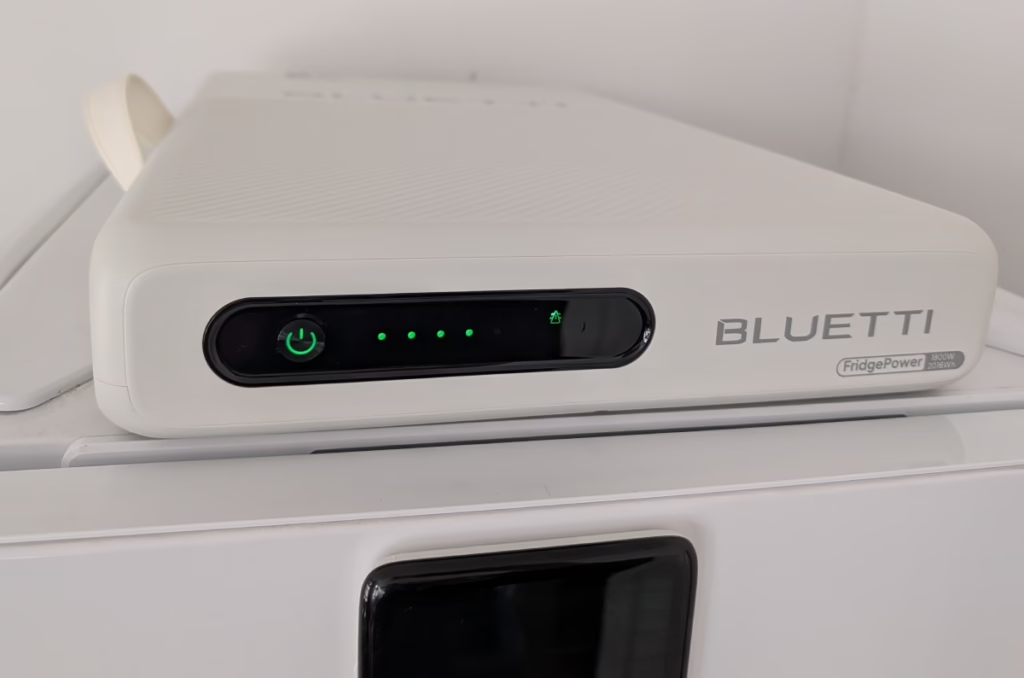
Bluetti Fridgepower Review:
FridgePower does what the name suggests: once installed, it connects to an outlet, and then the fridge connects to it. Suddenly, there’s a 1.8 kW output, 2 kWh (2,016 Wh to be exact) capacity battery that’ll keep your fridge and other devices powered during an outage. It has two AC outlets on the back, can handle up to 1 kW of solar input via XT60 at 12-60V / 20A, and is built around LFP (LiFePO₄) cells rated for 4,000 cycles to 80% capacity or roughly a decade of daily use. (ESS News could not test the solar charging beyond verifying it worked via a 100 W portable panel.)
Bluetti says Fridgepower provides enough juice to keep a modern fridge running for 21.6 hours without further charge. That will obviously depend on size, use, efficiency, and more, but getting close to a full day is significant. In any power outage, the loss of a fridge for more than a few hours may compromise the food stored fresh or frozen, and for anyone storing temperature-sensitive medication, the stakes are higher still.
Crucially, it’s also expandable via optional ‘BlueCell 200’ battery packs. Each BlueCell 200 adds another 2,016 Wh in the same slim slab form factor, and you can daisy-chain up to three of them for 8,064 Wh total, or roughly four days of fridge runtime. Each is 17.3 kg (38 lbs) and almost the same size as FridgePower, meaning you’ll need to commit space for it, but the option is there for low-fuss power.
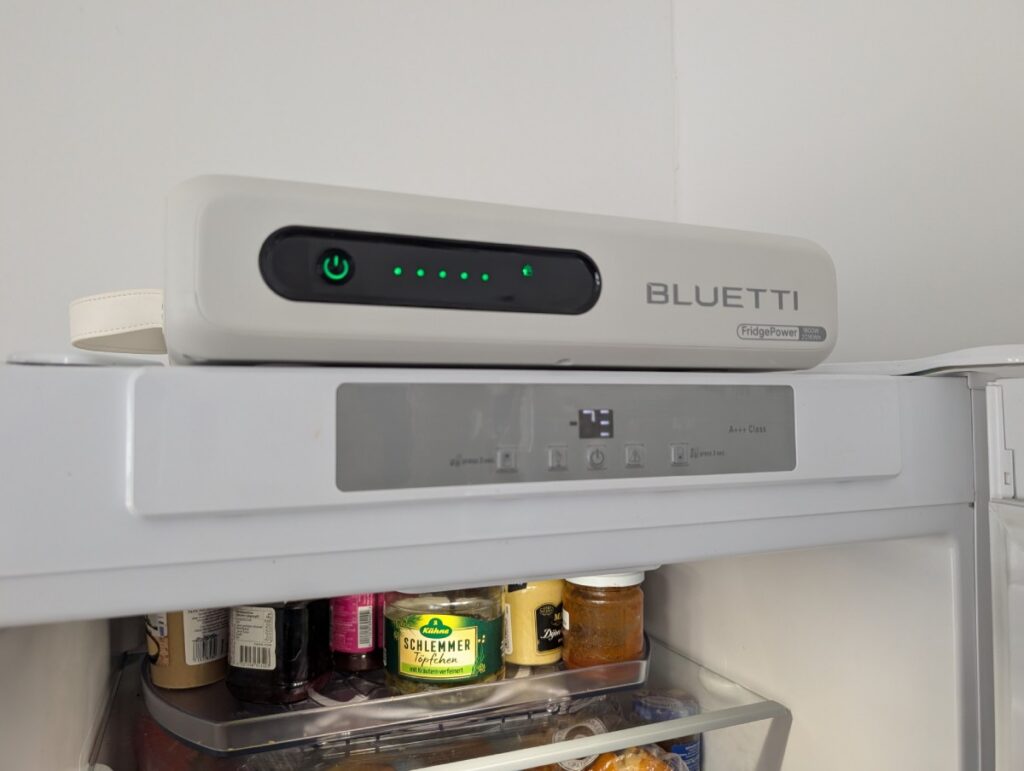
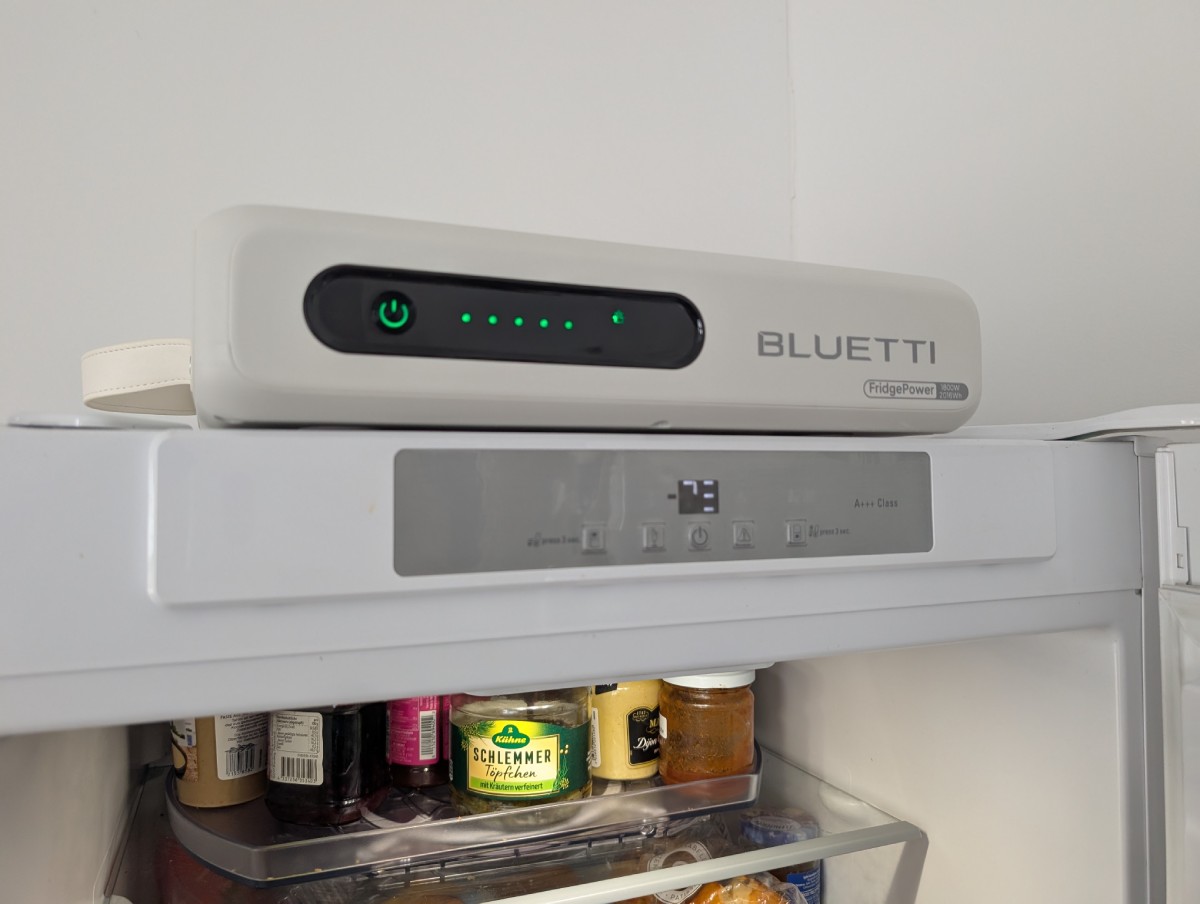
ESS News has tested FridgePower sitting on top of a fridge in a fairly classic city apartment setup. The good news? It fits easily into a kitchen without a lot of fuss, and consumes zero headspace. The even better news? If you want it to be more part of your life, there are options for that too as you think about powering a microwave, coffee machine, or Wi-Fi router from the one FridgePower. Downsides? Not many, though the final pricing will matter.
Installation
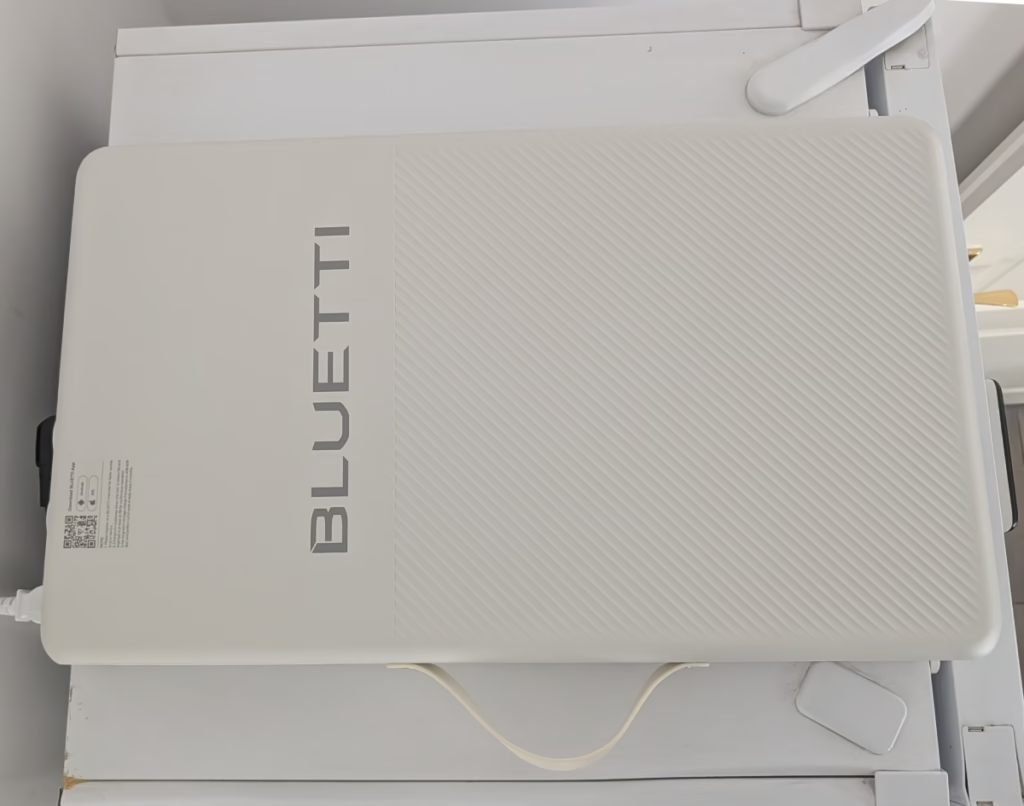
The FridgePower comes as a single unit in a box, weighing 19.7 kg (43.4 pounds), and measures 350 × 580 × 75 mm — so not a small object by any means. In the box, you get the unit itself, an AC charging cable, a handle strap you can attach for moving it around, and a full mounting kit including screws and adjustable leveling feet.
There’s also a wall bracket in the box for those who want to mount it vertically on the wall beside or near the fridge, which is a genuinely tidy option for homeowners though obviously not something you’d do in a rental. Bluetti has photos of this setup and it looks tidy.
Separately, there’s also an optional magnetic monitoring screen called Display 1 Magnetic Screen, connected via Bluetooth, like a small tablet, that shows the state of charge of FridgePower and any other Bluetti device, input and output power, along with time, temperature, and humidity. Its default state is to be off, and a tap illuminates the display.
You will have to charge its 2,000 mAh battery separately via USB-C, but it lasted many weeks; it was a surprise when it was finally low on charge. It’s a great device that had zero setup time, connecting with FridgePower directly out of the box.
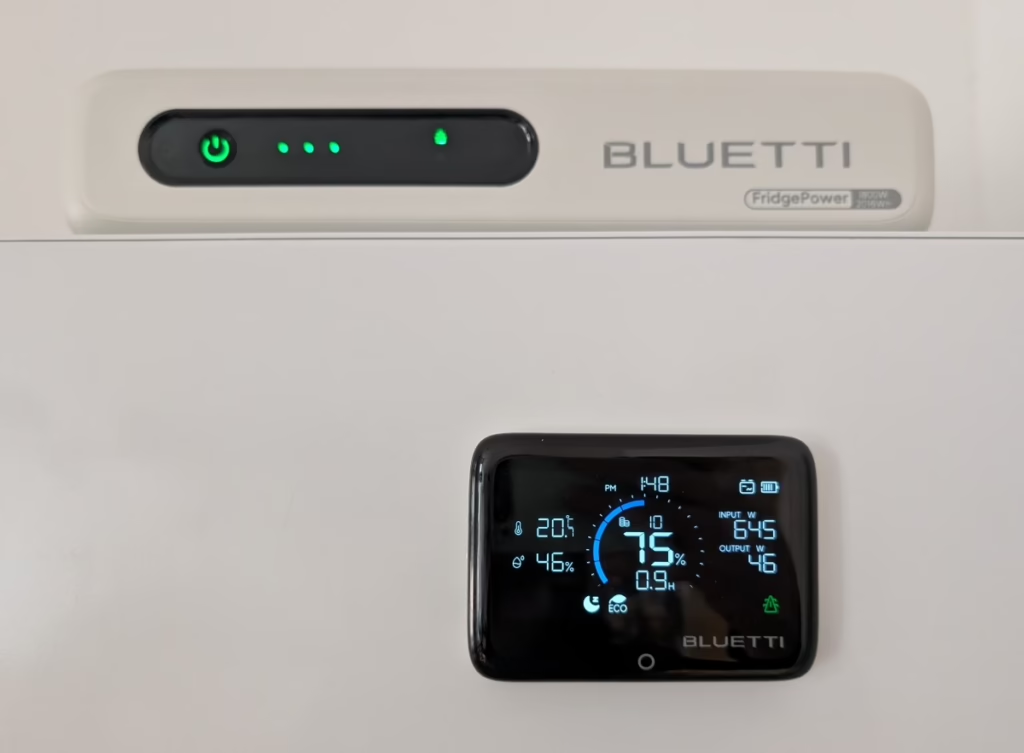
Installation options are many, but here it was just lifting it and placing it on top of the fridge directly. (The top of the fridge was also cleaned in advance, which, by evidence of dust, was not a task previously carried out.) Hoisting FridgePower to the top of the fridge first requires a heavy lift, then organizing the cabling. First the refrigerator was unplugged, plugged into FridgePower, and FridgePower plugged into the wall outlet and FridgePower then provided pass-through power.
Once connected, it both provides power and charges up at the same time. In the Bluetti app, the exact state-of-charge level can be controlled — for example, by setting the max charge level to 80%. Bluetti’s own manual will tell you to regularly cycle the battery for overall battery health, and the app will nudge you to do a full cycle every three months to keep the cells balanced.
Performance: More than a standby battery
Thankfully, the only outages experienced during the test were those simulated by just unplugging the power cord to the FridgePower. Doing that unleashes action: an audible beep, and the FridgePower switches to supplying the fridge directly. Other devices can also be plugged in, and the device can handle UPS-level fast cutover times of less than 10ms.
Even though a fridge doesn’t require fast response like that of computing gear one may want to protect, think PCs, routers, game consoles and more, that UPS-level response prevented the test fridge from making its song and dance during a power outage, which includes audible beeping and the need to press buttons to confirm a warning. Not a big deal, but preventing the issue was helpful.
ESS News was also brave enough to run an extended outage simulation of the fridge.
FridgePower was left unplugged, and only running the already cold fridge for an extended period. The fridge averaged around 20-40 W in standby, rising to around 80-100 W when we left the door open, as the compressor gently cooled it back down during testing.
Significantly higher draws would occur when cooling a warm fridge more rapidly and with older compressor styles. Happily, once the outage was commenced, a notification arrived on the phone via the Bluetti app when it was detected too, an appreciated touch.
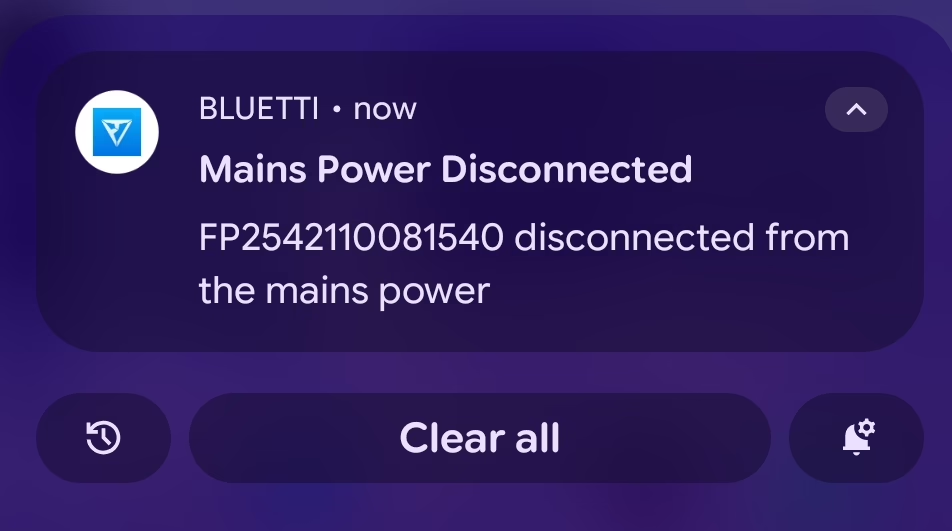
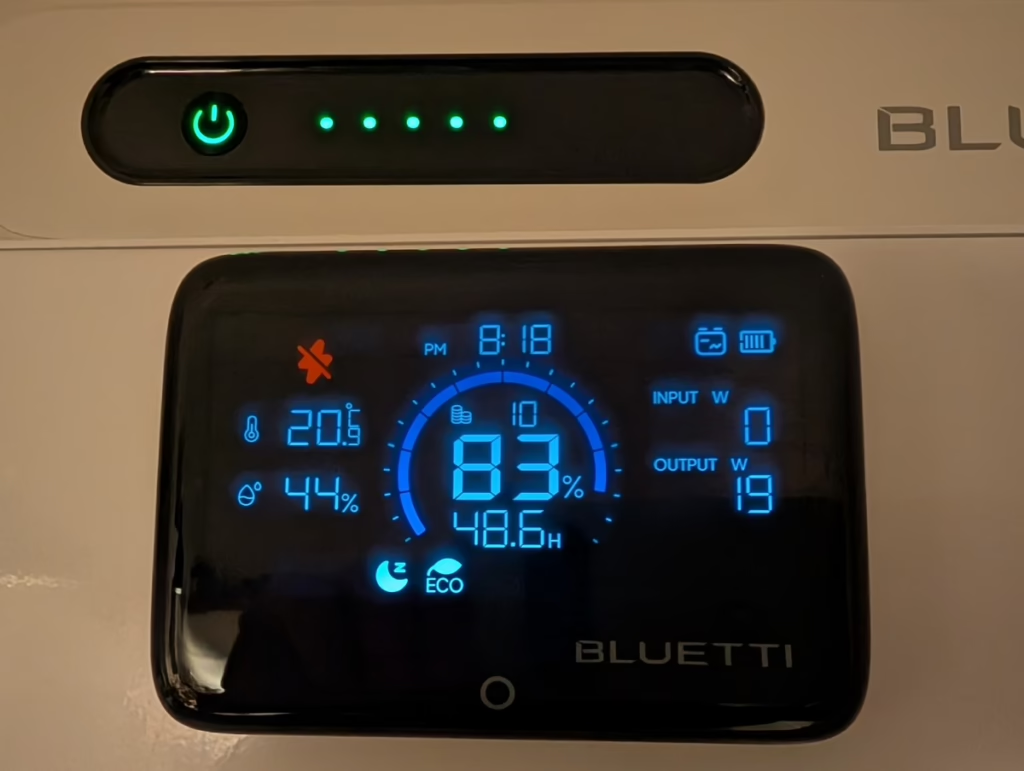
The red icon at the top-right shows the outage, with the 48.6 estimated hours the current uptime while at the current output.
Pleasingly uneventful
Otherwise, in a way, FridgePower is pleasingly anti-climactic. It sits above the fridge with its green LEDs illuminating the kitchen, especially at night. It is quiet without being silent — rated at 30 dB — and you’ll notice it in a quiet kitchen outside of cooking times when it’s on and charging. Setting it at 80% charge means it will discharge from 100% to 79%, then charge at around 500-650 W to reach 80%, then turn off.
It may be obvious, but FridgePower does use bypass-first architecture. When plugged into a mains outlet that’s on, the AC input flows directly to the fridge or any other device, rather than routing through the battery first. Anything else would be unusual, and checking with Bluetti was only just-in-case, but a rep did confirm the bypass and that means fewer unnecessary charge cycles.
- Note: FridgePower idle power draw. Idle power draw is impressively modest: in standard pass-through mode, the unit draws around 5 W to keep its BMS and display ticking over; bump it into active UPS mode for that instant 10ms switchover and it rises to 8 W.
Brains of the operation
The Bluetti app has a multitude of setup options. It’s a busy UI that’s functional but won’t win any design awards, and it requires some trial and error to find all the little elements you want.
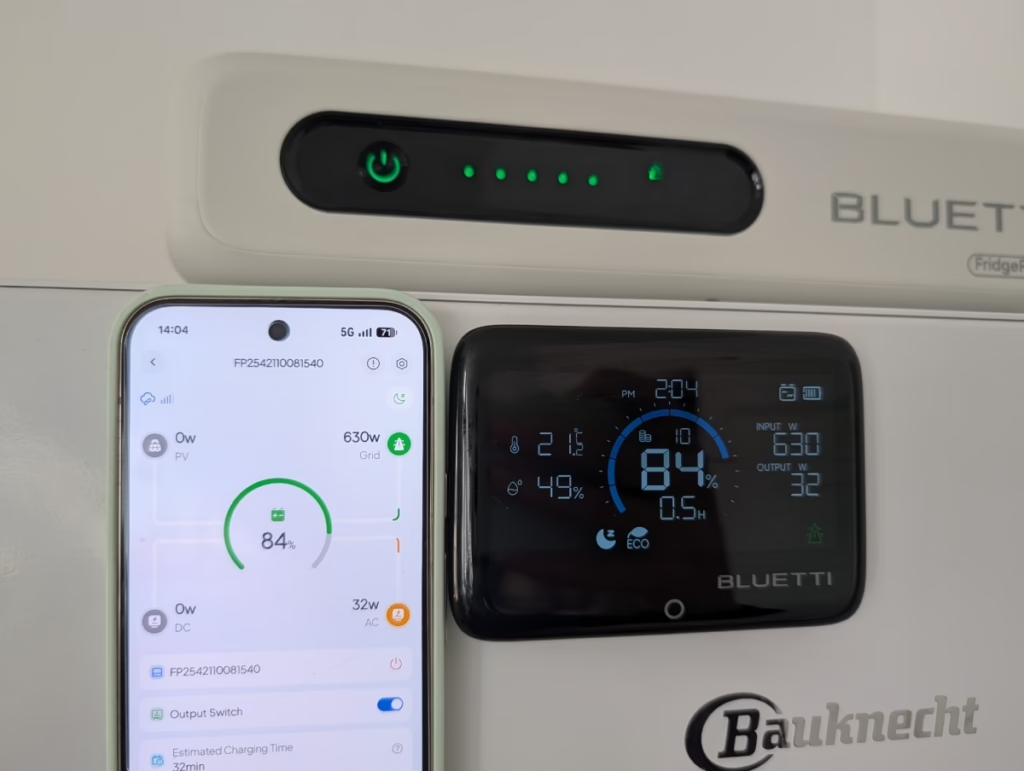
For example, one standout control used was being able to set exactly the state of charge, for example, setting charging to start and stop at 80% to protect the cells long-term, for instance. That works reliably and is genuinely useful. You can also set up monitoring of how much the device is costing or saving you, by selecting fixed rates for buying/selling power or Time of Use (TOU) for different peak and off-peak rates, with the energy management system seeking to charge during off-peak hours.
Another nice touch in the app is a weather alert feature that monitors local forecasts and charges FridgePower up ahead of incoming storms, so if something’s rolling in overnight, it’s already full before the grid goes down. Whether that works reliably in practice will depend on your location and the quality of Bluetti’s weather data integration, though Bluetti confirmed that it is a worldwide feature, not limited to any one region.
The only feature ESS News couldn’t find a setting for was to dull the bright green LEDs on the front of the FridgePower. This isn’t a big issue, but they are bright, and there’s no need to have them that bright throughout the day or night. Putting tape on them will solve it, in a way.
FridgePower efficiency and tech details
On efficiency, mains charging is around 94% in 220-240V regions like Europe and Australia, or 92% on 120V in North America, roughly as expected. A difference worth flagging between regions is North American buyers may wish to note the max AC input capped at 1,440W given standard 15A household circuits. That’s versus the 1,800W available in Europe and internationally with 220-240V mains power.
One thing to keep in mind if you’re considering it for a garage, RV, or anywhere that gets properly hot: charging input starts to throttle above 40°C ambient. For most home kitchens, that’s a non-issue, and overall, the impact on charging speed is modest rather than dramatic, but worth knowing.
Pricing and availability
Interestingly, Bluetti hasn’t yet revealed its pricing for FridgePower in any region, and final pricing is key to knowing if this is a buy. Bluetti is known for value and quality so hopefully it will sit in an accessible range.
ESS News understands FridgePower will go on sale via crowdfunding platform Kickstarter, as it did with the Apex 300 in the past which raised $5.5 million via Indiegogo, with significant benefits for early backers and those who take bundles, but the details are not yet available.
Those interested can sign up via Bluetti for earliest access to get the latest updates and exclusive benefits when it launches on Kickstarter this April.
More about
Written by






Popular Posts