Solidion Technology patents anode protection for space-based AI data centers

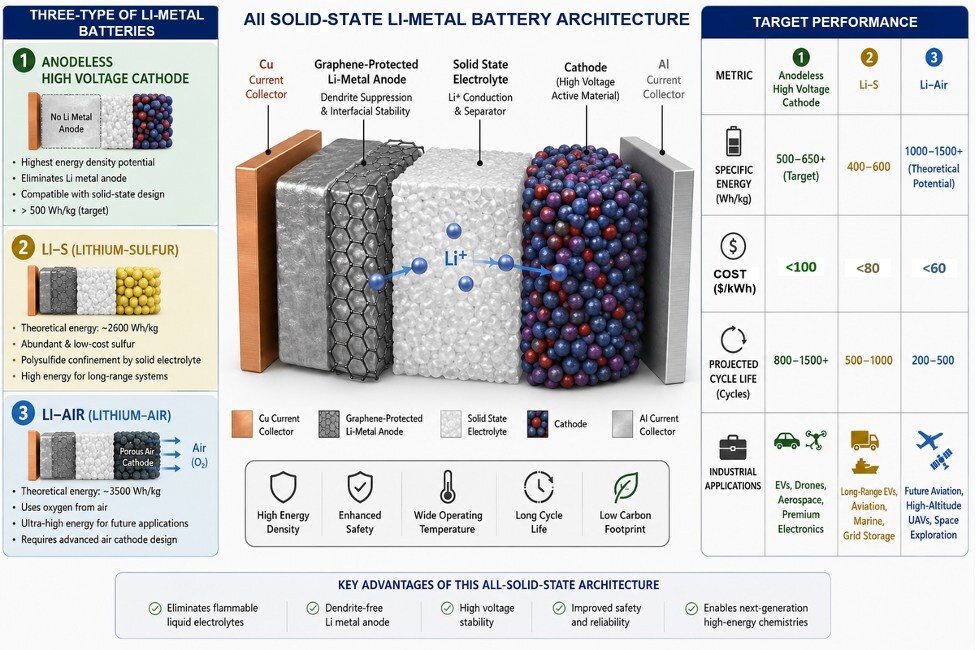
Solidion Technology has patented a lithium metal battery technology it claims can remove key stumbling blocks to lithium-sulfur, lithium-air and anodeless lithium metal battery commercialization.
Interest in solar-powered AI data centers in space has grown since Tesla CEO Elon Musk floated the idea at the World Economic Forum meeting in Davos in January 2026, but technical challenges remain.
Like data centers on Earth, AI infrastructure in orbit would likely need an uninterruptible power supply (UPS) to account for voltage dips, interruptions in in power generation and localized equipment failures.
Solidion Technology now has more than 30 patents for its lithium metal anode protection platform, which it claims are relevant for low-Earth-orbit-based AI data centers, crewed spacecraft and future lunar infrastructure.
The startup claims these patents address three technical barriers that prevent large-scale implementation of “ultra-high energy” lithium metal batteries: continued reactions between the electrolyte and lithium metal, lithium dendrites that could penetrate the separator or solid-state electrolyte layer, and large gaps between the lithium metal layer and the solid-state electrolyte that diminish batter performance.
The all solid-state lithium-metal battery architecture proposed by Solidion can also be separated into three types of batteries depending on the anode material. Solidion has proposed an anodeless battery, sulfur anode battery, and lithium-air.
Solidion’s proposed lithium-sulfur and lithium-air proposals battery architecture include a graphene-protected lithium-metal anode, which sits between a copper current collector and solid-state electrolyte leading to the lithium-sulfur or porous-air cathode.
Solidion Technology’s patent announcement was quickly followed by a fundraising push, with the company announcing a $35 million private placement of common stock to fund the company through 2028. The company reported it has entered into agreement with a new institutional investor. Titan Partners, a division of American Capital Partners, is acting as the sole placement agent for the offering. The deal expected to close on or about June 9, 2026.
More about
Written by
Comments


Popular Posts